The Orbis Pictus Award: Reflections from a Recent Committee Member
Have you ever hoped to find nonfiction resources to use in classrooms, recommend to readers or just enhance your own reading experiences? Have you ever wondered about how children and YA award winning books are selected? Have you wondered exactly what the Orbis Pictus Award given by NCTE is? If you answered yes to any of these questions, you might find the beginnings of answers here.
Many are aware of the Newbery Award, the Caldecott Award, and many other specific awards given by the American Library Association, such as ALA’s distinguished nonfiction award for children, the Robert F. Sibert Medal. However, often awards given by other educational groups specific to particular disciplines are not as well known, such as the Orbis Pictus Award from the National Council of Teachers of English. As stated on the NCTE website, "The Orbis Pictus Award was established in 1989 to promote and recognize excellence in the writing of nonfiction for children. The name Orbis Pictus, commemorates the work of Johannes Amos Comenius, Orbis Pictus—The World in Pictures (1657), considered to be the first book actually planned for children."
My own awareness of the Orbis Pictus award and belief in the power of nonfiction led me to accept a 3-year position on the committee that identified award winners from books published in 2023-2025. Serving on this committee greatly impacted my own respect for the work of this and similar committees as well as the field of nonfiction literature for young readers. The insights I briefly share in this month's WOW Currents reflect the committee and its process, my current thoughts on nonfiction literature and the books our committee selected during these three years.
Committee Selection and Process
NCTE receives applications from interested people to serve on the committee whose members rotate in and out after a 3-year term (4 years for the selected chair) and maintain the required 7 person group. Diversity among those serving is important in terms of educator positions (both university and classroom educators), cultural diversity and previous experiences with literature. Discussions during the year revealed the importance of this, especially that committee members represent different age levels of readers through their various positions.
The process began with monthly meetings in late spring as publishers sent copies of books they wished to be considered and continued throughout the months leading up to the NCTE convention in November, framed around NCTE guidelines. The meetings became more frequent given the large volume of books distributed in the fall and culminated in an all day meeting the Thursday of NCTE Convention weekend. Throughout these meetings voting was held monthly with each person voting for their top 5 of that month's discussed titles. A final vote prior to the NCTE Convention left 40 key titles from which the winning title, up to 5 honor titles and up to 8 recommended titles were chosen. No one aside from the committee knows the winning titles until the Saturday of NCTE at the Children's Book Awards Luncheon where they are announced and the winner is invited to share a talk the following year. I mention all this because the process is ongoing, rich with discussion that points to different perspectives and beliefs and adheres to guidelines for excellence. It is not a simple unanimous vote for a "good book." Even differing perspectives on how to interpret the criteria, shared below, can result in disagreement and the need for members to think deeply about other perspectives.
The Books and the Criteria
In identifying an "outstanding" book for children, the Committee members considered the following:
Accuracy of presentation in both text and illustrative material, as well as appropriate documentation, avoidance of anthropomorphism and teleology, distinction between fact and theory, and balanced treatment
Organization of material (e.g., general to specific; specific to general) that contributes to clarity and accessibility
Style of writing that is engaging and distinctive in its use of language
Style of illustration that is engaging, informative, and complementary to the text
Appropriateness of book design based on the topic or subject and with respect to the different age groups for which the topic or subject may be appropriate
Nonfiction that was published in the United States during the previous calendar year
Potential contribution to the K-8 curriculum
While all of the criteria are considered, the first bullet above carries specifics that can eliminate a book, despite the book perhaps being one appreciated by committee members. And the final bullet provides a purpose for the books as significant to curricular classroom materials. With curriculum standards varying from state to state (they are not a guideline), often committee members will reference standards in their state as support for a particular book.
While not addressing scholarly research in nonfiction trends here, given that we were receiving what publishers deemed some of their best literature each year, I saw topics and formats that framed types of nonfiction during these years. Among these were a focus on the environment and natural world, picturebook narratives about scientists and artists, especially women, who made important discoveries and contributions, insights into historical topics that are often new to adults and art forms and artists that are not always acknowledged. Additionally, the backmatter that nonfiction authors employ to situate their work continues to be seen in impressive forms across the books our committee read. Another observation in light of the narrative approach to nonfiction text that at times might seem to cross the fine line between fiction and nonfiction, was that this narrative actually brings the nonfiction into focus for the reader as the grey area between the two genre is widened.
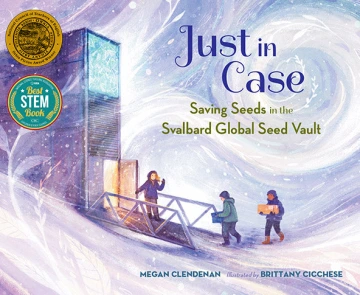
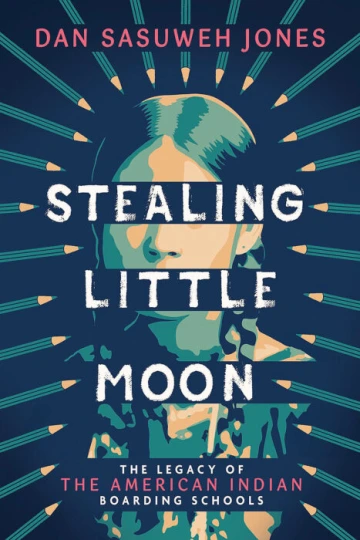
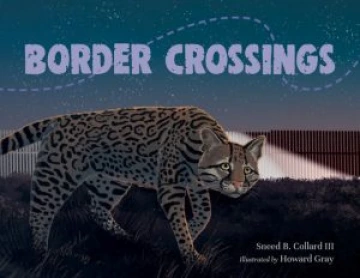
Despite some trends, books that emerged into the top 40 were diverse in topic, setting, reading levels and perspectives. Winning titles over the past 3 years can be found here. As you follow this link or the link for this year’s images and a brief summary of the winners, you can see the diversity among the three: Just in Case: Saving Seeds in the Svalbard Global Seed Vault by Megan Clendenan, illustrated by Brittany Cicchese (Charlesbridge); Stealing Little Moon, The Legacy of the American Indian Boarding Schools by Dan SaSuWeh Jones (Scholastic Focus); and Border Crossings by Sneed B. Collard III, illustrated by Howard Gray (Charlesbridge).
Image
| Image
| Image
|
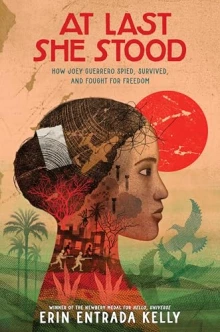
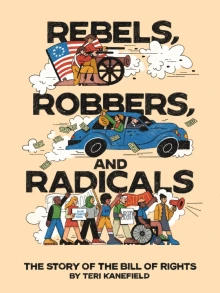
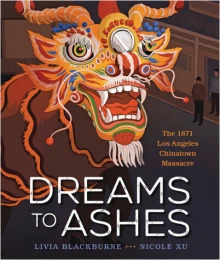
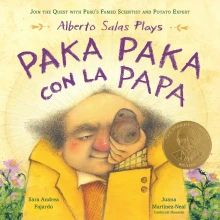
Taking time to look at the 2026 (published in 2025) titles on the NCTE site mentioned above that were selected as honor books this past year, one finds a rich array of titles that serve in curricular areas or as recommended reading for interested readers: Rebels, Robbers, and Radicals: The Story of the Bill of Rights by Teri Kanefield (Abrams); Dreams to Ashes: The 1871 Los Angeles Chinatown Massacre by Livia Blackburne, illustrated by Nicole Xu (Carolrhoda Books); Alberto Salas Plays Paka Paka Con La Papa by Sara Andrea Fajardo, illustrated by Juana Martinez-Neal (Roaring Book Press); The Keeper of Stories by Caroline Kusin Pritchard, illustrated by Selina Alko (Simon & Schuster); At Last She Stood: How Joey Guerro Spied, Survived, and Fought for Freedom by Erin Entrada Kelly (Greenwillow Books). These 5 books cover a diversity of topics: historical evidence situating the Bill of Rights in context, historical racism as seen in the LA Chinatown massacre, a Peruvian potato scientist, the community efforts to save Jewish books from a fire and a Filipino female hero in WWII. And exploring the 8 recommended titles, the potential for classroom use extends even further.
One other very quick look across the 42 books honored over the past 3 years reveals:
| Social studies and history | 12 |
| Science and environment | 15 |
Biography
| 14 3 2 6 2 1 |
| Indigenous | 3 |
| Chapter | 5 |
| Picture | 37 |
| Settings in other countries | 15 |
While this is only my brief determination of each topical category, this simple count reflects the diverse topics for which excellence in nonfiction literature has been noted by the Orbis Pictus Award.
Looking Ahead – A Few Thoughts
Just looking across the books noted here for 3 years of Orbis Pictus honors, teachers have 42 books to consider as curricular material, suggested reading for students or personal reading. Given the large number of books published, this list creates a rich beginning with new additions every year as well as lists prior to 2023.
In the search for literature to expand readers' connections to the global society, the Orbis Pictus list provides a wealth of titles that take readers outside their homeland and into the lives of others. It easily challenges one's knowledge of geography and culture!
In considering other award lists across different organizations, I pause to imagine the types and extent of discussions as they seek to award one or a few titles from so many possibilities. I continue to trust these lists but also am reminded that their excellence piques interest and initiates further reading on a topic. I am also reminded of the many other books we received that could have made the final list. So my reading continues as the Orbis Pictus work leaves me more equipped to identify excellent nonfiction.
The satisfaction of feeling widely read during the time on this committee and thinking critically with others reminds me to encourage others to apply. The connections made through these critical and often personal discussions create lasting friendships and professional relationships that continue long after OP committee service. Yes, it takes time, but it is time spent investing in both one's personal and professional growth. Likewise, as your own library grows, so can your connections to local educators when you share the books received with your choice of schools, organizations or individuals. This is no small gift for districts where library and classroom funds are limited.
However, for now, begin with reading an Orbis Pictus book and sharing here a recent "find" you would recommend!
WOW Currents is a space to talk about forward-thinking trends in global children’s and adolescent literature and how we use that literature with students. “Currents” is a play on words for trends and timeliness and the way we talk about social media. We encourage you to participate by leaving comments and sharing this post with your peers. To view our complete offerings of WOW Currents, please visit its archival stream.