

Inspirations for Children’s Books in Saudi Arabia: Part 4: A Part of a Whole
The plot of our fourth book, Rammula (Little Grain of Sand), started with an idea of a child looking at a part and judging the whole according to his/her own perception of the part. After many discussions the idea changed to a focus on how the small details that we usually ignore can cause major events. For example, a small nail is the reason for studying a large art work hanging on a wall. The group decided to read some more picture books to develop their idea.
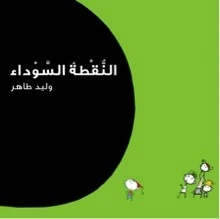
Annuqtatu Assawdaa (The Black Dot) by Waleed Tahir (Egyptian), (2009, Dar Ashorooq, Egeptian) is about a big black dot appearing suddenly on the playground of a neighborhood to disturb children’s play. The children first accept its presence, but then they decide to demolish it with hard work and patience. The group liked the way the writer presented his idea in a simple way. The ending of this particular book inspired them to write about a little piece of grit. They liked the simplicity of the illustrations as well. (See review of this book).
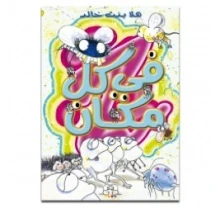
Fi Kulli Makan (Every Where) by Hala Bint Khaled (Saudi), (2009, Dar Jarbo’ lilnashr, Saudi) is a book about germs, focusing on the ways they harm humans and how to get rid of them in a beautiful rhythmic language. The group was inspired by the illustrations.
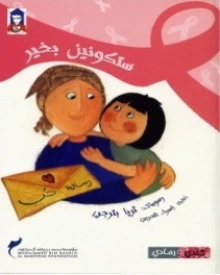
In Satakoonina Bekhair (You Will be Fine) by Israa Alharbi (Saudi) and Thuraya Batarji (Saudi) (2008, Kadi w Ramadi, Saudi) the child writes about her feelings throughout her mother’s suffering with breast cancer. The group liked the portrayal of the true feelings of the child.
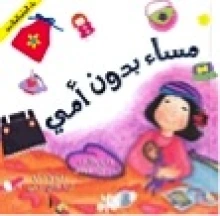
Masa’un Bedoon Ummi (A Night without My Mom) by Arwa Khumayis (Saudi) and Thuraya Batarji (Saudi), (2005, Kadi w Ramadi, Saudi) is about a child’s fears when her mom leaves home for a short visit to a friend’s house. The group liked the style of the writer and the way she handled the conversation between the mother and the child.
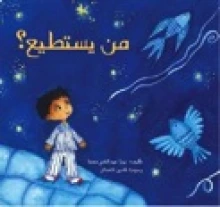
In Man Yastatee’? (Who Can?) by Nura Mohanna (Saudi) and Nadin Ka’dan (Syrian), (2010, Kadi w Ramadi, Saudi) the child asks questions with no answers about creation. The students were inspired by the deep questions of children and the way the writer presented God Almighty to help strengthen children’s faith. The curved lines that the illustrator used to draw buildings and the different shades of colors were inspiring.
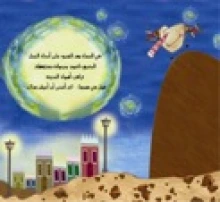
With each reading the idea developed more until the plot became focused on a small part being bored with being a part of a whole. Rammula is about a little grain of sand wanting to leave home to see the world. She takes the first “wind” and goes to different places where she sometimes suffers and other times she feels happy. In the end she goes back home but still threatens leaving any time soon. Another grain of sand is inspired by Rammula’s trip. The language of this book is vivid and the illustrations of the characters are well developed. To draw the character the group looks at enlarged photos of different grains of sand and tried many shapes until they reached a simple shape they were satisfied with.
Elham Alomari, Shad Zain, Afraa Hatahit, Aala’ Alghamdi and Hana’ Faqeeh was the group that had fun when writing and illustrating Rammula. They were the source of energy in our classroom. The date of publication is undecided yet.
Journey through Worlds of Words during our open reading hours: Monday-Friday, 9 a.m. to 5 p.m. and Saturday, 9 a.m. to 1 p.m.
The idea of having a a little grain of sand as the main character is the cutest thing ever!!!! It somehow reminded my with The Tiny Seed/bt Eric Carle :)
Can't wait to see this book come to life :D
Great job!!
thats amazing :)