

“The Sentiments of Diaspora”
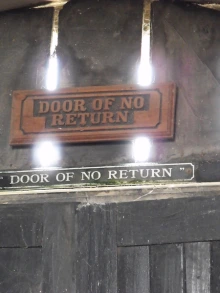
. "When I am asked who I am, I say, I am an African who was born in America. Both answers connect me specifically with my past and present ... therefore I bring to my art a quality which is rooted in the culture of Africa ... and expanded by the experience of being in America." (Tom Feelings, The Middle Passage)
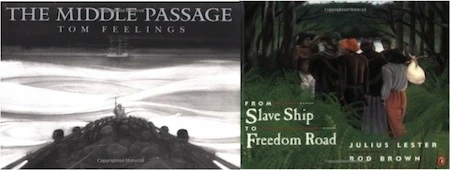
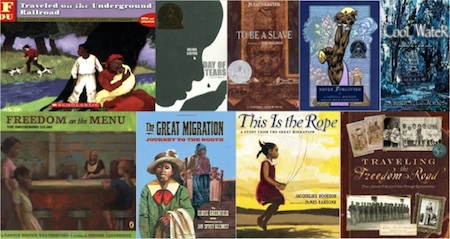
There are a number of terrific picture books that present the African diaspora and the sentiments of those enslaved. Pairing books such as The Middle Passage and From Slave Ship to Freedom Road with texts such as Traveled on the Underground Railroad, Days of Tears, To be a Slave, and Never Forgotten would increase adolescents’ understandings of not only the African diaspora, but the responses of African Americans through continued movements like the Great Migration--of African Americans once they reached the USA. There is more to be read, but thought you might enjoy the books shown here to start.
“He didn't know what he was anymore – not truly Chinese, for he had spent too long in the West, adopted too many Western ideas, but neither did he feel truly Westernised. There had been times when he had thought himself so, but a glimpse at his reflection quickly showed him the impossibility of such thoughts. No, rather, he felt suspended between two worlds, never to truly belong to either.” (Dominique Wilson)
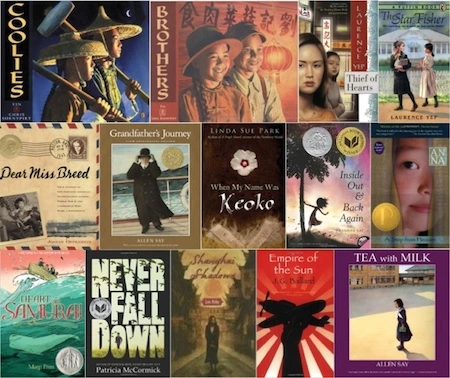
As I noted in my first entry this month, many people have experienced diaspora—as part of a group or as individuals—and for many different reasons. The legacy of many Asian Americans has a diaspora. Books that address how the Chinese were brought to the USA and treated as railroad workers; Vietnamese and Cambodians because of war immigrated to the United States, as did others from Korea and Japan. These peoples help create the strength of our multicultural nation, but have been treated as though this strength does not exist. Books such as Coolies, Brothers, Thief of Hearts, and The Star Fisher give readers a sense of a Chinese diaspora to the USA, while books like Grandfather's Journey, Dear Miss Breed, Weedflower, When My Name Was Keoko, Inside Out & Back Again, and So Far from the Bamboo Grove expand the Asian diaspora experience for readers.
“I've spent my whole life in Chicago being asked where am I from, so that I have a sense of displacement that also is very psychologically disorienting.” (Ana Castillo)
When thinking about a timely experience of diaspora, I am reminded of those in Central and South America as well as countries south of the US border, who are still North American. Stories about families and individuals attempting to find a better life by moving north present an alternate perspective to the one they may only hear about through the media that often forget the USA is a country of immigrants, many of whom have experienced diaspora for the same reasons our southern neighbors now experience it. Books such as La Línea, Grab Hands and Run, and Going Home are nice places to start understanding the border crossing/diaspora experience. Other border crossing stories that could be included in a diaspora experience are found in Sherman Alexie’s The Absolutely True Diary of a Part-Time Indian or How I Became a Ghost and Danny Backgoat, Navajo Prisoner by Tim Tingle. Works by Julia Alvarez are also powerful narratives of those who—individually or as part of a group—experience the displacement of diaspora.
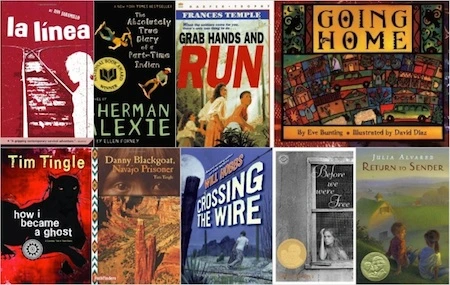
From my own readings of diaspora experiences, and from the voices of those who have lived through such an experience, the feelings of displacement, alienation, loss of identity, and fear can be overwhelming. Recognizing what others have experienced or are experiencing through the readings of the above texts allows us to connect to these feelings and these experiences. These books are powerful reads and I hope you will add them to your “what to read next” list!
Journey through Worlds of Words during our open reading hours: Monday-Friday, 9 a.m. to 5 p.m. and Saturday, 9 a.m. to 1 p.m. To view our complete offerings of WOW Currents, please visit archival stream.
Hi,could you tell me where that quote by Domonique Wilson came from please?
The Wilson quote came from the book, The Yellow Pages. Another displacement story.