Exploring and Experiencing: Marisol McDonald Doesn’t Match
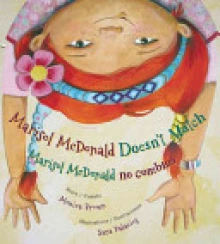
Picturebooks are “text, illustrations, total design; …As an art form on the interdependence of pictures and words, on the simultaneous display of two facing pages, and on the drama of the turning of the page” (Bader, 1976, p. 1). This week we continue our exploration of helping children read the art and written texts in picturebooks by seeing how Michelle Doyle shares the richness in Marisol McDonald Doesn’t Match, written by Monica Brown (2011) and illustrated by Sara Palacios, with her first graders. In the story, Marisol, as others see her, is a mismatch of things that don’t make sense. She has red hair and brown skin, likes to wear polka dot and strip combinations, and eats peanut butter and jelly burritos.
Though Marisol likes who she is, one day she decides to try to ‘match’ and please everyone else. By the end of the day, though, she realizes she needs and wants to be her unique self and announces to her family, “My name is Marisol McDonald and I don’t match because…I don’t want to!” Palacios uses mixed media for the art (i.e., acrylics, cut-out/glued on and colored newspaper shapes) which while ‘mismatched’, create a unique cohesive story that “matches” Marisol‘s uniqueness.
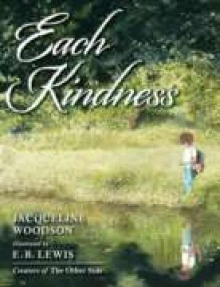
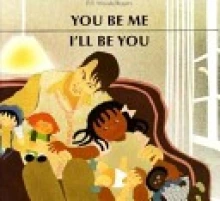
Michelle read Marisol McDonald Doesn’t Match with her first graders to help them think about their own identities and what makes them unique. As Michelle read, the children looked closely at the art as they talked about the story. They noticed the newspaper shapes and the texture it added, how Palacios filled each page with color, and how the colorful and cheerful art was just like Marisol. On the page showing Marisol sitting at the table with her family, they commented how Marisol’s family was like Anna’s family in You Be Me I’ll Be You (Mandelbaum, 1990) because her parents have different skin tones. Tyra connected Marisol to Maya in Each Kindness (Woodson, 2012) “because she dressed differently” than others. Throughout the reading, Michelle helped the children think about the ways Marisol was unique and special and the ways Palacios created unique pictures.
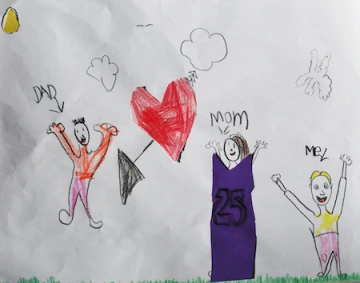
Following the reading, Michelle invited the children to think about what makes them “one of a kind”. She provided a range of materials, including magazine clippings, newspaper, and other paper, and invited them to create a picture that highlighted something special and unique about them.
In his picture, Mateo drew his mom, dad, and himself feeling very happy. He cut and glued a sun, a heart to represent the love his family shares, and his mother’s purple shirt to show she’s a fan of the Baltimore Ravens. He wrote, “My name in Spanish is Mateo. I am unique because my name is popular and I like to play. Walking my black lab and Race for Education and school are fun.”
Marcy drew herself doing a hula dance and cut and glued two sea creatures and a starfish into her picture. She wrote, “My name is Marcy. I’m unique because nobody has done a hula dance before. I can read a nine chapter Blue Blue book and I do the best ballet ever.”
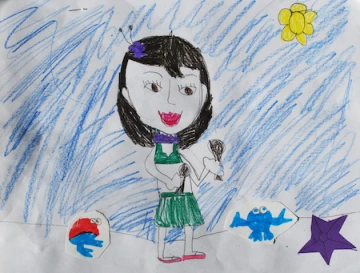
The children created their own unique art to highlight special and important things about themselves. While they chose paper they were familiar with rather than newspaper for their art, they nevertheless explored ways of representing who they are in unique ways as Sara Palacios did.
References
Bader, B. (1976). American picture books from Noah’s ark to the beast within. New York: Macmillan.
Brown, M. (2011). Marisol McDonald doesn’t match. Marisol McDonald no combina. Illus. S. Palacios. New York: Lee & Low Books.
Mandelbaum, P. (1990). You be me I’ll be you. Tulsa, OK: Kane Miller.
Woodson, J. (2012). Each kindness. Illus. E.B. Lewis. New York: Penguin.
Please visit wowlit.org to browse or search our growing database of books, to read one of our two on-line journals, or to learn more about our mission.