Global Representations of the Rural Black Experience in Children's Literature
Black communities in rural spaces have had a global influence through agriculture, culture and social innovation. Historically, people of African descent shared farming techniques, crop knowledge and land stewardship practices that shaped agricultural systems across the Americas, the Caribbean and parts of Africa. Their resilience and cooperative traditions inspired community-based approaches to development and mutual aid worldwide. Culturally, music, foodways and storytelling rooted in rural Black life have spread globally, influencing art and identity. Additionally, movements for land rights and social justice led by Black rural communities have informed global struggles for equity, empowering marginalized groups in rural regions worldwide.
When the topic of rural communities is discussed, readers often think of white communities and are surprised to learn that over 24% of rural communities are people of color, according to the 2020 census (Parton & Olson, 2024; Rowlands & Love, 2021). The current negative sentiments toward people of color necessitate a discussion of how they are portrayed in children's literature today.
This picturebook text set brings a global Black and diasporic perspective to rural K-12 classrooms by connecting African American experiences of land, labor, memory and belonging with West African, Caribbean, Latin American and broader diasporic traditions. After perusing recent publications featuring Black characters, particularly those living in rural spaces, we compiled a list to spark young readers' interests.
The selected books invite students to examine how Black communities across the world use storytelling, music, hair, family memory, spiritual traditions, migration and resistance to preserve identity and reclaim place. This global framing helps students understand that local histories of land and community are connected to larger histories of the African Diaspora, colonialism, enslavement, liberation and cultural survival. Three themes emerged after reading through the stories:
Land, Story, and Ancestral Memory
Body, Identity, and Reclamation
Spatial Belonging and Reclamation
In the remainder of this blog, we present sample stories that fit each theme.
Land, Story, and Ancestral Memory
This theme explores how legacies of land, story and memory function as sites of both historical trauma and reclaimed identity for Black communities. Readers can trace a timeline from enslavement and agricultural labor in the rural American South to West African traditions in which land- and water-based livelihoods are experienced intergenerationally.
Image
| Image
|
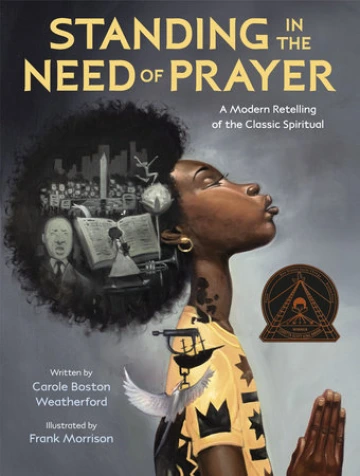
Standing in the Need of Prayer (Carole Boston Weatherford, illus. Frank Morrison, 2022)
Weatherford reworks the lyrics of the classic spiritual into a journey through more than 400 years of African American history, from the 1619 arrival of enslaved people in Virginia through Nat Turner's rebellion, military integration, the Selma marches and present-day protest. Morrison's paintings move from harsh imagery of bondage toward brighter, hopeful portraits of contemporary life, framing prayer and song as survival and resistance across generations.
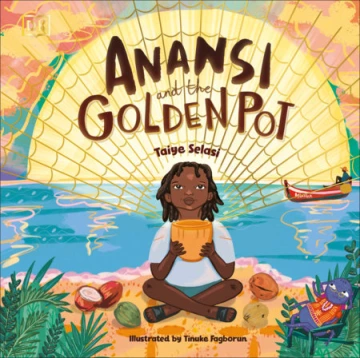
Anansi and the Golden Pot (Taiye Selasi, illus. Tinuke Fagborun, 2022)
Kweku, a boy nicknamed Anansi, visits his grandmother's seaside community in Ghana, where he helps fishermen pull in nets. He meets the trickster spider Anansi, who gifts him a magical pot. The story ties food, water, labor and land-based tradition to family wisdom about generosity passed down through generations.
Body, Identity, and Reclamation
This theme examines how people reclaim their space, voice and dignity through speech and self-worth, through experiences such as the U.S. civil rights movement, and the African American history of hair as a literal, embodied tool of resistance.
Image
| Image
|
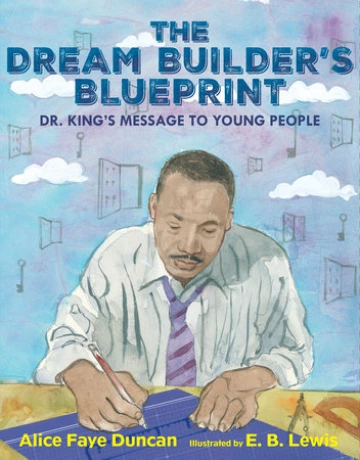
The Dream Builder's Blueprint: Dr. King's Message to Young People (Alice Faye Duncan, illus. E.B. Lewis, 2026)
Duncan condenses a little-known 1967 speech Dr. King gave to students at a Philadelphia junior high into a 277-word erasure poem urging young people toward self-worth, racial pride, education, nonviolence and purpose. Lewis's mixed-media art uses recurring images of open doors and forward motion to visualize hope and growth.
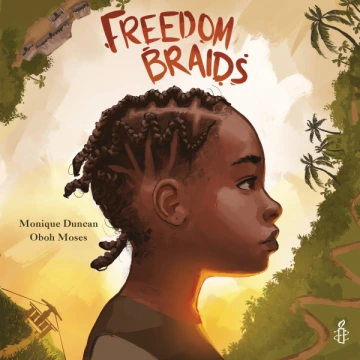
Freedom Braids (Monique Duncan, illus. Oboh Moses, 2024)
Inspired by the true history of enslaved African women in Colombia, the story follows young Nemy, who discovers that through elaborate braid patterns women create secret encoded escape routes and messages of resistance. The styles highlight hair as both cultural inheritance and a literal map to freedom.
Spatial Belonging and Reclamation
This theme asks who belongs in rural classrooms, towns, farms, libraries, public spaces, families and communities. Readers can examine how Black children and families worldwide claim belonging and extend the focus on reclamation into the realm of embodied knowledge and physical resilience.
Image
| Image
|
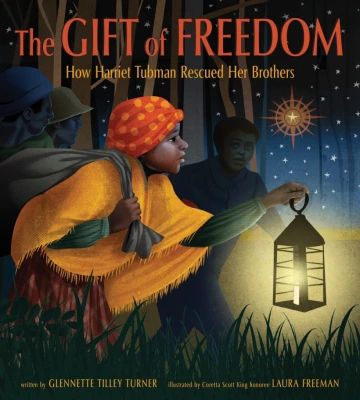
The Gift of Freedom: How Harriet Tubman Rescued Her Brothers (Glennette Tilley Turner, illus. Laura Freeman, 2026)
Based on interviews with Tubman's last surviving relative, this book centers on her Christmas Day rescue of her enslaved brothers, highlighting her skill as a navigator who read the North Star, waterways and natural signs to deliver them to safety. Tubman showed enduring commitment, risking her own freedom repeatedly to save others.
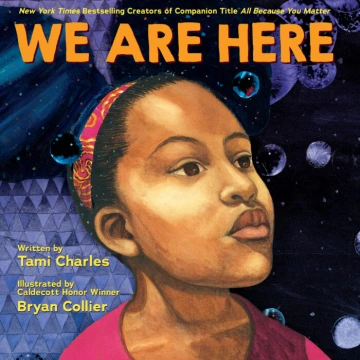
We Are Here (Tami Charles, illus. Bryan Collier, 2023)
Charles affirms Black and Brown presence, community and heritage, helping readers see how the African presence and contributions have influenced history through music, education, food and all life experiences. Readers can reflect on the past and dream of a future where they, too, can take their place in history. Collier's breathtaking illustrations visualize the powerful historical legacy and contributions of ancestors across time.
Conclusion
Together, these texts demonstrate that Black rural experiences are not isolated but deeply interconnected across the globe. By highlighting land, memory, identity and belonging, they invite students to recognize the enduring contributions of Black communities to agriculture, culture and social change. Incorporating these stories into all classrooms broadens rural representations, challenges assumptions and affirms diverse histories. These texts are important year-round, as they honor the voices of all students in our K-12 classrooms. Educators need to find authentic ways to insert the texts into the curriculum. Ultimately, this collection supports critical literacy, encouraging learners to see themselves and others within a shared diasporic narrative rooted in resilience, creativity and collective care, and promotes inclusive pedagogies that honor community knowledge while inspiring generations to imagine equitable and sustainable global futures for all.
References
Parton, C., & Olson, S. (2024). Rural places in academic spaces: A conversation about teaching
rural YAL. The Alan Review, 51(3), 61-65.
Rowlands, D. W., & Love, H. (2021, September 28). Mapping rural America's diversity and demographic change. Brookings Institution. brookings.edu
Children's Books
Charles, T. (2023). We are here (B. Collier, Illus.). Orchard Books.
Duncan, A. F. (2026). The dream builder's blueprint: Dr. King's message to young people (E. B. Lewis, Illus.). Calkins Creek.
Duncan, M. (2024). Freedom braids (O. Moses, Illus.). Lantana Publishing.
Selasi, T. (2022). Anansi and the golden pot (T. Fagborun, Illus.). DK Children.
Turner, G. T. (2026). The gift of freedom: How Harriet Tubman rescued her brothers (L. Freeman, Illus.). Abrams Books for Young Readers.
Weatherford, C. B. (2022). Standing in the need of prayer: A modern retelling of the classic spiritual (F. Morrison, Illus.). Crown Books for Young Readers.
WOW Currents is a space to talk about forward-thinking trends in global children's and adolescent literature and how we use that literature with students. "Currents" is a play on words for trends and timeliness and the way we talk about social media. We encourage you to participate by leaving comments and sharing this post with your peers. To view our complete offerings of WOW Currents, please visit its archival stream.