Haiku and Sijo: Poems from Japan and Korea
Haiku vs. Sijo
Haiku is a traditional Japanese poetic form, and Sijo is a traditional Korean poetic form.
Both are composed of three lines. Haiku is simpler than Sijo because it contains fewer syllables per line. Haiku follows a 5-7-5 syllable pattern, while Sijo consists of 14-16 syllables per line. Sijo is a little bit longer than Haiku.
Why is Haiku Popular in the U.S., but not Sijo?
Despite the similarities between Haiku and Sijo, the popularity of the two poetry forms is very different in the United States (U.S.). Haiku has been taught in schools in the U.S. over the past three decades and become a familiar part of American classrooms and culture (Peterson, 2018). In contrast, Sijo has rarely been talked about among U.S. educators and students. Through our conversations, we found that the popularity of Haiku and Sijo in the U.S. mirrors how they are viewed and taught in Japan and Korea. In Japan, Haiku continues to thrive as a vibrant literary form. Both classic and contemporary Haiku are widely published, and people of all ages read and compose Haiku throughout their lives. As a result, Haiku is viewed not only as a traditional poetic form but also as a living literary practice.
Unlike Haiku, in Korea, new Sijo books for children are hard to find. Sijo is often understood as something written in old times. When searching for Sijo for children, we found that most of the Sijo books are described with the adjective "old" or "traditional", like old Sijo or traditional Sijo for children and teens. Such names imply that Sijo is not for children to write in modern days. We found one Korean elementary teacher who has published 13 Sijo books with her students (Yoon, 2020). Since 2007 she has taught Sijo to her students and made a book at the end of the school year.
Children in Korea are introduced to Sijo in Language Arts classes starting in elementary school. Textbooks include Sijo written by historical figures and others, introducing children to Korean history and how people's lives were back then. In the U. S., there has been some movement in Sijo writing. For example, the Sejong Cultural Society, Chicago, has held the Sijo contest annually. Some teachers posted their Sijo lessons through online platforms such as YouTube. These efforts suggest growing opportunities to introduce Sijo to a wider audience and encourage greater appreciation of Korea's rich poetic tradition.
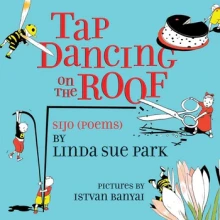
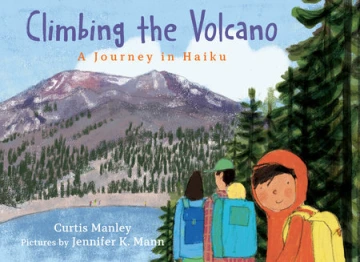
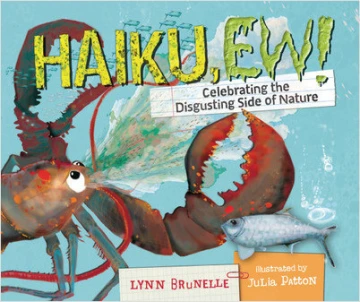
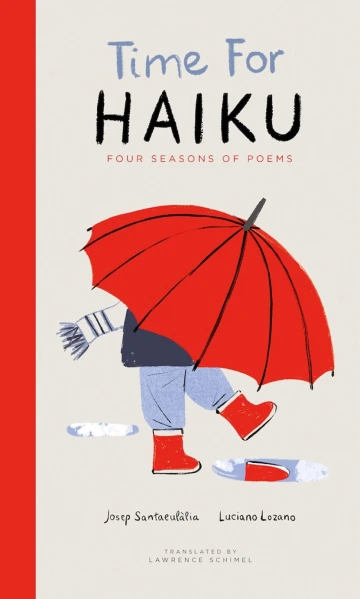
Here, we introduce some of the recently published Haiku books in the U.S. We found many Haiku books, but not Sijo books, as you can imagine. We only found one Sijo book: Tap Dancing on the Roof, written by Linda Sue Park. This book was published in 2015, which is eleven years ago. It is quite surprising that no Sijo book has been published in the U.S. since this book. By contrast, several Haiku books have been published in recent years, including Haiku, Ew! by Lynn Brunelle and Julia Patton (2024), Climbing the Volcano by Curtis Manley and Jennifer K. Mann (2024) and Time for Haiku by Josep Santaeulalia, Luciano Lozano and Lawrence Schimel (2026).
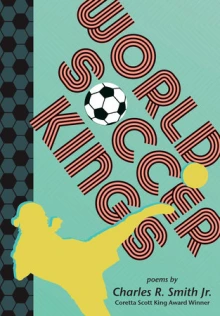
This year, Charles R. Smith published a poetry book that introduces sports stars worldwide. Interestingly, in this poetry book, Charles pairs poetic forms with soccer stars to highlight their talents. Regarding Sijo, one Sijo poem is included, written for the Korean soccer star Heung-min Son. We hope that teachers introduce both Haiku and Sijo and enjoy Japanese and Korean cultures through their distinct poetry styles.
Image
| Image
| Image
|
Haiku Books
Climbing the Volcano: A Journey in Haiku by Curtis Manley & Jennifer K. Mann (2024)
Haiku, Ew!: Celebrating the Disgusting Side of Nature by Lynn Brunelle & Julia Patton (2024)
Time for Haiku: Four Seasons of Poems by Josep Santaeulalia, Luciano Lozano and Lawrence Schimel (2026)
Sijo Books
World Soccer Kings by Charles R. Smith (2026). Sijo for Son is included.
Tap Dancing on the Roof by Linda Sue Park & Istvan Banyai (2015)
References
Brunelle, L. (2024). Haiku, ew!: Celebrating the disgusting side of nature (Illus. J. Patton). Workman Publishing.
Manley, C. (2024). Climbing the volcano: A journey in haiku (Illus. J. K. Mann). Neal Porter Books.
Park, L. S. (2015). Tap dancing on the roof: Sijo (poems) (Illus. I. Banyai). Clarion Books.
Peterson, M. (2018 Nov 5). Sijo and haiku. Korea Times, https://www.koreatimes.co.kr/opinion/20181105/sijo-and-haiku
Santaeulalia, J. (2006). Time for haiku: Four seasons of poems (Illus. L. Lozano & Trans. L. Schimel). Red Comet Press.
Smith Jr., C. R. (2026). World soccer kings. Candlewick.
Yoon. S. (2020 Feb 13). ”어린이들과 13년째 ‘시조짓기’, 책 13권 펴냈어요” [I published 13 Sijo composition books with children], OhmyNews, https://www.ohmynews.com/NWS_Web/View/at_pg.aspx?CNTN_CD=A0002611813
WOW Currents is a space to talk about forward-thinking trends in global children's and adolescent literature and how we use that literature with students. "Currents" is a play on words for trends and timeliness and the way we talk about social media. We encourage you to participate by leaving comments and sharing this post with your peers. To view our complete offerings of WOW Currents, please visit its archival stream.