2026 Trends in K-12 Global Literature
The annual K-12 global recommended reading lists are updated each year to include new books and identify annual trends. These lists consist of global books published and/or distributed in the U.S. between July 2025 and July 2026. As was true in 2025, there are no dominant trends in themes, topics or genres, although there are trends in countries highlighted in the books in the 2026 book lists.
The updated K-12 global recommended reading lists are published on the Worlds of Words website in grade level bands, K-1, 2-3, 4-5, 6-8, 9-10 and 11-12, with separate fiction and nonfiction lists. The lists are organized around broad themes, including strength through relationships, forced journeys, taking action, locating self in the world, adventures and mysteries and mythological quests. Books that remain in print are kept on the lists each year, while out-of-print books are removed and new books from 2025 and 2026 are added.
The books considered for the recommended lists are identified by examining the global books sent to the Worlds of Words Center for review purposes, consulting global book award lists and reading book reviews. To be considered, the books must be set in cultures outside the U.S. or involve characters who move between a global community and the U.S. Some of the global books are international books, first published in another country before being translated or adapted for publication or distribution in the U.S. Books are eliminated from the larger set of global literature because of negative reviews or because they are generic and lack a specific global setting or cultural values. Finally, we carefully consider which books will be of most interest in K-12 classrooms and libraries based on our backgrounds as educators and interactions with teachers and librarians.
One immediately evident trend is that the majority of global books in the past year are picturebooks at the K-1 and 2-3 grade levels. The number of global books decreases as the grade level increases, with the fewest books at the 9-10 and 11-12 grade levels. We removed picturebooks from consideration that focus on animals as main characters and do not contain connections to a global community through values or settings. This lack of global connection was most evident in the picturebooks written for a K-1 audience. We always consult book reviews in addition to our own evaluation to search for possible global connections. This increase in generic picturebooks is a concern and is not evident in the lists since the majority of these books were eliminated from consideration.
In terms of the global settings, books from East Asia, specifically Japan, China and Korea, dominated at all grade levels with many in translation and the rest created by immigrants. From South Korea, Pencil by Hye-Eun Kim (2025) is a visual narrative that follows a colored pencil from its origins as a tree to an art store where it feeds the imagination of a young artist. Late Today by Chon-yun Ho and Myong-ae Yi (2025) is a moving picturebook about a lost kitten on a busy bridge where drivers rush by, worried about being late. Sarang Saves the School by Korena Howley and Joowon Oh (2025) is set in a rural village where a school is threatened with closure, until Sarang realizes that grandmothers were denied school as young girls.
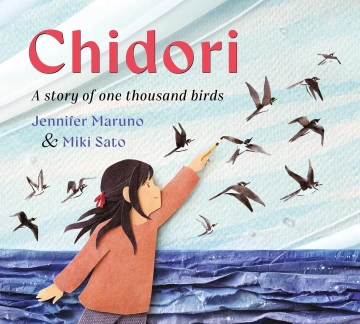
In Pitch Black by Takuma Takasaki (2026), translated from Japan, a boy fills paper after paper with pitch black, worrying his teacher and parents, until he lays out his drawings to reveal his intent. Chidori by Jennifer Maruno and Miki Sato (2025) is a picturebook about the 2011 Japanese tsunami in which a young girl paints a thousand birds to cope with the grief of losing her mother. In the translated graphic novel, Journey to Tomoika by Laurent Galandon (2026), two children who lost their parents in the tsunami go into the forbidden zone to return their grandmother's ashes to her home, assisted by yokai spirits.
Translated from China, Little Monk Writes Rain by Hsu-Kung Liu (2026) is a picturebook about a monk who is only able to write the character for rain but uses that ability to bring life-saving rain to his community. Wenxuan Cao from China and Suzy Lee from Korea team up in a picturebook, Yulu's Linen (2026), in which a girl attempts to paint the perfect self-portrait, but the canvas keeps rejecting her attempts. In Lost in Peach Blossom Paradise by Kim Xiong (2026), the first translated graphic novel of a popular series from China, a city girl embarks on a forbidden journey into an ancient forest, facing multiple trials.
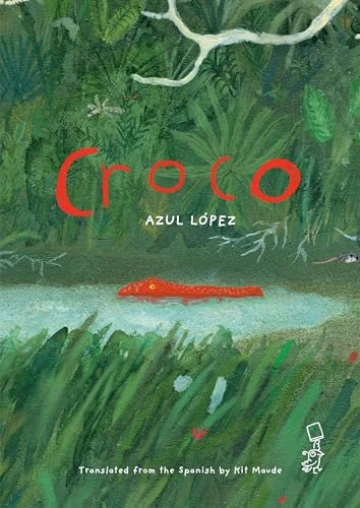
More picturebooks from Latin American countries are present in the lists, especially from Brazil, Argentina, Chile, Peru, Uruguay and Mexico, including the Batchelder award winner Croco by Azul López (2025) from Mexico. A vertical orientation is required for viewing this translated book as a crocodile falls into a deep hole and cannot get out. A translated picturebook from Argentina, How to Reach the Moon by Nicholas Schuff and Ana Sender (2025), focuses on the special relationship between a boy and his grandfather.
The Caribbean also increased in representation, particularly with picturebooks focusing on immigrants from Jamaica and Guyana in Canada. In A Single Dreadlock by Xavier Campbell and Eugenie Fernandes (2025), Lovie fears the ridicule of his single dreadlock until his grandmother explains Jamaican traditions. When We Go Home by Heather Beaumont and Natali de Mello (2026) follows a family on a visit to Jamaica, a place Marlee has never been and does not feel like home, despite her parents' excitement. In Brown Girl in the Snow by Yolanda Marshall and Marianne Ferrer (2025), Amina misses her warm tropical home in Guyana, especially her garden, and despairs over whether she'll ever see green again.
Other countries appear on the global lists that have not had much representation in previous years, such as Mongolia, Oman, Somalia, Tunisia, Uganda, Samoa and Zimbabwe. In Wrestlers of the Grassland by Liu Hau (2025), a translated book from Mongolia, Anand trains every day to become one of the famous wrestlers of the grassland. The difficult task in Filo's Butterflies by Litea Fuata and Myo Yim (2025) is performing a special dance for the first time at his auntie's Samoan wedding. In one of the few YA novels, When It's Your Turn for Midnight by Blessing Musairi (2026), a teen in Zimbabwe learns that her Baba is not her biological father, leading her to question her identity and family.
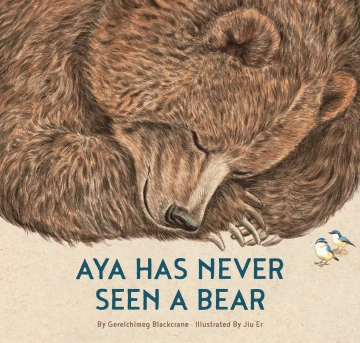
Although previous lists include Indigenous books from Canada, the current lists highlight global Indigenous experiences in picturebooks. Aya Has Never Seen a Bear by Gerelchimeg Blackcrane and Jiu'er (2026) is a translated Indigenous book from the Oroqen people in northern China, where a young girl is learning to live by her people's values to protect the balance between humans and nature. Seasons by the Lake by Naja Lund Aparico and Alex Nees (2026) is set in Greenland where two Inuit brothers engage in adventures across the seasons. The YA novel Butterfly Heart by Moa Backe Astor, translated from Swedish, focuses on a biracial Sami/Swedish teen who wants to learn more about her Indigenous roots. Origin by Nat Cardozo is a nonfiction book with portraits of 22 Indigenous children and their communities from around the world. Each double-page spread features a child and stunning illustrations that blur the lines between the child and the environment.
Although we did not find dominant themes across the 2026 global reading lists, we did identify interesting themes. One noteworthy theme is firsts and lasts. Odds and Ends by Maija Hurme (2026), a translated picturebook from Finland, is a child's scrapbook documenting different types of last moments in everyday life, such as cyclical lasts, reversible lasts and lasts that are first. In The Last Last by Wendy Whittingham and Brianna McCarthy (2025), a girl gathers her last last memories of Jamaica to carry with her to Toronto, where she experiences her first first.
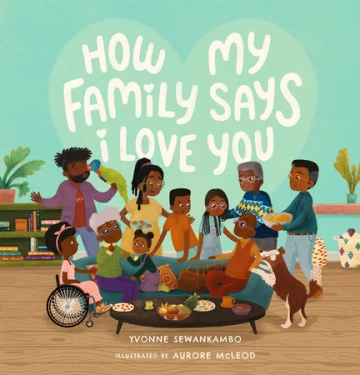
Another heart-warming theme in picturebooks is the diverse ways in which families show "I love you." In How My Family Says I Love You by Yvonne Sewankambo and Aurore McLeod (2025), a Ugandan family in Australia describes how their actions show love in their daily lives. This book can be paired with How We Say I Love You by Nicole Chen and Lenny Wen (2022) about a Taiwanese family who express their love through what they do for one another. The book includes Mandarin Chinese and Taiwanese Hokkien words. Ways Papi Says I Love You by Delia Ruiz and Carlos Velez Aguilera (2026) is a translated book from Mexico that integrates Spanish in Papi's conversations to express love to his daughter on a trip into town. In Love in Every Language by Anoosha Syed (2026), a girl who speaks only English and her Pakistani grandmother who speaks Urdu struggle to communicate, until the girl's parents explain that in their culture love is expressed through actions rather than words. The color-coded speech bubbles reflect the language or mixture of languages being spoken.
An interesting structure in two novels involves the use of parallel stories across different time periods. In the middle grade novel, The Nine Moons of Han Yu and Luli by Karina Yan Glaser (2025), parallel stories in 731 China and 1931 Chinatown follow two girls who venture out into the larger world and perilous adventures to save what they most love. The YA novel Song of a Blackbird by Mare van Lieshout (2025) was translated from Dutch and is set in Amsterdam in 1943 and 2011, where Annick discovers her grandmother was secretly adopted as a child and searches for their lost family.
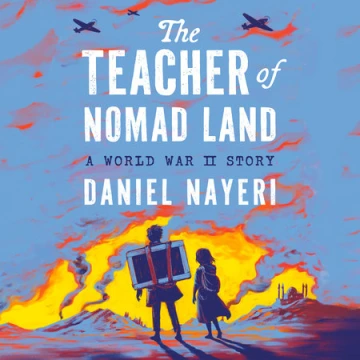
World War II is a frequent theme in middle grade books, but several new novels and nonfiction books stand out in their diverse perspectives on the war. The Lions' Run by Sara Pennypacker (2026) tells the powerful story of an orphan boy who finds purpose and courage to save a baby and a racehorse in a Nazi-occupied French village. The Teacher of Nomad Land by Daniel Nayeri (2025), winner of the 2026 National Book Award, is set in Iran. Iran, a neutral country, was occupied by British and Soviet forces while Nazi spies roamed the alleyways. Two orphaned children journey in search of safety through the mountains to join a group of nomads for whom their father had been a teacher. At Last She Stood by Erin Entrada Kelly (2025) is a biography set in the Philippines where guerilla fighter Joey Guerrero uses her leprosy to spy on the Japanese soldiers who occupy her country.
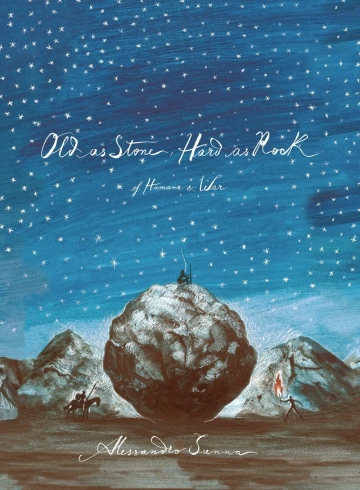
Finally, one of the most powerful books is Old as Stone, Hard as Rock by Alessandra Sanna (2025), a visual narrative from Italy about human destruction through the ages from the perspective of a stone. This wordless book is 188 pages long as a visual essay for YA readers that uses atmospheric paintings to trace human destruction and creation across time, gradually depicting progressively more technologically advanced forms of warfare.
You are invited to spend time with the updated K-12 recommended global book lists to locate books that connect to your interests and needs. Each book includes a short annotation to describe the plot and indicates the country or culture within which the book is set. In addition, these books are published in the U.S. and so should be available through various sources. If you visit Tucson, come to Worlds of Words Center to browse through the actual books.
Worlds of Words has also carefully analyzed the 2024 and 2025 characteristics of international books for children and young adults, books first published in another country before being published or distributed in the U.S. Those detailed reports with many graphs, charts, and maps are found on the Worlds of Words website. Read the world!
WOW Currents is a space to talk about forward-thinking trends in global children's and adolescent literature and how we use that literature with students. "Currents" is a play on words for trends and timeliness and the way we talk about social media. We encourage you to participate by leaving comments and sharing this post with your peers. To view our complete offerings of WOW Currents, please visit its archival stream.