

By Jeanne Gilliam Fain & Christina Davidson
 At the beginning of the 2012-2013 school year, Christina Davidson (fourth grade teacher) and I (teacher educator) decided to collaboratively examine how fourth graders in the reading/language arts block develop critical perspectives of literature. Critical literacy research informed our understanding of building intentional space in an already jam-packed literacy curriculum that explored and wrestled with issues of power (Vasquez, Tate, & Harste; 2013). Christina teaches in a rural school located two hours outside of Nashville, Tennessee. Fourth grade students understand the complexity of living in a small town and many often arrive with in-depth knowledge about the economy, government, farm animals, football, hunting, and religion. Their worldview is heavily influenced by the fact that several of the students rarely travel outside of their town. Continue reading
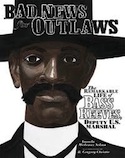
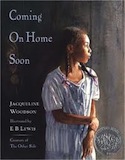
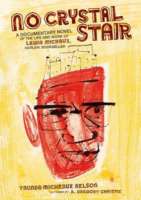 Today’s post is a continuation of the presentation with Jerry Pinkney, Jacqueline Woodson, and Vaunda M. Nelson that I attended on March 10, 2013 at the Tucson Festival of Books. The presentation was entitled “The Choice to Make a Difference”. This week, Vaunda M. Nelson describes the writing of her book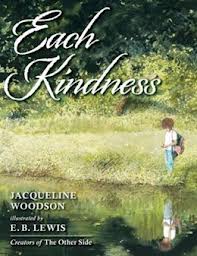
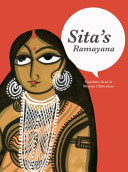 While folktales and fables are traditional literature of a secular nature, myths are sacred narratives. To people within a particular religious group, myths are true accounts of past events. Myths explain how the world came to be and how people’s behavior, societal customs, and institutional norms were formed. The main characters in myths are usually gods or heroes with supernatural powers and the humans with whom they interact. “…Myth might be defined simply as ‘other people’s religion,’ to which an equivalent definition of religion would be ‘misunderstood mythology,’ the misunderstanding consisting in the interpretation of mythic metaphors as references to hard fact” (Campbell 27).
 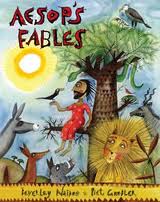 Fables are another form of traditional literature. They are short stories written in prose or verse. The main characters are most often anthropomorphized animals whose behaviors demonstrate moral lessons. Fable tellers and writers end their stories with a maxim, or a statement that encapsulates the moral. The most famous fables in Western culture are attributed to a Greek named Aesop.
 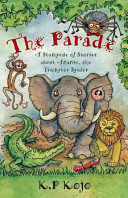 The week’s selection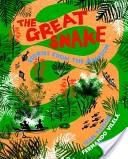
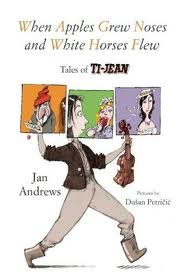 Each year the United States Board on Books for Young People (USBBY) selects and promotes a list of