

Notes from a Small Island: The Lie Tree
This is my last week blogging from a small and crowded island; the book I am discussing is called The Lie Tree, written by Frances Hardinge, who is a popular and well received author in the U.K. Like the other texts I have discussed, this one won an award, The Costa Book Award in 2015, and is in the fantasy genre. And like the other two novels, it is being marketed for young adults, although I question this designation. Though the protagonist is 14 years old, she is a chaste and sexless adolescent, and I subscribe to what Karen Coats has said about YA fiction: what makes it YA is the sex.
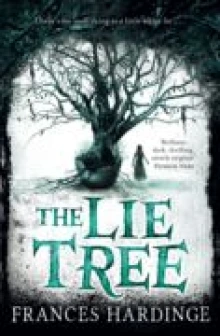
This novel is also a piece of historical fiction, set in the Victorian age in England and has the gothic trappings of what I normally associate with this time. It is dark and mysterious and not only are the characters unreliable but the setting is also a kind of nemesis. The Lie Tree seems to me to be a homage to novels by Daphne du Maurier as well as the texts Jane Eyre and The Woman in White, stories that pit plucky young women against the terror of the landscape and of discovering the truth.
And the truth is what the protagonist, Faith, must discover as she attempts to clear her family’s name and to solve the mystery of her father’s death. She does this by using a mystical "lie tree" that only tells you the truth if you lie to it and to those around you and lie well. The bigger the lie, the bigger the payoff and Faith is risking the very core of her belief system to find out a truth that is, perhaps, a truth that we as humans aren’t supposed to know.
Like girls of this era, Faith is supposed to be decorative and intellectually vapid, but she is plain and bright, a girl who deals with the mystery of the natural world instead of the intricacies of how to reel in a prosperous husband. With no one to help her, Faith relies on herself and realizes her potential.
Through Faith we glean interesting tidbits of what life was like in the Victorian age. And it was a strange time, with its morbid obsession with death and its strange ideas of what is healthy. Childhood is so different and is nicely illustrated throughout the narrative. This is especially ironic for a YA novel to have a temporal setting where there is no such thing as being a teenager. You are a child and then an adult and that’s that.
As I had mentioned in my first blog, the difference between U.S. and U.K. kidlit is realism versus fantasy and nature paying a minor role versus nature as another character. The sense of place is so intrinsic to the U.K. novels I have read and the idea of questioning the reliability of reality a given in these texts. There is also an assumption on the U.K. authors that their readers can make text-to-text connections and this intertexuality is part of the narrative -- the unwritten part. These qualities may indicate a different idea and what kidlit is supposed to teach children in the UK and another tacit theory of what younger readers can "handle" -- may be they are seen as more capable, perhaps, with dealing with multiple genres, referents, and the ambiguity of the "truth."
As my Brummie husband says, Tara a bit.
Journey through Worlds of Words during our open reading hours: Monday through Friday 9 a.m. to 5 p.m., Saturday 9 a.m. to 1 p.m. Check out our two online journals, WOW Review and WOW Stories, and keep up with WOW’s news and events.

But what is an example of an oxymoron in the book?
I loved reading this reflection — it makes The Lie Tree sound like a rich and atmospheric story, mixing mystery, fantasy, and historical detail in a way that really brings the Victorian setting to life. The focus on Faith’s curiosity and determination as she tries to uncover truth — even when it comes through lies — feels like such a clever twist, and it makes me want to read the book to see how it all unfolds.