

by Ann Parker, The University of Arizona, Tucson, AZ
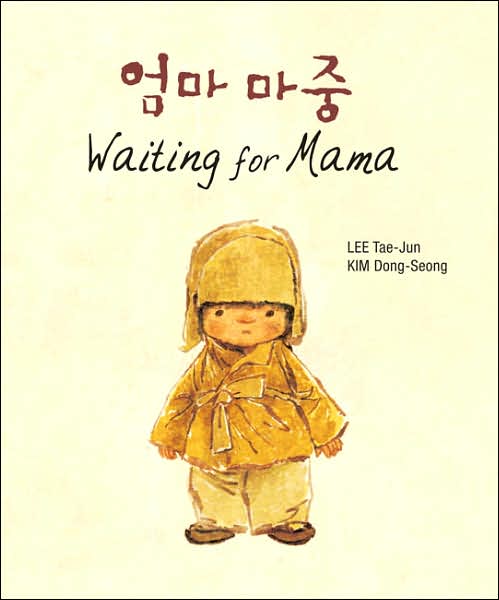 Last month, Janine Schall interviewed children’s book writer and illustrator Xavier Garza, who publishes his books in English and in Spanish because he thinks children should be exposed to their first language or to a language other than their own. More and more publishing companies, particularly smaller, independent publishers, are publishing dual language books. This week, I’d like to examine bilingual books and the role they can play in the classroom. Next week, I’ll focus on some of the outstanding bilingual books that are being published by independent publishers.
For my doctoral dissertation, I interviewed people from five publishing companies (Cinco Puntos Press, Luna Rising, Salina Bookshelf, Piñata Books, Children’s Book Press, and the University of New Mexico Press) to learn why they were publishing multicultural children’s books generally and bilingual books specifically. I found that most of them considered these books to be a niche market, because the big conglomerate publishing companies, whose interest is mainly in how many books they can sell, weren’t interested in books that had such a small buying audience from the outset. Interestingly enough, several national companies, such as Scholastic, have decided that there is a big enough market for Spanish language books (see Scholastic en Español), but the smaller companies also publish books in Native American and Asian languages as well as other languages from around the world.
Continue reading
 Milly Lee (2006) introduces readers to Sun Lee, a 12-year old Chinese boy, who immigrates to America in the book
 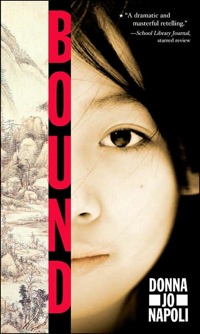 Last week I wrote about the challenge of evaluating fairy tales for cultural authenticity and the tools that help meet that challenge. In this post I explore the question: should there be zero tolerance for cultural inaccuracies in fairy tales? I’ll by describing the process of evaluating a novel-length version of Cinderella set in China.
 Evaluating fairy tales can be a challenge especially if the setting is another culture or country. Serving on the Children’s Literature Assembly for the National Council of Teachers of English
 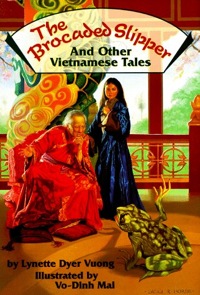 Fairy tales fueled my imaginary life as a child. In my play I became Snow White, Cinderella, and sometimes even the Prince when my friends insisted they must have a turn at the “main parts.” The romance of the tales captured my interest. Waiting for sleep at night, I would create new versions of the stories, always starring myself as the heroine.
 Because I like to travel, as I mentioned in my last post, geography has become of real interest to me. How can we engage international literature without thinking about geography?