By Judi Moreillon, Texas Woman’s University, Denton, TX
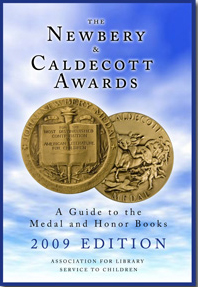 This is the fourth of a planned four-part interview with Nick Glass, member of the 2009 Newbery Committee, conducted electronically by Judi Moreillon.
JM: Nick Glass and I are wrapping up this month’s Newbery Medal Award conversation with a look at the books that have earned this prize since it was first awarded in 1922. That year, The Story of Mankind written by Hendrik Wellem van Loon earned the medal. To support our historical look, we referenced a book now published annually by the Association of Library Services to Children (ALSC), The Newbery and Caldecott Awards: A Guide to the Medal and Honor Books.
In clarifying the criteria for the awards and defining terms, ALSC notes that the “award is for literary quality and quality of presentation to children. The award is not for didactic intent or for popularity” (p. 4). As we noted in early posts this month, the question of popularity should not enter into the committee’s deliberations. Still, every school and public library branch in the country purchases at least one copy of each Newbery award-winning book.
Do we expect Newbery Award-winning books to be enticing to readers? If not, can we rely on teachers and librarians to push titles that possess literary quality but are less popular with young people? What has been your experience?
NG: I absolutely believe the books that have been recognized as distinguished by the Newbery committee will be enticing –- with the caveat that not every book is for every reader. I loved the 2008 Newbery Medal-winning Good Masters! Sweet Ladies! It is both a wonderful book, and perhaps the one of the best curriculum-fit books I’ve read in a long time. It tells marvelous stories of the Middle Ages, and can be performed as fun, comprehension-grasping reader’s theater. Do I expect everyone to pick this book up and find it enticing? No. But for the people who love mini-dramas, goodness, they will love this treasure.
Continue reading →

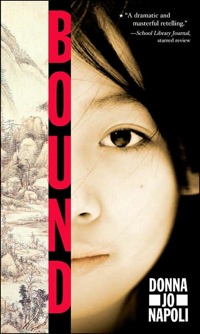 Last week I wrote about the challenge of evaluating fairy tales for cultural authenticity and the tools that help meet that challenge. In this post I explore the question: should there be zero tolerance for cultural inaccuracies in fairy tales? I’ll by describing the process of evaluating a novel-length version of Cinderella set in China.
 Evaluating fairy tales can be a challenge especially if the setting is another culture or country. Serving on the Children’s Literature Assembly for the National Council of Teachers of English
 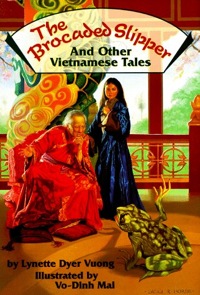 Fairy tales fueled my imaginary life as a child. In my play I became Snow White, Cinderella, and sometimes even the Prince when my friends insisted they must have a turn at the “main parts.” The romance of the tales captured my interest. Waiting for sleep at night, I would create new versions of the stories, always starring myself as the heroine.
 Because I like to travel, as I mentioned in my last post, geography has become of real interest to me. How can we engage international literature without thinking about geography?
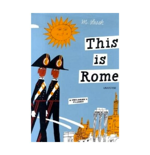 First, I like reading about where I have been. The reading is enriched when I can picture it. I pull the images from my memory to help envision the world to which the author has led me. Secondly, the reading enriches my experience of the places I have traveled. It’s also great to find books to read about a place—whether fiction or informational—when planning to travel in it. Some fun texts for cities across the globe are the Miroslav Sasek series such as This is London and This is Rome. These books were written in the 1960s and 1970s, but have “this is today” excerpts that help students see how cities change over time.
 If you ask me what I came to do in the world, I, an artist, will answer you: I came here to live out loud. — Emile Zola
 I am on a hunt. I am searching for the variety of ways international literature might be conceptualized by teacher educators, teachers, and teacher candidates. I am also interested in the ways in which they might address and differentiate between international and multicultural literature as well as how they perceive various other terms that might be used for literature that, well, transcends its native borders. I became interested in such a venture because it seemed as though as much as I discussed what I suggested was the difference between, say, “international” and “multicultural” literature, the terms and their nuances seldom transferred to my students. Was I not trying hard enough? Was I being too esoteric? Needless to say, I found the phenomenon intriguing, and so thought I would broach the topic via WOW Currents.