
By Kathy G. Short, University of Arizona, Tucson, AZ and Kathleen Crawford-McKinney, Wayne State University, Detroit, MI
Although we are constantly bombarded with images of the war in Ukraine, many people know little about this country, its culture, or its long history of conflict with Russia/Soviet Union. This set of books reflects a range of perspectives on Ukrainian culture and history, many authored and illustrated by Ukrainians or people with Ukrainian heritage. The stories involve significant historical events, such as Stalin’s mass starvation of Ukrainian people in 1932, the Nazi occupation in 1941-1943, the Chernobyl nuclear disaster in 1986, and the 2022 siege of Mariupol by Russian forces. Pairing these books with recent news articles connects this history to current events. The strength of Ukrainian people, especially the Jewish population, in the midst of suffering is thus a frequent theme, but the set does include several humorous folktales. Continue reading

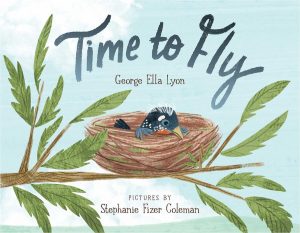 Whenever I see a new book by George Ella Lyon, I immediately take notice. Her most beloved form of writing is poetry where she provides us with eloquent lyrical verse in each of her books she delivers. I can hear her voice as I read through her books, much like the voice you hear that can be heard on YouTube videos or on her
 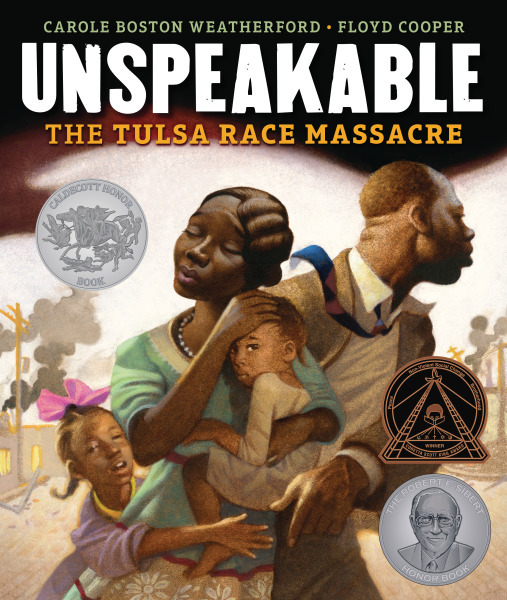 Unspeakable: The Tulsa Race Massacre chronicles the murderous hostility, humiliation and hope of this largely suppressed historical event in United States. The devastation occurred in 1921 when a white mob attacked the Black community in Tulsa, Oklahoma. This third person informational text narrates the incidents that occurred in one of the worst racially violent cases in U.S. Tulsa, during this time, was a prosperous segregated town, where descendants of “Black Indians, from formerly enslaved people, and from Exodusters” thrived in their Greenwood community, once known as Black Wallstreet. “Once upon a time” near Tulsa, is a phrase that is eloquently repeated to depict the prosperity that the people in the Greenwood community created. Then one day, the massacre stemmed from one elevator ride where a 17-year-old white elevator operator accused a 19-year old Black shoeshine man of “assault for simmering hatred to boil over.” This incident resulted in 300 Black people who died, and more than 8,000 left homeless, “…hundreds of businesses were reduced to ash.” It took over 75 years to launch an investigation, which uncovered that “police and city officials had plotted with the angry white mob to destroy the nation’s wealthiest Black community.”





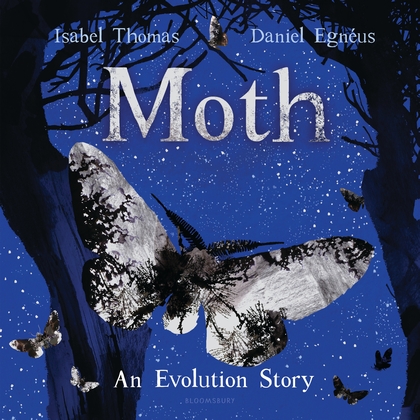 Moth: An Evolution Story by Isabel Thomas chronicles the “change and adaption, of survival and hope” of the peppered moth during the 19th century, a time of industrial environmental changes. Thomas’ exquisite language use leads readers to explore the cycle of life of these moths. The moths emerged from cocoons, “skittered and swooped… and looped the loop all night long” before laying eggs of their own. These moths were typically spotted in nature as white and peppered with specks of dark, but sometimes they were born “with wings as dark as charcoal.” The lighter speckled moths slept on lichen-covered trees and had better camouflage from prey. “The dark-colored moths made a feast for hungry chicks,” because they stood out on the white tree branches. Industrialization changed the environment so that the air was polluted and trees filled with soot, which altered the survival of the light-colored moths. They were no longer camouflaged from their prey. Now charcoal-colored moths survived in abundance. This might sound like an end to the white-colored moth, but Thomas provides hope in this chronicle. Many years later people decided to be more aware of the environment by cleaning the air and burning less pollutants. Over time “both colors of moths find places to hide and survive.”