
 Looking for Smoke is K.A. Cobell’s debut novel for young adults. A member of the Blackfeet nation, Cobell takes on the crisis of Missing and Murdered Indigenous Women (MMIW) that haunt the Indigenous nations within the western USA. As Geraldine, the grandmother of one of the missing/murdered notes, “If you want to get away with murder, do it on an Indian reservation” (p, 39). Told through the perspective of four teens, the novel focuses on the teen’s reactions to one missing girl and another murdered girl who they knew intimately as either a friend or relative. In connection to the story of the missing or murdered young women, the novel includes issues of identity, drug-usage, poverty, and family dynamics that are part of these young people’s lives. It also addresses the pride of community and tradition that allow for a well-rounded sense of people and place. Continue reading
Author: wowstudent

WOW Dozen: The Magic of Reading, Libraries and Stories
By Katie B. Loomis, Texas Woman’s University
Picturebooks help readers explore the power of stories—inspiring, comforting, educating and bringing people together. This WOW Dozen shares a common theme: a deep love for books, libraries and the magic of reading. Many of them highlight the role of libraries and librarians in fostering a love of reading; others focus on the personal and transformative experiences that books can offer individuals—whether it’s a child discovering the joy of storytelling, a librarian bringing hope to a war-torn town or a book itself traveling through many hands and lives. Continue reading
WOW Dozen: Making and Using Maps
By Janine M. Schall, University of Texas Rio Grande Valley
Where are we in the world? How do we get someplace new? How do we perceive the world—or how do we want the world to be perceived? How does one place or idea connect to another? These are all essential questions for how people experience and move through the world, and they can all be answered by maps.
A map is a symbolic depiction of interrelationships between places, things or ideas. While they often focus on spatial relationships and geographic elements, both real and imagined, maps can also be used to display associations between ideas or concepts. Maps are tools to help us navigate and understand the world but are shaped by the map-maker’s culture, beliefs, and knowledge. As such, they are statements about what matters and what does not. Continue reading

Come to the Tucson Festival of Books on March 15-16, 2025
By Kathy G. Short, University of Arizona, Tucson, AZ
 A festival is a great place to meet authors who have popular appeal, authors who are critically acclaimed, and new emerging authors in sessions that offer laughter and thoughtful discussions of critical issues. The Tucson Festival of Books has over 300 authors across multiple genres and 130,000 attendees. 65 of those authors are picturebook author/illustrators, middle grade authors, graphic novel creators, and young adult authors, who present over 100 sessions. Many of the sessions are in rooms that seat 40-50 people to allow for more intimate interactions with authors, instead of only large auditoriums where authors are at a distance. This WOW Currents highlights the sessions and some of the authors who are coming this March. Go to the festival website for a full list of authors and sessions for the entire festival. A list of the children/teen authors and illustrators can be found here. Continue reading
WOW Recommends: Grandma’s Roof Garden
 Set in contemporary Chengdu, the capital city of Sichuan province in southwest China, Grandma’s Roof Garden tells a heartfelt story of Granny’s love for gardening and sharing food with her family and neighbors, while also highlighting the theme of sustainability. Granny tends to a rooftop garden atop her apartment building, where she lovingly nurtures a variety of vegetables. She collects discarded produce from the market to feed baby chicks, hens and geese or to create compost for her garden. Granny is energetic and powerful: “Swift and agile like a cat, / and tough and sturdy as an ox.” She digs, waters, and weeds all day in her garden and even builds a wooden fence. During harvest times, Granny shares fresh vegetables with her neighbors and cooks delicious dishes for her family, making them healthy, strong, and happy. Continue reading
The Power of Graphic Novels to Foster Connections
By Julia López-Robertson, University of South Carolina, Melissa Summer Wells, University of Mary Washington & Jennifer D. Morrison, Sam Houston State University
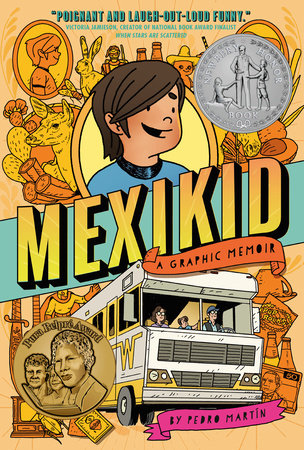 In our last blog we introduced you to graphic novels and provided a model for applying critical reading and critical literacy to When Stars Are Scattered (Jamieson & Mohamed, 2020). This blog focuses on the Pura Belpré Award winner, Mexikid (Martín, 2023). Mexikid is a memoir about a Mexican American boy named Pedro and his family’s journey to bring their abuelito from Mexico to live with them in the United States. Pedro is the seventh of nine children; the older five were born in Mexico, while Pedro and his three younger siblings were born in the U.S. and, according to the older siblings, are “not Mexican enough.” The family embarks on a 2,000-mile road trip to Mexico, encountering many adventures along the way. While the older siblings drive a pick-up truck, Pedro and his younger siblings travel with their parents in a used Winnebago. Throughout the journey, Pedro hears stories about his family—particularly his abuelo—and learns about his Mexican heritage and family history. In what follows we will discuss our purposes for engaging students with graphic novels and speak specifically about Mexikid. Continue reading
WOW Recommends: Born Naughty: My Childhood in China
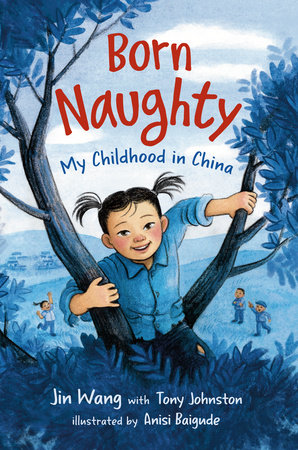 Born Naughty: My Childhood in China gives children an understanding of the culture and experiences of a child growing up in China in 1982. From the very first page, Jin’s story hooks the reader. “When I was young I lived with my family in a mud house so tiny we barely fit inside. Our house had just one room, filled mostly with the bed we all shared—my mother, Ma, Die (meaning “father”) my two younger brothers, and I.” When I read this aloud to a class of 3rd and 4th graders, they immediately had questions about how five people could sleep together on such a small bed in a tiny one-room house. The black and white illustrations by Anisi Baigude helped them imagine the scene. The illustrations are expressive and action packed, adding details that illuminate the story.
Each chapter in the book evoked more questions from the students especially the description of what water was available to drink. “Because we had so little of it, water was a big, big thing… To save it, my family drank hardly any. Ma set most aside for cooking and washing clothes. We took baths once, maybe twice a year and shared about three cups of water each day for washing hands. I let my hands get very dirty before I washed them. But—Ma’s big rule—always before we ate we had to wash our hands.” The children listening to this part of the story were incredulous — a bath once or twice a year? Continue reading
WOW Dozen: Encouraging Hope through the use of Children’s Poetry and Verse Novels
By Darryn Diuguid, McKendree University, Lebanon, IL, Willeena Booker, Hatboro-Horsham School District, Horsham, PA, Glenda Funk, Pocatello/Chubbuck, S.D. #25, Pocatello, ID, Joe Pizzo, Black River Middle School, Chester, NJ, Junko Sakoi, Tucson Unified School District, Tucson, AZ, April Halprin Wayland, UCLA Extension Writers’ Program, Los Angeles, CA & Jongsun Wee, Pacific University, Forest Grove, OR
Hope! It’s a universal theme we crave in times of uncertainty such as with national polarizing opinions, health crises and personal hardships. For children, they need to understand hope since they encounter instabilities such as having divorced parents, rough patches with siblings and unmet social-emotional needs. To foster hope in the school community, teachers can frame hope as a way for students to become better citizens through hard work while celebrating successes and learning from challenges. Teachers can also create a positive school culture by focusing on hope during difficult times such as staffing, funding and high-stakes testing. NCTE’s Poetry Awards Committee provides contemporary poems, anthologies, and verse novels that embrace hope. We ask that you celebrate hope with us as we share our favorites. Continue reading
The Power of Graphic Novels to Foster Critical Literacy and Critical Reading
By Julia López-Robertson, University of South Carolina, Melissa Summer Wells, University of Mary Washington & Jennifer D. Morrison, Sam Houston State University
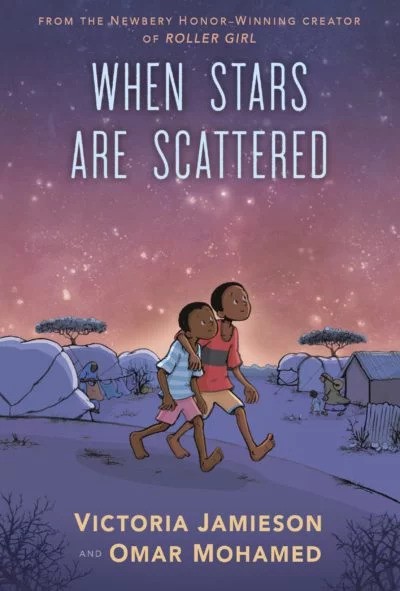 Graphic novels, often stigmatized as a genre, hold immense potential for transformative multimodal literacy instruction. Paris and Alim (2017) argue that equity and access are best achieved by centering the dynamic practices and identities of students and communities of color within a critical, inclusive vision of education. In our teaching and research, this means prioritizing multimodal texts to help preservice teachers explore diverse ways of knowing, doing, and being in the classroom.
Traditional reading and writing capture only a fraction of students’ literacy capabilities. Carefully selected multicultural, multilingual and multidisciplinary graphic novels offer powerful tools for critical reading and literacy. These texts provide unique access points that connect teaching and learning to the lived experiences of children and their communities. Continue reading
WOW Recommends: The Rock in My Throat
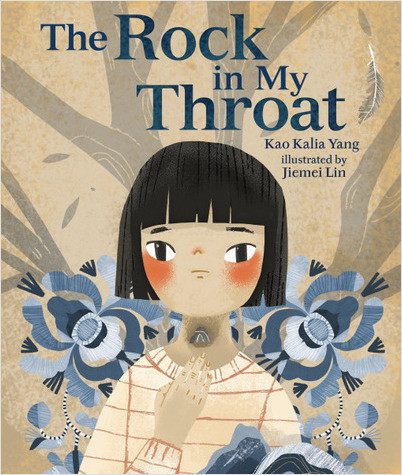 The Rock in My Throat by Kao Kalia Yang and illustrated by Jiemei Lin takes a stance of resistance with an ending that challenges the privileged status of English and the treatment of immigrants in the U.S. This autobiographical picturebook tells the story of Kalia’s childhood decision to be selectively mute in speaking English. Kalia and her family came to the U.S. as Hmong refugees, comfortable in speaking their beautiful native language in their home. When she witnesses a cashier’s demeaning treatment of her mother who struggles to communicate in English, a rock grows in her throat. Kalia stops speaking in school, causing concern and confusion among her teachers and classmates, and growing loneliness in the isolation she feels in this place where English dominates. At recess, she finds solace in the beauty of nature and a relief from the constant scrutiny and embarrassment she feels in the classroom. She is unable to explain to her teachers or parents why she has stopped speaking, and the book ends with Kalia still not speaking in school, but with the hope of a connection to a classmate who invites her to play. Continue reading