By Marilyn Carpenter, Eastern Washington University, Cheney, WA
“Just as the child is born with a literal hole in its head, where the bones slowly close underneath the fragile shield of skin, so the child is born with a figurative hole in its heart. Slowly this, too, is filled up. What slips in before it anneals shapes the man or woman into which that child will grow. Story is one of the most serious intruders into the heart” (Touch Magic by Jane Yolen, p.26).
Fairy tales can be “serious intruders into the heart,” however, children need adults to lead them to tales that have that potential. Children too often only experience the Disney versions of fairy tales. As I was growing up Disney movies popularized and sugar coated the fairy tales but did so in a way that took away the essential nature of the story and turned, for example, Snow White into a passive character singing, “Someday my Prince will Come.” Disney robbed the tales of what Yolen calls their “invigorating magic.” “The story has been falsified and the true meaning lost …” (p. 39).
In this WOW Currents post continuing on the subject of fairy tales, I will explore the following questions regarding fairy tales:
- Why are fairy tales valuable for today’s children?
- How can we as classroom teachers justify sharing folktales when we are mandated with scripted or time-based curriculum and have the pressures of testing?
- How can we answer objections to reading fairy tales in the classroom?
Continue reading →


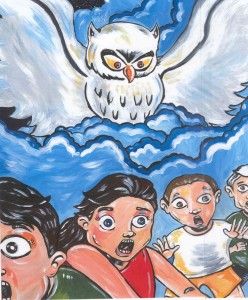
 This is the first of a four part interview with Xavier Garza, author of several children’s books, including Lucha Libre: The Man in the Silver Mask, 2005 América’s Award Honor Book. Xavier was born and raised in Rio Grande City, a small town on the Texas/Mexico border. His work draws upon the cultural and linguistic influences of life in the Rio Grande Valley. Xavier now lives in San Antonio with his wife and son. This interview was conducted electronically.
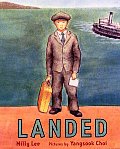 Milly Lee (2006) introduces readers to Sun Lee, a 12-year old Chinese boy, who immigrates to America in the book
 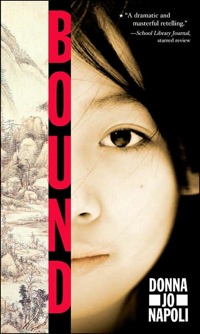 Last week I wrote about the challenge of evaluating fairy tales for cultural authenticity and the tools that help meet that challenge. In this post I explore the question: should there be zero tolerance for cultural inaccuracies in fairy tales? I’ll by describing the process of evaluating a novel-length version of Cinderella set in China.
 Evaluating fairy tales can be a challenge especially if the setting is another culture or country. Serving on the Children’s Literature Assembly for the National Council of Teachers of English
 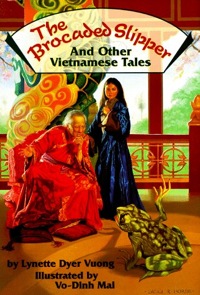 Fairy tales fueled my imaginary life as a child. In my play I became Snow White, Cinderella, and sometimes even the Prince when my friends insisted they must have a turn at the “main parts.” The romance of the tales captured my interest. Waiting for sleep at night, I would create new versions of the stories, always starring myself as the heroine.