

By Janelle Mathis, University of North Texas
We continue last week’s introduction on sharing children’s literature by focusing on picture books. The notion of a picture book for many is that of “cute” books for young readers. However, images and text in picture books nurture creative and critical thinking. Each new class of preservice teachers I instruct proves this idea and so do many educators already in classrooms. While chapter books approach social issues in their own right, the significance of images in today’s communicative contexts creates a place for illustrators to tell their stories through a variety of modes and mediums. With this in mind, we consider immigration through global perspectives in recent picture books.




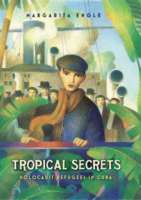 Those who are familiar with the vast range of contemporary novels published today are aware of the diversity of topics, characters, and events that make these books significant and appealing to readers. However, as with the realm of picture books, many readers, adolescents and young adults, are not aware of the powerful contents of these books, and educators working with this population are often even less informed, or their perception is that YA literature is a bridge to the more difficult pieces traditional literature.
 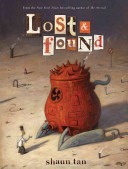 Picture books have been defined over the past few decades with great integrity and attention to the complex interaction that occurs for the reader through the visual aspects of such books—text, illustrations, total design; a commercial product; a social, cultural, historical document (Bader, 1976). Still, when secondary teachers are approached about using picture books in the classroom, many somewhat shun the idea or act surprised that anyone could think this a valid curricular resource for older students. A small number attest to the fact that picture books hold significant experiences for older readers and these teachers can share numerous reasons why picture books play an important role in their instruction.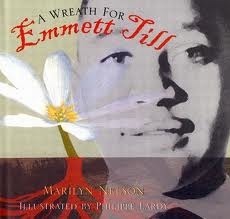
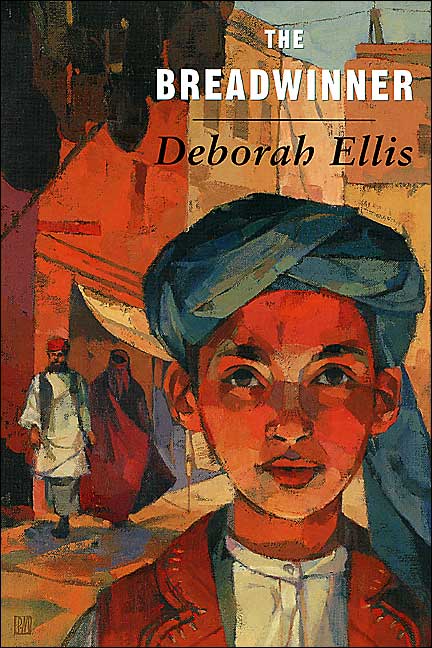 The realization that other young citizens of the global community have messages of empowerment, or agency, to share with children of the western world is perhaps one of the most important roles of international literature. The literature, in which the main characters reveal agency through identity, voice, decision-making, and taking action according to their learned perceptions of a situation, is one way to accomplish that exchange of ideas. That was one of the outcomes for individuals who attended the IBBY Congress last month as active participants in IBBY’s role of building bridges across global cultures.