Decorative WOW Currents Banner

Hurricane Dancers: The Power of the Read Aloud

By Prof. Carmen M. Martínez-Roldán & Elizabeth Morphis, Teachers College, New York.
In this week’s blog, Elizabeth Morphis, a university student taking my Latino literature course, conducted a read aloud of the book Hurricane Dancers by Margarita Engle with six fifth grade students at a New York City public school. Here she shares some highlights of her experience. We hope that other teachers or readers will feel inspired to offer their thoughts regarding the use of historical fiction and of verse to reflect on the complexities of historical events.
Continue reading
Decorative WOW Currents Banner

The Internet: Connecting a Non-Fiction Reader to Fiction

Monique Storie, University of Guam, Latte Heights, GU

DC's Ancient Rome Book, the book connecting a non-fiction reader to fiction.


“Why would I want to read fiction when there are so many fascinating things on this earth to learn about?!”


We are avid readers in my house but we run the gamut in our reading preferences. My husband and I prefer fiction (I gravitate towards realistic fiction while Brett prefers modern fantasy and alternate history) but our son is a true non-fiction aficionado. As a preschooler, Ethan loved when his teacher read current events to him and would even remind her to read the newspaper in the morning when she forgot. As he grew, Ethan found facts, events, and tidbits about our lives more interesting than stories. My father, a non-fiction aficionado himself, summed up Ethan’s fascination with non-fiction by saying “Why would I want to read fiction when there are so many fascinating things on this earth to learn about?!”
Continue reading

Decorative WOW Currents Banner

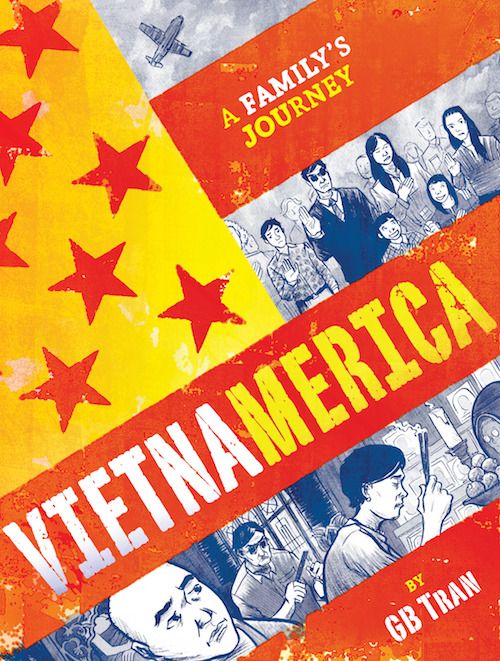
Student Connections to Vietnamerica: A Family’s Journey

by Julia López-Robertson, Lisa Stockdale & Amber Hartman, The University of South Carolina

A man without history is a tree without root.
Confucius
. . . students are often disinterested in their own culture because their parents have worked so hard to help them blend into the Western world and environment.

Book sleeve of Vietnamerica: A Family's Journey by GB TranWe close our blog this month with another graphic novel, Vietnamerica, and leave you with a few questions regarding students’ language and culture and its place in the classroom. The main character, G.B.,  is a Vietnamese American who learns about his family’s past in Vietnam and America through family stories and also by visiting his home country of Vietnam. G.B.’s parents fled Vietnam during the war in Saigon to keep the family safe and to find new life in America. Although G.B.’s family struggled to adapt to their new life in America, they wanted what was best for their children so they didn’t go back right away. G.B. grows up in the United States and it is obvious throughout Vietnamerica that he has definitely assimilated to the American culture and become extremely “Americanized.” When his parents ask him to visit Vietnam with them years later, G.B. wants nothing to do with it. He questions why they still care about Vietnam when they left it so many years ago. Eventually, G.B. comes to the conclusion that his family’s past is important, and he tries his hardest to grasp what he can before the history goes away.
Continue reading

Decorative WOW Currents Banner

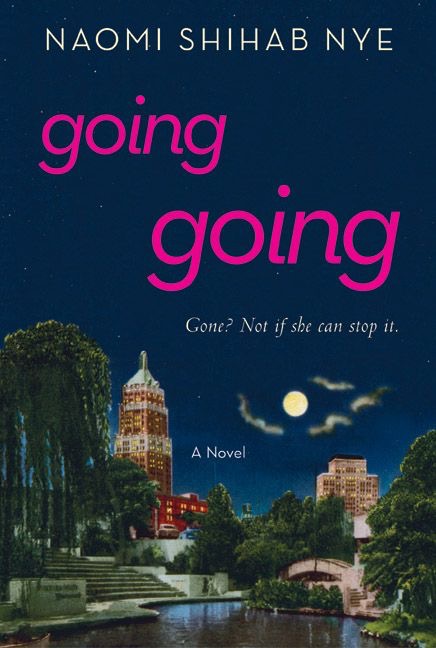
Student Connections to Going, Going by Naomi Shihab Nye

by Julia López-Robertson, Amanda Dunnigan, and Rebecca Martin, The University of South Carolina

. . . it has to begin with acceptance and by honoring people’s cultural practices; way of life, language and belief systems— even if one doesn’t fully understand it.”

Book jacket of Going, Going by Naomi Shihab NyeSet in San Antonio, Texas, Going, Going by Naomi Shihab Nye follows the main character, Florrie, a teenager as she begins a grassroots campaign to protest the loss of local business to large corporations. Having worked in her mother’s restaurant as long as she could remember, Florrie understood the importance of supporting local businesses. My students connected Florrie’s struggle to maintain the local in San Antonio to maintaining our own students’ language and culture. Continue reading

Decorative WOW Currents Banner

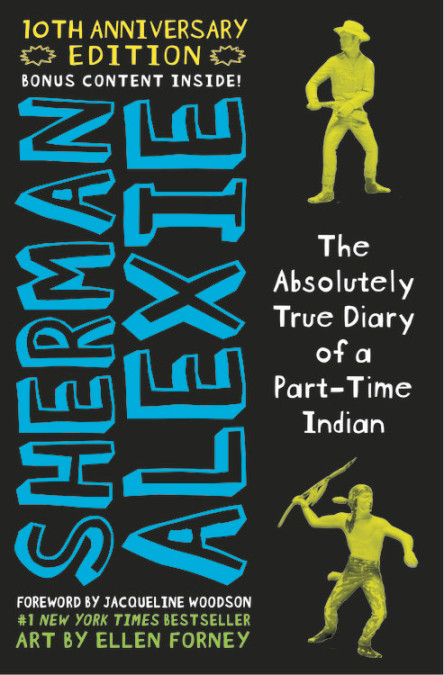
The Absolutely True Diary of a Part-Time Indian: Students Facing Injustice

by Julia López-Robertson, Deanna Futrell, Jennifer Judy and EDRD 797, The University of South Carolina
The Absolute True Diary of a Part-Time Indian Continue reading

Decorative WOW Currents Banner

Graphic Novels and the English Language Learner: American Born Chinese

by Julia López-Robertson, Jennifer Judy, Lisa Stockdale with Kirstin Wade, The University of South Carolina

Cover from American Born ChineseYang stresses the importance of being who you truly are and nothing less. As teachers it is our duty to create a classroom environment in which our students can feel free and comfortable being themselves.
Student Response to American Born Chinese

This month my students and I explore the use of young adult novels with English Language Learners; several of the blogs will provide suggestions for classroom use which will include a discussion of the assessment of English Language Learners in mainstream classrooms. We begin our blog with an exploration of American Born Chinese (Yang, 2006).
Continue reading

Decorative WOW Currents Banner

English/Spanish Codeswitching in Children’s Literature

by Janine Schall, University of Texas-Pan American, Edinburg, TX

I Love Saturdays y domingos

I spend los domingos with Abuelito y Abuelita.

Abuelito y Abuelita are my mother’s parents.

They are always happy to see me.

I say: –¡Hola, Abuelito! ¡Hola, Abuelita!—as I get out of the car.

And they say: –¡Hola, hijita! ¿Cómo estás? ¡Hola, mi corazón!

I Love Saturdays y domingos
Alma Flor Ada

“I love to see that my language is valued and that my ELL students are offered booksthat they can connect to.” – Gracia

Continue reading