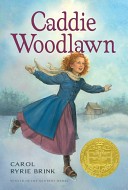
Caddie Woodlawn

Caddie Woodlawn is a real adventurer. She’d rather hunt than sew and plow than bake and tries to beat her brother’s dares every chance she gets. Caddie is friends with Indians, who scare most of the neighbors — neighbors who, like her mother and sisters, don’t understand her at all.

Caddie is brave, and her story is special because it’s based on the life and memories of Carol Ryrie Brink’s grandmother, the real Caddie Woodlawn. Her spirit and sense of fun have made this book a classic that readers have taken to their hearts for more than seventy years.
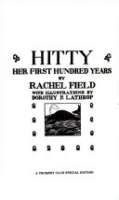
Hitty: Her First Hundred Years

Hitty is a doll of great charm and character. It is indeed a privilege to publish her memoirs, which, besides being full of the most thrilling adventures on land and sea, also reveal her delightful personality. One glance at her portrait will show that she is no ordinary doll. Hitty, or Mehitable as she was really named, was made in the early 1800s for Phoebe Preble, a little girl from Maine. Young Phoebe was very proud of her beautiful doll and took her everywhere, even on a long sailing trip in a whaler. This is the story of Hitty’s years with Phoebe, and the many that follow in the life of a well-loved doll.

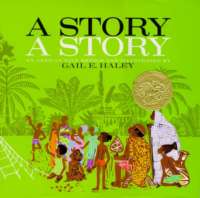
A Story, A Story (Story A Story Lib)

Many African stories, whether or not they are about Kwaku Ananse the “spider man,” are called, “Spider Stories.” This book is about how that came to be. The African storyteller begins: “We do not really mean, we do not really mean that what we are about to say is true. A Story, a story; let it come, let it go.” And it tells that long, long ago there were no stories on earth for children to hear. All stories belonged to Nyame, the Sky God. Ananse, the Spider man, wanted to buy some of these stories, so he spun a web up to the sky and went up to bargain with the Sky God. The price the Sky God asked was Osebo, the leopard of-the-terrible-teeth, Mmboro the hornet who-stings-like-fire, and Mmoatia the fairy whom-men-never-see. How Ananse paid the price is told in a graceful and clever text, with forceful, lovely woodcut illustrations.

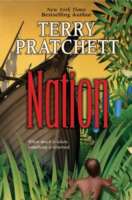
Nation

After a devastating tsunami destroys all that they have ever known, Mau, an island boy, and Daphne, an aristocratic English girl, together with a small band of refugees, set about rebuilding their community and all the things that are important in their lives.

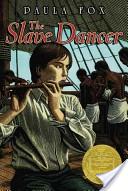
The Slave Dancer

“Take up the pipe, Claudius,” a voice growled near Jessie’s bound head. “He’s worth nothing without his pipe!” Snatched from the docks of New Orleans, thirteen-year-old Jessie is thrown aboard a slave ship where he must play his fife so that captured slaves will “dance,” to keep their muscles strong and their bodies profitable for their owners’ use. Jessie is sickened as he witnesses the horrible practices of the slave trade. But even those horrors can’t compare to the one final event awaiting Jessie’s witness. Can the cruelty to his fellow human beings be stopped? And will it be too late when it finally does stop? In a stunning performance by Peter MacNicol, Paula Fox’s enduring classic comes magnificently alive, with the seating truth about a period of American history we would otherwise most likely wish to forget.

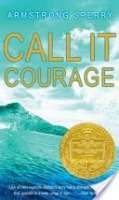
Call It Courage

Mafatu has been afraid of the sea for as long as he can remember. Though his father is the Great Chief of Hikueru – an island whose seafaring people worship courage – Mafatu feels like an outsider. All his life he has been teased, taunted, and even blamed for storms on the sea.

Then at age fifteen, no longer willing to put up with the ridicule and jibes, Mafatu decides to take his fate into his own hands. With his dog, Uri, as his companion, Mafatu paddles out to sea, ready to face his fears. What he learns on his lonesome adventure will change him forever and make him a hero in the eyes of his people.

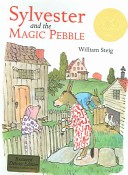
Sylvester and the Magic Pebble

One rainy day, Sylvester finds a magic pebble that can make wishes come true. But when a lion frightens him on his way home, Sylvester makes a wish that brings unexpected results. How Sylvester is eventually reunited with his loving family and restored to his own donkey self makes a story that is beautifully tender and perfectly joyful.

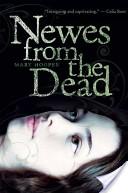
Newes from the Dead

Class and gender inequalities of 17th-century England and the state of medicine at the time are explored through the real and gripping story of Anne Greene, an innocent young woman who was hanged and presumed dead, but awakens on the dissection table. Alternate chapters are narrated by Anne and Robert, an Oxford medical student.

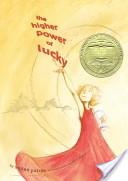
The Higher Power of Lucky

Lucky, age ten, can’t wait another day. The meanness gland in her heart and the crevices full of questions in her brain make running away from Hard Pan, California (population 43), the rock-bottom only choice she has.

It’s all Brigitte’s fault — for wanting to go back to France. Guardians are supposed to stay put and look after girls in their care! Instead Lucky is sure that she’ll be abandoned to some orphanage in Los Angeles where her beloved dog, HMS Beagle, won’t be allowed. She’ll have to lose her friends Miles, who lives on cookies, and Lincoln, future U.S. president (maybe) and member of the International Guild of Knot Tyers. Just as bad, she’ll have to give up eavesdropping on twelve-step anonymous programs where the interesting talk is all about Higher Powers. Lucky needs her own — and quick.

But she hadn’t planned on a dust storm.

Or needing to lug the world’s heaviest survival-kit backpack into the desert.

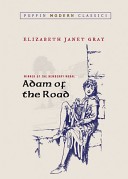
Adam Of The Road (Puffin Modern Classics)

Eleven-year-old Adam loved to travel throughout thirteenth century England with his father, a wandering minstrel, and his dog, Nick. But when Nick is stolen and his father disappears, Adam suddenly finds himself alone. He searches the same roads he traveled with his father, meeting various people along the way.