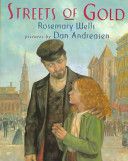
Based on a memoir written in the early twentieth century, tells the story of a young girl and her life in Russia, her travels to America, and her subsequent life in the United States.

Materials from United States of America
Based on a memoir written in the early twentieth century, tells the story of a young girl and her life in Russia, her travels to America, and her subsequent life in the United States.
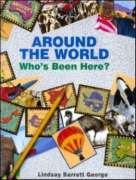
Follow Miss Lewis as she circumnavigates the globe aboard the ship Explorer and reports her experiences in photographs, sketches, and letters sent back to her students at home.
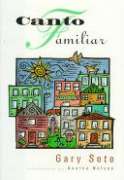
Twenty-five poems about the pleasures and woes that Mexican American children experience growing up. Simple poems, many involving Mexican Americans, celebrate experiences at school, home, and in the street. A companion to Neighborhood Odes, (1992). Touching, vibrant, and humorous, this lively collection of poems accompanied by beautiful illustrations celebrates childhood and the Mexican American experience. Invoking ordinary domestic and community incidents, it’ a fine introduction not only to poetry but to Chicano culture. Nelson debuts with scenes–homey, comfortable, bright–that make the book even more accessible.
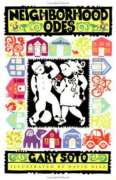
Twenty-one poems about growing up in an Hispanic neighborhood, highlighting the delights in such everyday items as sprinklers, the park, the library, and pomegranates.
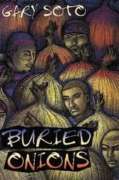
When nineteen-year-old Eddie drops out of college, he struggles to find a place for himself as a Mexican American living in a violence-infested neighborhood of Fresno, California.
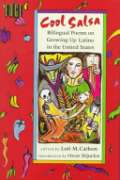
Growing up Latino in America means speaking two languages, living two lives, learning the rules of two cultures. Cool Salsa celebrates the tones, rhythms, sounds, and experiences of that double life. Here are poems about families and parties, insults and sad memories, hot dogs and mangos, the sweet syllables of Spanish and the snag-toothed traps of English. Here is the glory, and pain, of being Latino American.Latino Americans hail from Cuba and California, Mexico and Michigan, Nicaragua and New York, and editor Lori M. Carlson has made sure to capture all of those accents. With poets such as Sandra Cisneros, Martiacute;n Espada, Gary Soto, and Ed Vega, and a very personal introduction by Oscar Hijuelos, this collection encompasses the voices of Latino America. By selecting poems about the experiences of teenagers, Carlson has given a focus to that rich diversity; by presenting the poems both in their original language and in translation, she has made them available to us all.As you move from memories of red wagons, to dreams of orange trees, to fights with street gangs, you feel Cool Salsa’s musical and emotional cross rhythms. Here is a world of exciting poetry for you, y tuacute; tambieacute;n.
 It’s almost Cinco de Mayo, and Ricky’s class is going to put on a play to celebrate the festive Mexican holiday. When asked to choose his costume, Ricky picks a big, bushy mustache, just like his dad’s. He’s tired of everyone telling him he looks like his mother. After all, he’s a boy–he wants to look like his Papi. Although he’s supposed to leave it in school, Ricky wears the mustache home, reveling all the way in how grown-up it makes him feel. But by the time he gets there, the mustache is gone, and Ricky dreads having to tell his teacher what happened.
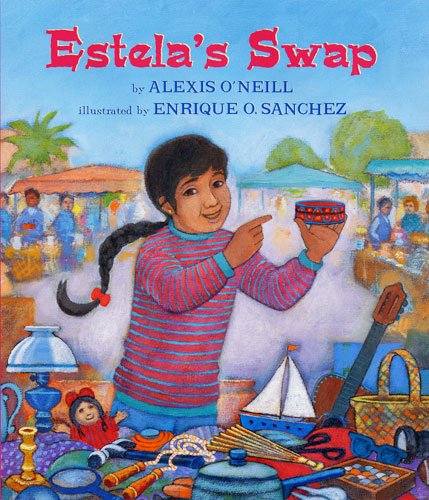 A young Mexican American girl accompanies her father to a swap meet, where she hopes to sell her music box for money for dancing lessons.
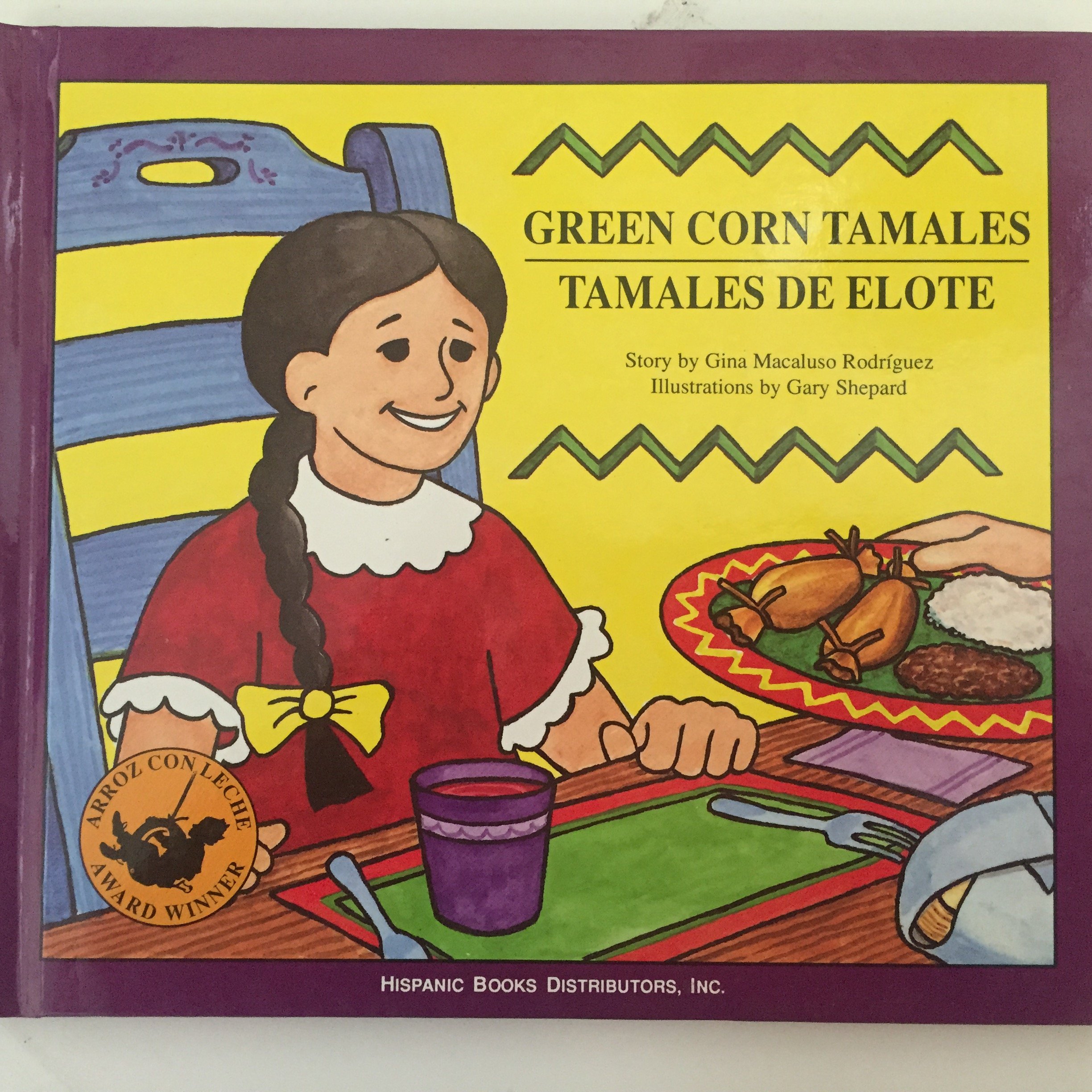 GREEN CORN TAMLAES – TAMALES DE ELOTE narrates the experience of one small girl growing up in an Hispanic-American family which gathers every year at grandmother’s ranch to make wonderful green corn tamales
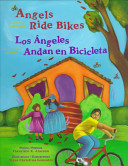
A bilingual collection of poems by a renowned Mexican-American poet revisits and celebrates his childhood memories of fall in the city and growing up in Los Angeles. By the creators of Laughing Tomatoes and Other Spring Poems. 10,000 first printing.