
This book provides an overview of Japanese culture and food, including descriptions of staples, information about food production, and recipes.

Materials from Asia
This book provides an overview of Japanese culture and food, including descriptions of staples, information about food production, and recipes.
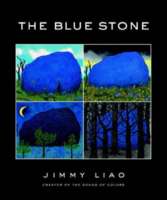
A large, beautiful blue stone is discovered in a forest. It is cut in half, and one half stays in the forest while the other starts on a long and mystical journey through many places, many owners, and many transformations. It begins as a statue of an elephant, admired by museum goers, and then becomes a carved bird residing in an elderly woman’s garden. It becomes a moon, a cat, a necklace, and more. Throughout it all, the stone longs to return home, and finally it crumbles to dust and flies with the wind back to rest with its other half in the forest.
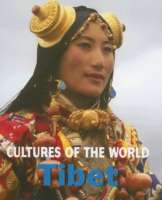
This book examines the lives and times of the Tibetan people, their cultural complexities, the country’s astonishing geography, and its economic and political status.
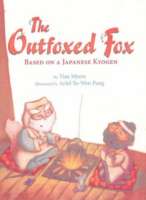
A proud old fox scorns a youngster’s simple plan for stopping the hunter who has grown skillful at killing foxes, but when he sets out to handle the problem himself, he runs into trouble.
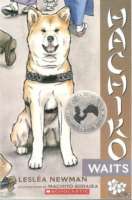
Hachi, an Akita pup, reveres his master and likes nothing more than accompanying Japanese professor Eizaburo Ueno to his morning train and then meeting him in the afternoon. One day the professor dies while at work, yet the faithful Hachi awaits his return at the station every day until his own death some 10 years later. Newman’s fictionalized account of this true story adds a young boy, Yasuo, who befriends the dog and the professor and later cares for Hachi during his steadfast vigil at the Shibuya train station in Japan.
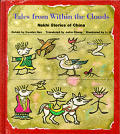
South of the clouds, in the land of the Jade Dragon Snow Mountain, dwell the descendants of a once pastoral people, the Nakhi. In ancient times, family names were passed from mother to child, there were no marriages, and women alone raised children. In the Nakhi language, there is no word for “father.” Today there are still Nakhi who follow these traditions, and Nakhi folktales reflect these beliefs. In the legends presented here we are introduced to a fantastic cast of characters: plants, insects, animals – all of them female! (Nakhi people, Naxi language)
This book introduces customs in India by following a young girl through her day at home and at school. All information is presented as seen through the eyes of six-year-old Geeta.
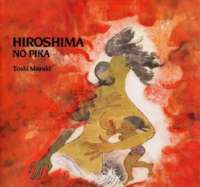
August 6, 1945, 8:15 a.m. Hiroshima. JapanA little girl and her parents are eating breakfast,and then it happened.HIROSHIMA NO PIKA.This book is dedicated to the fervent hope the Flash will never happen again,anywhere.
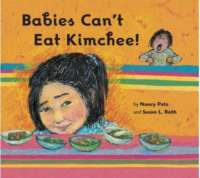
When a baby sister comes along, it seems she is just too little for anything! Will she ever be big enough to play? To whisper secrets? To eat kimchee? Will she always lie there? Scream for no reason? Be so helpless and little? When a baby sister is just too little to do anything, what’s her big sister to do but wait and wait and WAIT . . . and dream about what’s to come.
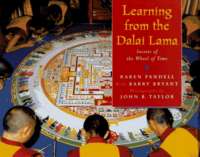
For children, here is a simple and creative introduction to the Buddhist way of life and to the teachings of the Dalai Lama, the spiritual leader of Tibetan Buddhism. Text and photos explain the beautiful and intricate Kalachakra ceremony and initiation, and the meaning of the sand mandala and its symbols. Features a foreword by Richard Gere. Full color.