By Angeline P. Hoffman, White Mountain Apache
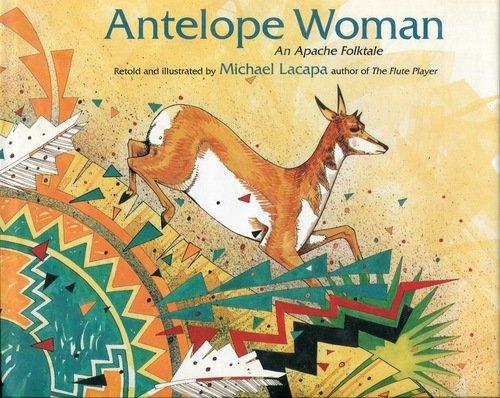
One of the themes from my studies, animals, derives from Native American children’s books featuring animals and the encountered stories about ethical or moral behaviors contained within them. Many Indigenous American cultures honor and revere animals. The people know that animals came into existence before man and animals have long been prevalent on Mother Earth. When men came, Animals communicated with humans and they still do. Therefore, they are respected; animals are considered Spirit helpers. Each animal has qualities that are special and powerful and shared with human beings if the animal is respected.

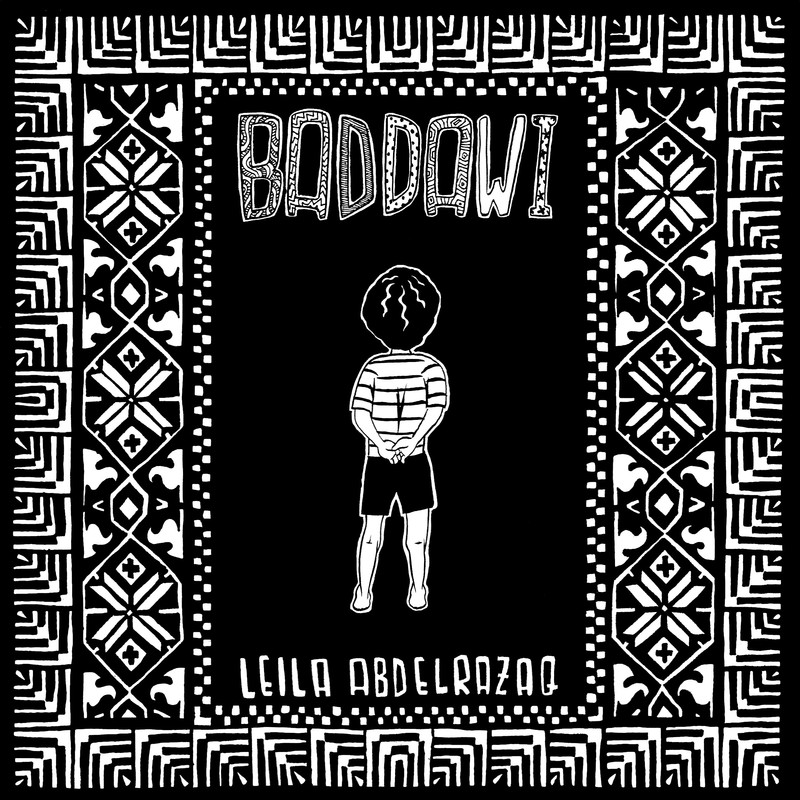 Baddawi by
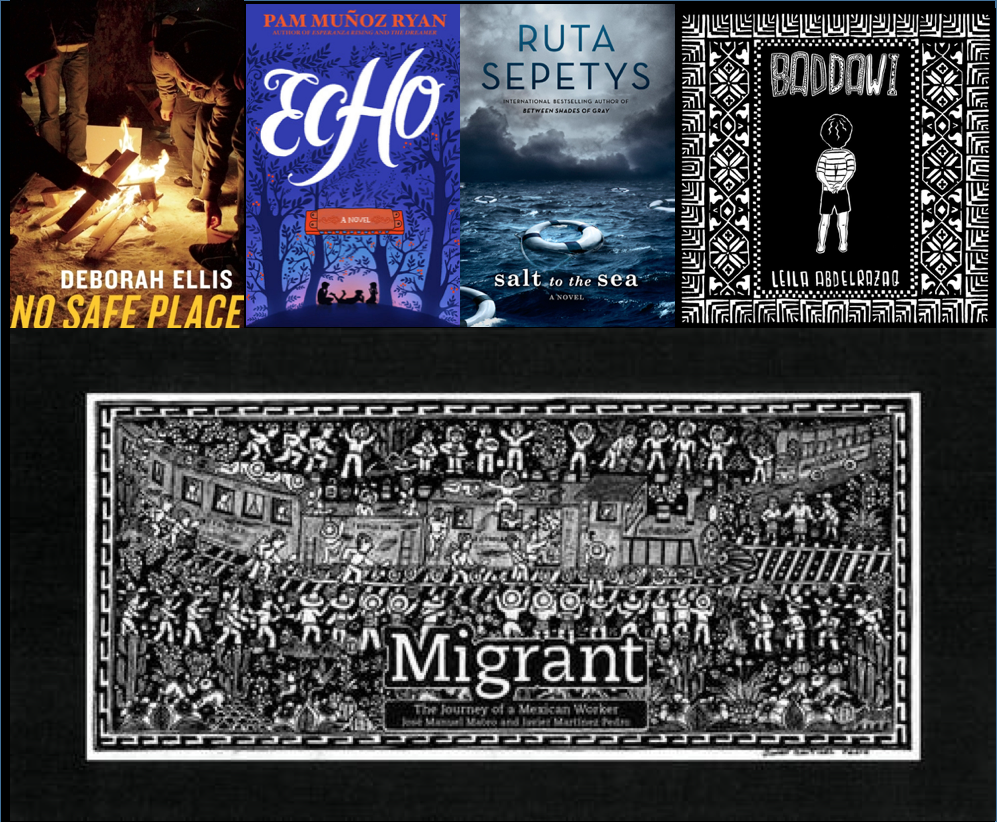
 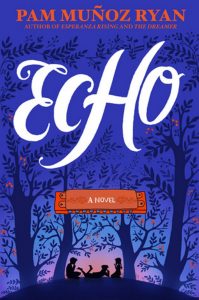 Echo by Pam Muñoz Ryan is a poignant story about the journey of a magical mouth harp (harmonica) through time and space. The masterful enmeshing of timeless fairytale and historical reality binds this powerful text into a strong narrative that highlights world events, prejudice, and social class distinctions. It all begins with Otto, who gets lost in a jungle where three sisters, bound by a witch’s curse, find him. Otto promises to break the curse by taking the harmonica out to the world. The harmonica, through its magical music, tangibly joins three children separated by place, which lifts the curse, freeing the three sisters.
  The well-executed plot of No Safe Place by Deborah Ellis follows the journey to freedom of three undocumented immigrant children. While the children struggle to reach the shores of England, a British orphan, released from the bonds of an oppressive uncle, joins them. These children, Abdul from Baghdad, Cheslav from Russia, Jonah from England, and the only female, Rosalia, a Romani, develop throughout the story. Ellis depicts a rich cultural background of the countries with distinct circumstances for each character. This story begins in France and culminates in England, providing a fine description of the traumatic lives many immigrants lead in France.