
 One day in a small California barrio, a scary-looking stranger with an ugly scar on his face arrives. Silence falls on the streets. Normally raucous children stop playing, and their fearful mothers quickly beckon them inside. Everyone peeks out of windows and doors to watch the stranger walk down Main Street. Later in the week, the stranger again appears in town. And a few days later, on a pleasant Sunday morning, the man shows his frightening face yet again. But this time, he’s not alone. Cradled in the stranger’s arms is a big, red rooster with a yellow ribbon tied around its neck. When the rooster sets off after a bug with the stranger hanging on to the ribbon “like a cowboy who had lassoed a wild bull,” the townspeople are finally able to look past the long, ugly scar on the stranger’s face. Echoing the oral tradition common to so many Latinos, acclaimed author Victor Villaseñor shares with young readers one of his father’s favorite stories. With vibrant illustrations by José Jara, this will soon become the favorite of many children aged 3 to 7.
Primary (ages 6-9)
Material appropriate for primary age groups
Skippyjon Jones in the Dog-House
Skippyjon Jones is a Siamese cat who wants to be a Chihuahua dog, despite his mother’s efforts to make him think “Siamese.”
Snapshots from the Wedding
Maya attends a family wedding and captures it all on film, from her cousin getting rice in his eye to the cake that tasted as delicious as it looked, in a beautifully illustrated tale of a special family day.
Sunflowers / Girasoles
After helping her grandfather plant squash, onions, carrots, cabbage, and other vegetables that her mother uses in soups and salsas, seven-year-old Marisol plants sunflower seeds in her neighbors’ yards, and weeks later, everyone gets to enjoy the fruits of Marisol’s labor.
”My name is Marisol. I’m seven years old. This spring, I helped my grandfather make a garden.” First, Marisol and her grandfather had to prepare the ground. They pulled out the old plants and weeds. They mixed up all the dirt ”to make it soft.” Then it was time to plant the seeds. They planted seeds to grow the vegetables Mama uses in soup squash, onions, carrots, and cabbage. They planted seeds to grow the things she needs to make salsa garlic, tomatoes, cilantro, and chili peppers. They planted mint for Abuela’s tea. They planted watermelon seeds for Marisol and her brother. And for Grandad, they planted sunflower seeds because their ”big black eyes with long yellow eyelashes” make him happy. And he likes to eat the seeds! One day, Marisol’s grandfather gives her a small bag of sunflower seeds, but instead of eating them she plants them here and there one in the corner of Mrs. Sosa’s yard, another in Mr. Binh’s yard. In fact, as she walks to school, she plants seeds in the corners of all the yards she passes. And she plants the last three seeds in the playground at school. As the days pass, sometimes it’s rainy and sometimes it’s sunny. Finally, one bright day, Marisol’s sunflower surprise shines a bit of happiness all around. The tender relationship between grandparent and grandchild is illuminated in this children’s book by author Gwendolyn Zepeda with warm illustrations by Alisha Gambino. Children ages 3-7 will sow and reap ideas of their own about ways to share a little joy, just as Marisol does with sunflowers.
Papa and Me
When I’m with my papá, I can fly like an eagle, an águila.
I can climb alto, high, in a tree,
And I am the ganador, the winner, of many races.
When I am with my papá, I hear the best cuentos, stories,
and I give him the biggest abrazos, hugs.
A young boy and his papa may speak both Spanish and English, but the most important language they speak is the language of love. Here, Arthur Dorros portrays the close bond between father and son, with lush paintings by Rudy Gutierrez.
What Can You Do With a Rebozo?
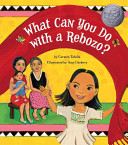
A cradle for baby, a superhero’s cape, a warm blanket on a cool night–there are so many things you can do with a rebozo. Through the eyes of a young girl, readers are introduced to the traditional shawl found in many Mexican and Mexican-American households. Lively rhymes and illustrations as brightly colored as the woven cloths themselves celebrate a warm cultural icon that, with a little imagination, can be used in many different ways.
See the review at WOW Review, Volume 3, Issue 2
A Crazy Mixed-Up Spanglish Day
 Part of the Get Ready for Gabi Series. In Northern California, Maritza Gabriela Morales Mercado struggles to deal with the third grade.
Julian Rodriguez Episode One
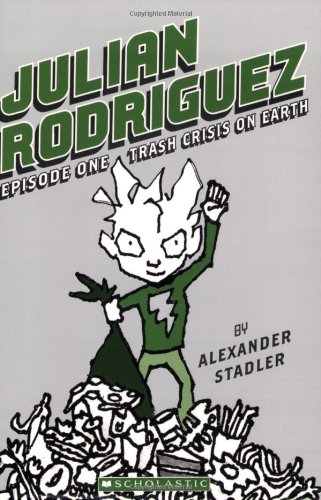 Julian Rodriguez is on a mission for the Mothership. He’s been sent to Earth to study human lifeforms and their bizarre habits–from their disgusting diet (orange sticks named carrots, flavorless liquid called water, and the revolting substance known as vegi-dogs) to their repressive treatment of their young (forcing them to carry out menial tasks known as chores, withholding access to the great cultural masterpieces called cartoons). When Julian’s Maternal Unit assigns a hideous task, it’s nearly too much for the hardened space veteran to bear–but he finds his courage at last. * “First in what readers will hope will be a robust series, this hybrid of fiction and graphic novel dusts off a favorite conceit with a slick swipe of edgy visuals and tart commentary….It’s impossible to read this without laughing.” — Publishers Weekly (starred review)
The Empanadas That Abuela Made/Las Empanadas Que Hacia La Abuela
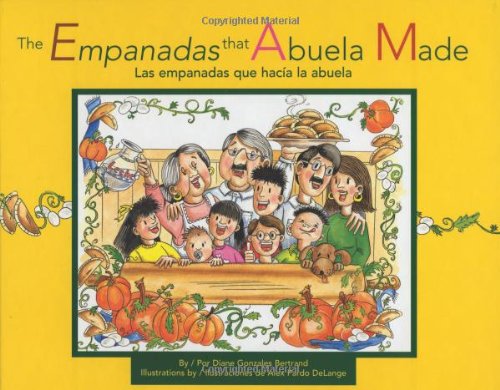 A sweet bilingual story about a family tradition. Baking is always a treat, particularly when you throw family and fun into the mix. In this whimsical look at the making of empanadas, popular children’s author Gonzales Bertrand serves up the festive fun of a family’s effort to concoct the delicious pastries. In the tradition of popular rhymes like “The Old Lady Who Swallowed a Fly,” the laughter and fun rise from page to page. The Empanadas that Abuela Made/Las empanadas que Abuela hacía is filled with humorous cooks and family: Abuela, Abuelo, the cousins, aunts, uncles, and even the family dog join the parade of fluttering flour and swirling sugar. Alex Pardo de Lange fills the pages with offbeat illustrations of blankets of dough and dancing rolling pins.
Migrant Worker: A Boy from the Rio Grande Valley
 Describes the way of life of Mexican American families and their children who work as migrant agricultural laborers in Texas.