In this retelling of a Jewish folktale, Rachel and Jacob must work together to solve the trickiest riddles of all.
Folklore and Fairy Tales
Next Year In Jerusalem
Jewish stories set in Jerusalem, adapted from the Talmud and Midrash, Hasidic sources, and oral tradition, with origins in the Middle East, Eastern Europe, Spain, Italy, and Greece.
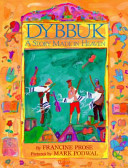
Dybbuk
Because forty days before a baby is born the angels in heaven decide whom it will marry, nothing prevents the wedding of Leah and Chonon from taking place.
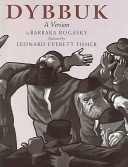
Dybbuk: A Version
In this retelling of a Jewish legend, a girl is possessed by the spirit of the man she was destined to, but did not, marry. Sender, the richest man in town, only wants the best for his daughter, Leah. Her husband-to-be must be extremely wealthy. But when Leah and Konin, an orphaned scholar, fall in love, Sender recalls a pact he made long ago with his best friend: If one man had a daughter and the other a son the two would be married. Though Konin is the son of his beloved friend, Sender cannot bear to permit the poor scholar to wed Leah. Konin dies of a broken heart once he hears Leah has been promised to another. Konin has his revenge, though, on Leah’s wedding day when he inhabits her body and refuses to leave.
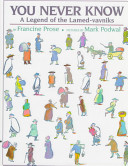
You Never Know
Though mocked by the rest of the villagers, poor Schmuel the shoemaker turns out to be a very special person.
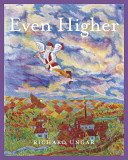
Even Higher
Young Reuven has a problem. Every year, on the day before Rosh Hashanah, the beloved rabbi of the village of Nemirov disappears until nightfall and no one knows where he goes. The villagers suspect that he ascends to heaven to beg forgiveness for their sins, but Reuven’s friends want the truth. They appoint him to solve the mystery — after all, he is the smallest and fastest of the group — but how? That evening, when Reuven watches the rabbi through the synagogue window, he gets an idea. Determined to follow him at daybreak, Reuven is baffled as the rabbi, disguised as a simple woodcutter, passes the synagogue, the cheder, and Beryl the Baker’s house — his usual stops — only to enter the great forest. Where could the rabbi of Nemirov possibly be going? Adapted from a beloved story by I.L. Peretz, Richard Ungar once again captures the joyous spirit of the Jewish folktale with lighthearted humor and a rich palette of colors as vibrant as the story he tells.
Kibitzers and Fools
Thirteen brief, illustrated, traditional Jewish tales, each accompanied by an appropriate saying.
Golem
A retelling of the Jewish legend of the golem created by the Rabbi to defend the Jews of Prague
Something For Nothing
Dog lived in the noisiest part of Bialystok. All day long he heard the hubbub of the nearby marketplace, and all night long he heard the banging and clanging of workmen unloading their goods. When he could take the racket no more, Dog set off for the country to find a quieter place to live. On his first night in his new home, a gang of howling and yowling, hissing and screeching cats terrorize him, destroying his newfound peace and quiet. Inspired by a Jewish folk tale, how Dog outwits the rascally cats makes for a humorous, satisfying story, exuberantly illustrated with stunning jewel-toned paintings reminiscent of Marc Chagall’s. Afterword.
Aesop Accolades (Awards)
It Could Always Be Worse: A Yiddish Folk Tale
Once upon a time a poor unfortunate man lived with his mother, his wife, and his six children in a one-room hut. Because they were so crowded, the children often fought and the man and his wife argued. When the poor man was unable to stand it any longer, he ran to the Rabbi for help. As he follows the Rabbi’s unlikely advice, the poor man’s life goes from bad to worse, with increasingly uproarious results. In his little hut, silly calamity follows foolish catastrophe, all memorably depicted in full-color illustrations that are both funnier and lovelier than any this distinguished artist has done in the past.