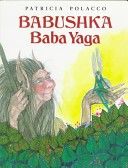
The villagers are afraid of her, so the legendary Baba Yaga disguises herself as an old woman in order to know the joys of being a grandmother.

The villagers are afraid of her, so the legendary Baba Yaga disguises herself as an old woman in order to know the joys of being a grandmother.
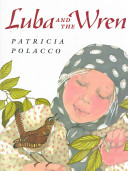
In this variation on the story of “The Fisherman and His Wife,” a young Ukrainian girl must repeatedly return to the wren she has rescued to relay her parents’ increasingly greedy demands.
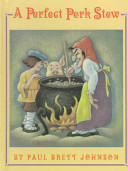
When Ivan the Fool meets Baba Yaga, the witch of Russian folklore fame, on a day that has begun badly for her, he outwits her by making dirt soup, getting a fine, fat pig in the bargain.
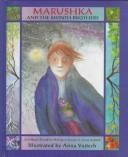
A retelling of the Slavic folktale in which the Month Brothers’ magic helps Marushka fulfill seemingly impossible tasks which prove the undoing of her greedy stepmother and stepsister.
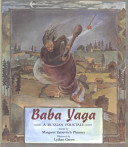
When she is sent by her father’s cruel housemaid to the fearsome Baba Yaga, a clever young girl uses kindness to make her escape.
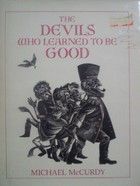
After feeding two starving beggars, an old Russian soldier receives a magical flour sack and deck of playing cards which help him to remove some pesky devils from the Tsar’s palace.
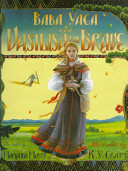
A retelling of the old Russian fairy tale in which beautiful Vasilisa uses the help of her doll to escape from the clutches of the witch Baba Yaga, who in turn sets in motion the events which lead to the once ill-treated girl’s marrying the tzar.
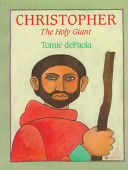
As Reprobus carries a child across a river one stormy night, the boy gets heavier and heavier until Reprobus feels he is carrying the world on his shoulders–thus goes the legend of the name Christ-bearer, or Christopher.
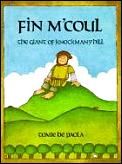
Fin M’Coul’s wife, Oonagh, helps him outwit his arch rival, Cucullin.
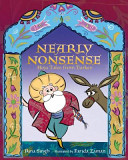
Nasrudin Hoja was a mullah (teacher) in Turkey. He was a busy man – he worked in a vineyard, gave sermons at the mosque, and was sometimes even a judge. He did all of this with a nagging wife, a constant stream of uninvited visitors, and many animals. Although Hoja’s life wasn’t easy, his heart was always light and his observations about life held a witty twist. For instance, when his donkey got lost, his neighbors offered sympathy, but Hoja found the bright side: “Imagine if I were riding the donkey at the time. I’d be lost too!”Though the ten Hoja stories presented by Rina Singh and richly illustrated by Farida Zaman are funny, each one contains such insight into human nature that Sufi teachers use them to illustrate their teachings. Traditional Turkish Hoja stories are much-loved throughout Asia, and Nearly Nonsense brings them to a North American readership sure to enjoy them and, through laughter, to learn from them.