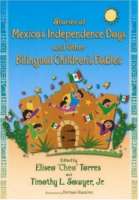
This collection of six bilingual children’s stories takes a regional and historical emphases. “Sixteen” provides the background of September 16, Mexico’s day of independence from Spain. “The Little General” teaches children about Cinco de Mayo through a young boy who helps save his village from the French army. The remaining four stories are fables that impart important moral themes to young readers. In “Sweetie, the Lion that Thought He Was a Sheep,” children learn to respect different backgrounds and abilities. “A Parrot for Christmas” demonstrates the friendship children can share with animals and “Orlando, the Circus Bear” emphasizes the importance of compassion toward animals. “A Horse Called ‘Miracle’” teaches the value of helping others in need. Each story is followed with discussion questions to help children recall the story’s key details and suggestions for classroom activities designed to stimulate curiosity and expand knowledge of historical events.
Mexico
Materials from Mexico
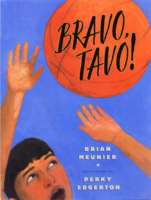
Bravo, Tavo!
Tavo, named for his father Gustavo, plays basketball so much that his sneakers are worn out. His father is too worried about the drought afflicting their small village to focus on replacing them. Gustavo thinks he can solve the water shortage, but the other villagers say he’s crazy. Tavo puts aside basketball to help prove his father right. In return, something miraculous happens to his sneakers, and he’s the hero of the next game. Did the magic come from his shoes, or was it in his heart all along? Brian Meunier’s outstanding storytelling makes this a captivating read-aloud, while Perky Edgerton’s extraordinary paintings make it a visual treat.
Mexico the Land (Lands, Peoples, and Cultures)
This book looks at the land of Mexico, including its history, regions, natural resources, wildlife, environmental problems, and transportation systems.
Spirit of the Maya: A Boy Explores His People’s Mysterious Past
Kin, a 12-year-old Lacando boy living in a Mexican town, is descended from the ancient Maya. Wearing contemporary clothing yet sporting the style of long hair traditional to his people, he is clearly rooted in both the past and the present. After his grandfather shows him a book about Pacal, a Maya who became king in 615 A.D. when he was 12, Kin eagerly accompanies his father to the site of Pacal’s tomb. The boy “feels a twinge of sadness” watching his father sell his handmade replicas of Maya hunting arrows to tourists “at the gates of the great city that his ancestors once ruled.” Kin explores the Maya ruins and locates Pacal’s tomb, but afterwards he feels lonely and distant from his ancestors. Then, on the ride home, he has an improbably sudden change of attitude when he spies a statue of the king. All at once Kin realizes that he and Pacal are “brothers” and, for the first time in his life, Kin “knows how it feels to be a king.”
Gods and Goddesses of the Ancient Maya
Gives the history of the principal gods and goddesses of the ancient Mayans, including Hunab Ku, Itzamna, Ix Tab, and Ah Puch.
Cinco de Mayo: Celebrating the Traditions of Mexico
Every Cinco de Mayo, Rosa and her family cheer at a parade and enjoy delicious Mexican food. But what exactly is Cinco de Mayo? Although many people think May fifth marks Mexico’s independence, the holiday is actually the anniversary of a decisive battle against foreign occupiers. Today, Cinco de Mayo is celebrated by many. Follow Rosa, a vivacious Mexican-American girl from California, as she learns about he heritage and celebrates the holiday with her family, friends, and community.
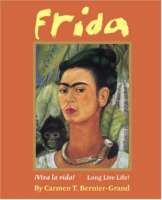
Frida: Viva La Vida! Long Live Life!
Frida Kahlo, a native of Mexico, is described here in biographical poems accompanied by her own artwork. Both text and images reveal the anguish and joy of her two marriges to muralist Diego Rivera, her life-long suffering from a crippling bus accident, and her thrist for life, even as she tasted death. Carmen T. Bernier-Grand’s powerful poems and Frida Kahlo’s extraordinary painting capture the intensity and passion that make Frida stand out as an important twentieth century painter.
See the review at WOW Review, Volume 5, Issue 3
Mexico
Introduces Mexican culture using crafts, recipes, games, and folktales.
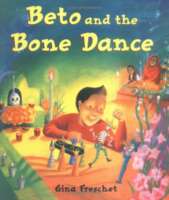
Beto and the Bone Dance
A fantastic encounter on the Day of the Dead. Today is Beto’s favorite holiday — the Day of the Dead. First, he and his father craft an altar at home in honor of Beto’s recently departed grandmother, filled with the things she loved in life. Later, it’s off to the cemetery, where at midnight all the dead souls will come to visit the living. It’s a celebratory occasion, but Beto is distraught because he isn’t able to find a perfect gift for Abuela’s altar. The answer to his dilemma is found in a wild dream, in which Beto joins a conga line of dance-mad skeletons. Through her effulgent paintings and rhythmic text, the author conveys all the excitement of this unique Mexican fiesta, as well as a comforting message for children who have lost a loved one.
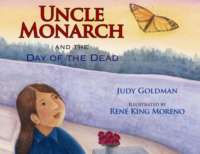
Uncle Monarch and the Day of the Dead
When the monarch butterflies return to the Mexican countryside where Lupita lives, she knows that it means that Dia de los Muertos, the Day of the Dead, is near. She and her favorite uncle watch the butterflies as they flutter in the trees. When a butterfly lands on Lupita’s hand, her uncle reminds her that she should never capture or hurt a monarch because they are believed to be the souls of the departed.