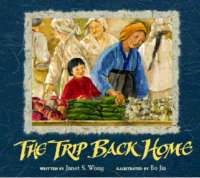
These are the gifts brought across the ocean to Korea: Leather gloves. An apron with pockets like flowers. A book with pictures and simple words. What is given in return? Simple gifts like these–and so much more.

Materials from Korea
These are the gifts brought across the ocean to Korea: Leather gloves. An apron with pockets like flowers. A book with pictures and simple words. What is given in return? Simple gifts like these–and so much more.
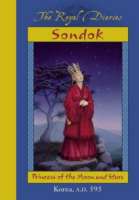
During the seventh-century, the land which is now Korea was fraught with political and religious intrigue. The country was split into Three Kingdoms, each fighting for supremacy: Silla, Koguryo, and Paekche. Besides the warring kingdoms, there are three religions in conflict: Shamanism, the ancient female-dominated faith wherein Shamanist priestesses wield great power at court, foretelling the future, performing important national rituals, and healing sickness; Buddhism, the contemplative State religion; and Confucianism, a recent import from powerful China. Written as a first-person diary, a young princess expresses her frustrations at not being able to study astronomy because she is a girl.
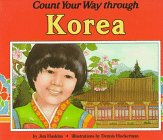
With the Korean numbers one through ten, Jim Haskins introduces young readers to diverse aspects of Korean culture. Describing such things as one ancient building and eight food seasonings, Haskins’s clear text works together with vivid full-color illustrations by Dennis Hockerman to help children explore Korean life.
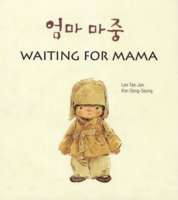
This tender story was first published in a newspaper in 1938. This tale from Korea is universal–a small child waits for Mama at the station, asking the conductor if he has seen her. The conductor hasn’t, but cautions the child to wait a little farther from the tracks. It is cold and snowy but the child waits patiently until finally Mama comes.
It is an English-Korean bilingual picture book. The Korean edition book is also available.
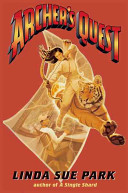
Twelve-year-old Kevin Kim helps Chu-mong, a legendary king of ancient Korea, return to his own time.
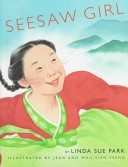
Jade Blossom can never go beyond her family’s Inner court. Every girl from a good family in seventeenth-century Korea must stay at home and learn to sew and work in the kitchen to prepare her for her future life in her husband’s Inner Court. Jade has other interests. She longs to take trips to the mountains and the marketplace. Jade won’t stop thinking about the world beyond the high walls of her home.
Jennifer, a Korean American, is worried that her grandmother, visiting from Korea, will embarrass her on her school’s Grandparents’ Day, but the event brings her understanding and acceptance.
In 1945, 10-year-old Sookan’s homeland of North Korea is occupied by the Japanese. Sookan watches her people–forced to renounce their native ways–become increasingly angry and humiliated. When war’s end brings only a new type of domination–from the Russian communists.
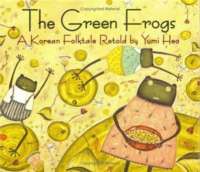
A folktale about two green frogs who always disobey their mother, explaining why green frogs cry out whenever it rains.
Recalls the events in a North Vietnamese village that forever changed the lives of the youngest daughter of a prosperous trader and her family.