

By Seemi Aziz, The University of Arizona, Tucson, AZ and Janelle B. Mathis, University of North Texas, Denton, TX
This third week continues a focus on displacement but as it is found in picturebooks. In particular, this week uses a historical context in emphasizing the sociohistorical nature of this issue.
This story is about José de la Luz Sáenz (Luz) who believed in fighting for what was right. Luz’s life was permanently displaced due to his heritage. Even though he was born in the United States, Luz faced prejudice because of his Mexican heritage. Resolute in helping his people, even in the face of discrimination, he taught English to children and adults… children during the day and adults in the evenings. As World War I broke out, Luz joined the army. He had the ability to learn languages and that ability made him an invaluable member of the Intelligence Office especially during war. Luz discovered that prejudice does not end even if you serve your country during war. Even though he was asked by superiors for his translating abilities he didn’t receive credit for his contributions. After returning to his Texas home, he joined with other Mexican American veterans to create the League of United Latin American Citizens (LULAC), which presently is the largest and oldest Latinx civil rights organization and continued to teach English to his people so that language does not become a barrier and they should not be discriminated against. The author uses his typical illustration style and Luz’s diary entries to tell the story of a Mexican American war hero and his fight against prejudice and for equality for his fellow
Latinx.


 By Seemi Aziz, The University of Arizona, Tucson, AZ and Janelle B. Mathis, University of North Texas, Denton, TX

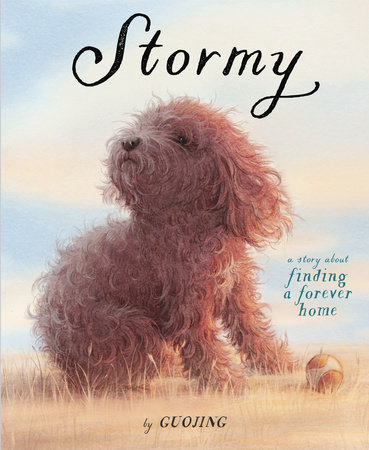 Stormy, by Chinese author/illustrator Guojing, captures attention from a first look at its cover: a small, curly-haired dog and his ball created in soft hues with pencil and watercolor. The assumption can easily be that this is another lovely dog story, potentially appealing to both young and old. However, opening this book reveals a visual narrative whose art goes beyond just “another dog story.”


 By Marilyn Carpenter, Eastern Washington University, Spokane, WA, and Holly Johnson, University of Cincinnati, Cincinnati, OH

 Many readers are looking for virtual escape as movement is restricted due to the spread of COVID-19. Schools nation-wide are closed, but they will soon open either on line or face-to-face and teachers will be keen to help young people make sense of current events. The
  Frank Li is, in many ways, like any boy at his high school. He has a best friend and a great desire to have a girlfriend. His best friend is Black, which produces discomfort with his traditional Korean parents, and Frank’s new girlfriend is also non-Korean. Frank, fearful of becoming a pariah like his older sister, hides his relationship from his parents, but soon hatches a plan to work with Joy, one of the “Limbos” who also has traditional Korean parents and a boyfriend who is non-Korean. Joy and Frank “date” one another, which frees them to meet with their respective love interests. This arrangement has its drawbacks. As Frank negotiates his identity as both Korean and American, and all the issues that come with being a savvy teen living in a home that falls back on old prejudices and biases of race and ethnicity, Frank’s story is imbued with humor, profound insights and adolescent sensibility that produces an enjoyable and realistic experience that both delights and challenges readers. -Recommended by Holly Johnson, University of Cincinnati