by Yoo Kyung Sung, University of New Mexico, Albuquerque and Junko Sakoi, Tucson Unified School District, Tucson
Queen Elizabeth II, the UK’s longest-serving monarch, recently passed away at age 96, after reigning for 70 years. Fourteen countries continue to maintain the monarch as their head of state after gaining independence, despite the collapse of the British Empire in the last century. The death of Queen Elizabeth II could readily accelerate the push by former U.K. colonies to ditch the British crown amid heightened anti-colonial sentiments in the remaining Commonwealth realms (Halb, 2022).
Former UK colonies’ anti-colonial sentiment made us think of colonial histories and facts that are not current hot topics discussed within the global community. Global knowledge of physical outcomes of colonization history is now often romanticized as the beautiful substance of architects, food, festivals, tourism, etc. European countries’ colonial histories in Africa and South America remain aesthetically appreciated based on the historical background of languages, hybrid cultures, diverse ethnicities and educational contexts. Lost are critical perspectives on the colonizers’ past and the colonial indigenous cultures. This leads Junko and I to realize how colonial history among Asian countries is often simplified as Asian history; not knowing who colonized whom in Asia is often a common misperception.
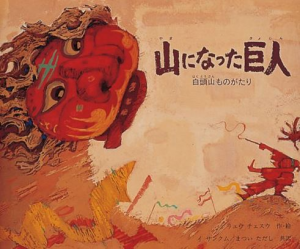 This month, Junko and I explore Korean picturebooks translated and published in Japan to analyze colonization patterns in Korea. In 1910, Korea was annexed by the Empire of Japan after years of war, intimidation and political machinations; Japan ruled Korea until 1945, the end of World War II. Until then, Korea was one of Japan’s colonies. During the Korean War that followed, South Korea established strong ties to the U.K. Continue reading →



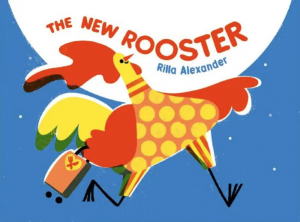 The New Rooster by Rilla Alexander is a universal and fanciful story about the challenges of communicating when many different languages are spoken. The story starts on the title page when Rooster, clutching his roller bag, parachutes from a plane. He has come a long way for his new job in a new country. We notice on the front endpapers that he has been hired to give the wake-up call at the ZZZ Hotel. But when he crows just as he had back home, no one is aroused. Even when he yells at the top of his lungs no one gets up. Repeated efforts until 3 p.m. fail to get anyone out of bed and the rooster figures he is out of a job. He realizes that he will need a good breakfast if he must make the long journey home. When the delicious smells of his cooking finally arouses the hotel guests they share a breakfast and chat. “They didn’t understand every word they heard, but they tried their best.” The ending will leave smiles on listener’s faces as this book makes a terrific read aloud. Don’t miss the punch line on the back endpapers — “Did you know the Rooster speaks pig latin?”

 “Rompe nuestra burbuja” were the words that Mariposa (self-selected pseudonym), an eight-grade Chilean student, used when giving her opinion about the benefits of reading stories that explore how people from different cultures live. She revealed, “Porque uno aprende nuevas cosas y rompe nuestra burbuja, nos muestra diferentes realidades de la vida diaria [because we learn new things, and it pops our bubbles. It shows us different realities from daily life].”
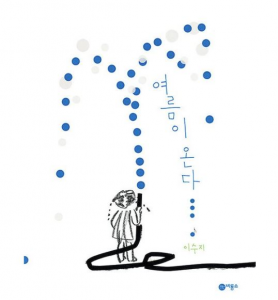 In recent years, increasing numbers of translated and non-translated Korean children’s literature are available to Japanese readers. Yes, Japanese readers read and consume Hangul (written Korean) directly beyond literature experiences (e.g., language learning). We’ve found several major Japanese publishing companies, JBBY (Japanese Board on Books for Young People), bookstores, and public and school libraries feature books by Korean authors and illustrators through social media and physical spaces. Three beloved Korean authors who also illustrate their work influenced Korean picturebooks’ reputations in Japan positively beyond what Japanese audiences are familiar with over the years (i.e., postcolonial texts). In this post, we share three Korean authors, Heena Baek, Suzy Lee and Heeyoung Ko who are among those gaining great popularity in Japan.
 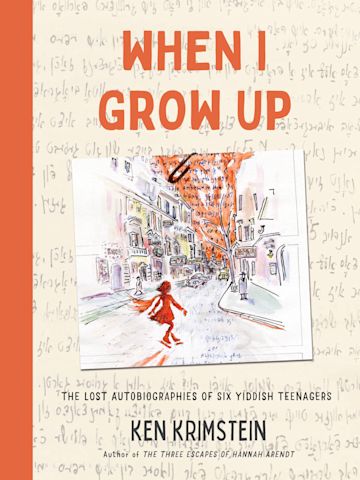 When I Grow Up: The Lost Autobiographies of Six Yiddish Teenagers by Ken Krimstein is a collection of “lost autobiographies” that breaks with many norms readers might expect from autobiographical works. And I predict YA literature readers will be fascinated by the power of these young people’s words and experiences and the “author’s” visual interpretation of their memoirs.