
The recent release of Disney’s Little Mermaid theatrical trailer made a big splash, and we are here for it! In fact, let’s capitalize on that interest to explore a more global lens on mermaids. In case no one noticed, WOW Dozen recently published a list on Black mermaids and sirens in children’s literature by Desirée Cueto and Dorea Kleker. How about we search the WOW Center shelves to see if we can find additional global mermaid books that may also be of interest to young people inspired by Halle Bailey’s portrayal of Ariel? Continue reading
WOW Dozen: Responsibility to Others
By Kathleen Crawford-McKinney, Wayne State University, Detroit, MI
I have been thinking more intently on what it means to be responsible to others. What do we, citizens of the world, have the right to do, or be? Over the past several months we watched people being incarcerated for minor infractions or their cities and lands taken away from them. I wonder who has this type of right to act in these ways to others. Who is responsible for ensuring that these missteps don’t occur in places where people think differently than within our own communities? What would we do, or what should we do if our rights are stepped upon? Who is responsible for taking care of others?
Students in classrooms know their rights and question them within their families and school settings. I hope that they will also push themselves to be responsible to and with each other. To move beyond being kind to each other and to think more broadly about the world. In several of the previous months the themes of the Dozen has encouraged us to think more deeply about the current political world. This month continues with this focus by examining books where the characters look at being responsible to families, to communities, to our environment and to our world. Continue reading
WOW Recommends: Time to Fly
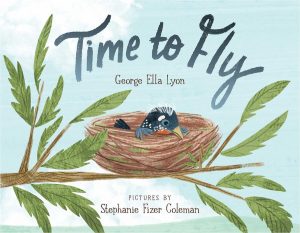 Whenever I see a new book by George Ella Lyon, I immediately take notice. Her most beloved form of writing is poetry where she provides us with eloquent lyrical verse in each of her books she delivers. I can hear her voice as I read through her books, much like the voice you hear that can be heard on YouTube videos or on her website page where you can find her reading her books and poems. In this new book, Time to Fly, I can vividly hear Lyon’s voice as she narrates a mother bird urging her last baby bird to leave the nest and learn to fly on her own. Authors who write stories where you can hear them are the types of books that I gravitate to because of their ability to be a storyteller and relay the characters’ voices brilliantly. Continue reading

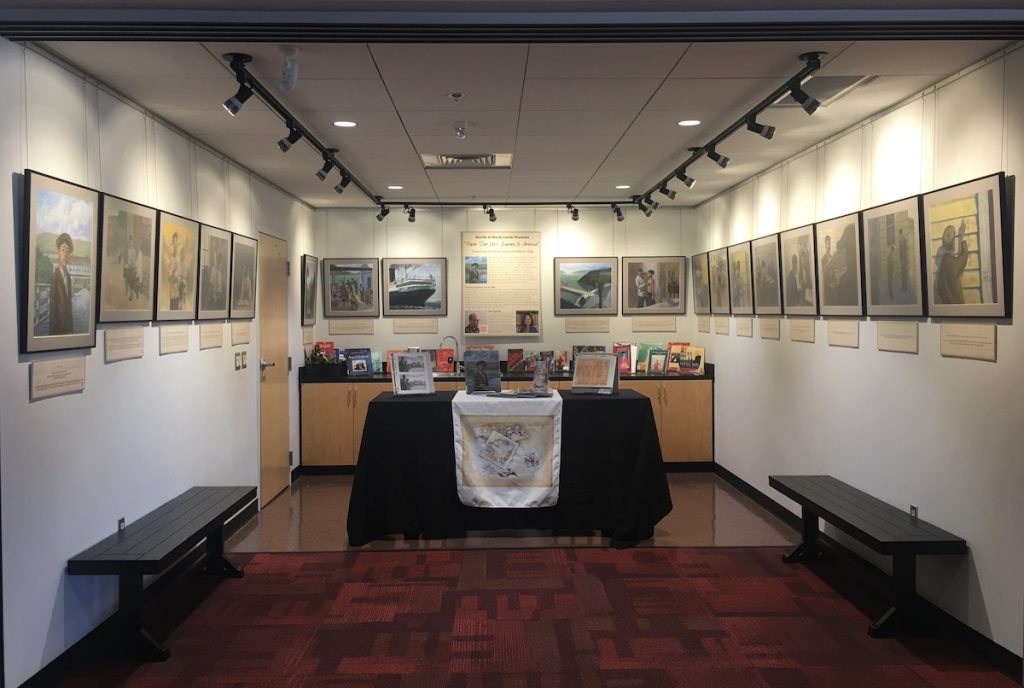
Worlds of Words Center Presents – Paper Son: Lee’s Journey to America
By Rebecca Ballenger, Associate Director, Worlds of Words Center
Wilson Ong’s last name was Wong until the fourth grade when his father revealed he used a false name to immigrate to the U.S. as a “paper son.” His father’s story isn’t that different from Lee’s story in the picturebook illustrated by Wilson, Paper Son: Lee’s Journey to America. Each of Wilson’s original oil illustrations for this book were purchased by Mary J. Wong, also the child of a paper son, and donated to the Worlds of Words Center where they are now on exhibit.
2022 Trends in Global Literature: Multilingualism and Language Learning
By Kathy Short, University of Arizona, Tucson, AZ
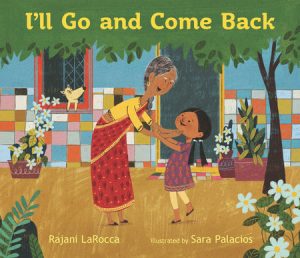 The increasing global mobility and multilingualism of our world are playing out in interesting ways in recent books for children. Some of these books focus on children learning to speak English or on English-speakers struggling to pronounce a child’s name. Still others naturally integrate multiple languages in a translingual book where characters weave additional languages into their dialogue, drawing from the multiple languages they speak and understand. Another trend is an increase in bilingual books with the entire text in two languages. Continue reading
WOW Dozen: Intergenerational Global Families in Picturebooks
by Judi Moreillon, Tucson, AZ, and Mary Margaret Mercado, Pima County Public Libraries, AZ
For economic, political and personal reasons, families today are spread across countries and continents. They must navigate language and cultural differences and geography to hold their familial ties together. Some children and families are able to travel to visit their relatives in their heritage countries; others are unable to cross borders to maintain their family connections. Some families have only photographs or memories to share of their extended families and ancestors.
In this WOW Dozen, children navigate the challenges that can separate them from their loved ones and their heritage cultures. Some learn the language of their parents, grandparents or other relatives. Some learn about culture through traditional artifacts, food, celebrations and family stories. Some have only hopes and dreams of reuniting with their relatives or maintaining connections to a “home” they may never visit and relatives they may never meet face to face. Continue reading
2022 Trends in Global Literature: Picturebooks about Relationships with Grandparents
By Kathy G. Short, University of Arizona, Tucson, AZ
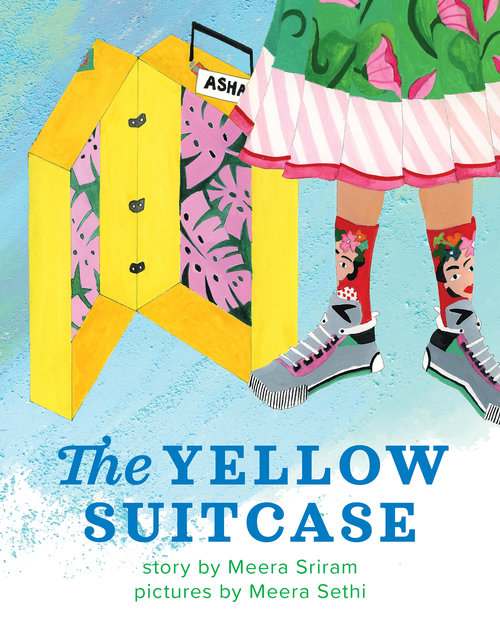 The lack of books depicting contemporary global cultures has been an issue for many years with historical fiction, traditional literature and fantasy dominating the global books published in the U.S. This over-representation of history and traditions often results in stereotypes and misconceptions of these cultures as set back in time or no longer existing in the contemporary world. The recent emergence of picturebooks with contemporary depictions is thus a positive trend in providing books that invite children to make connections between their own culture and global cultures in today’s world. Continue reading
WOW Recommends: Luli and the Language of Tea
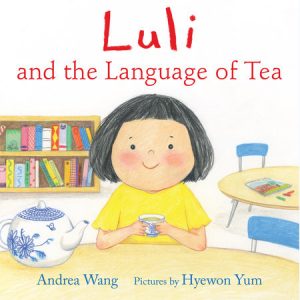 Luli and the Language of Tea opens with Luli coming into a preschool classroom with children from many cultures and countries. Their parents are attending an ESL class next door. The text reads, “The playroom was quiet./ Luli couldn’t speak English./ Neither could the others./ All around the room, children played alone.” Continue reading
Authors’ Corner: Wilson Ong
By Kathy G. Short, University of Arizona, Tucson, AZ
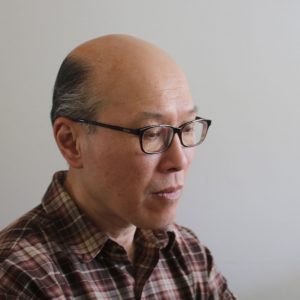 Mary J. Wong recently donated the entire set of original oil illustrations for Paper Son: Lee’s Journey to America by Wilson Ong to the Worlds of Words Center along with his thumbnail sketches and color studies. In working on the exhibition, we wanted to include Wilson’s perspective and process in creating the illustrations and so interviewed him, gaining many useful insights into his process and the connection of the book to his family story. Continue reading
Trends in Global Literature for Children and Adolescents
By Kathy G. Short, University of Arizona, Tucson, AZ
 WOW Currents for this month highlights the trends in global books published and/or distributed in the U.S. between Summer 2021 and 2022. Each year, we examine the new books published in that period of time and check out review sources and awards to identify books we believe will be of most interest to K-12 educators for use in their contexts. This process allows us to update the K-12 global reading lists, fiction and nonfiction, to post on the Worlds of Words Center website. This immersion into the new books also helps identify publication trends and patterns over the past year. This post overviews these trends and the posts during the month of August examine one trend in more depth with examples of books. Continue reading