By Michele Ebersole, University of Hawaii, Hilo, HI, and Yoo Kyung Sung, University of New Mexico, Albuquerque, NM

This month Michele Ebersole and Yoo Kyung Sung explore the deep and complicated theme of “sense of belonging.” Michele began by creating a text set with a focus of sense of Hawai’i. When she shared it with Yoo Kyung, it helped them explore that sense of place could be a sense of belonging, sense of responsibility, sense of excellence, sense of total well-being, sense of aloha, etc. Perhaps for New Mexico, it would take a sense of high desert, turquoise, Indigenousness, and sense of North and South. They think that “sense of belonging” may capture different dynamics in stories of communities and also reflect young people’s lives within a community as space. The four books they chose illustrate various faces of communities; they show that community is something you enter as a new member and sometimes you are a small community itself. Sense of belonging is a process of making sense of who you are and where you are. This theme unfolds with the four books presented this month through different characters and various locations such as India, Caribbean, and the U.S. They begin with The Bridge Home by Padma Venkatraman.
 Continue reading →








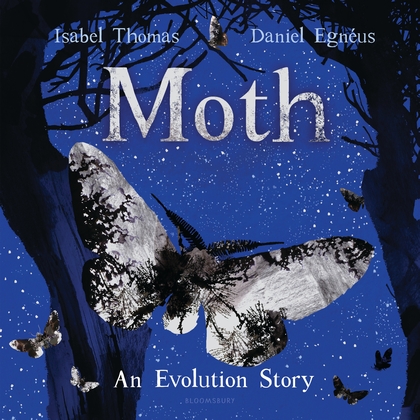 Moth: An Evolution Story by Isabel Thomas chronicles the “change and adaption, of survival and hope” of the peppered moth during the 19th century, a time of industrial environmental changes. Thomas’ exquisite language use leads readers to explore the cycle of life of these moths. The moths emerged from cocoons, “skittered and swooped… and looped the loop all night long” before laying eggs of their own. These moths were typically spotted in nature as white and peppered with specks of dark, but sometimes they were born “with wings as dark as charcoal.” The lighter speckled moths slept on lichen-covered trees and had better camouflage from prey. “The dark-colored moths made a feast for hungry chicks,” because they stood out on the white tree branches. Industrialization changed the environment so that the air was polluted and trees filled with soot, which altered the survival of the light-colored moths. They were no longer camouflaged from their prey. Now charcoal-colored moths survived in abundance. This might sound like an end to the white-colored moth, but Thomas provides hope in this chronicle. Many years later people decided to be more aware of the environment by cleaning the air and burning less pollutants. Over time “both colors of moths find places to hide and survive.”