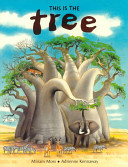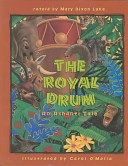
A lyrical description of the ancient baobab tree and how it provides shelter and nourishment to wildlife of the African plain.
Early Years (ages 2-6)
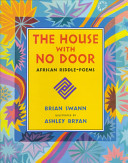
The House With No Door: African Riddle-Poems
A collection of original poems created from riddles of various African tribes.
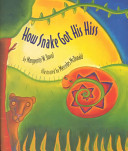
How Snake Got His Hiss: An Original Tale
Explains how long ago a self-absorbed snake became responsible for the hyena’s spots, the lion’s mane, the monkey’s chattering, the ostrich’s speed, and its own unique shape.
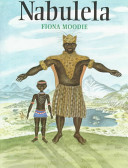
Nabulela: A South African Folk Tale
When the village girls cruelly trick the daughter of their king, he will forgive them only if they kill Nabulela, a treacherous white-skinned monster. A tale of the Nguni people
Baby Baboon
When lazy Leopard cannot catch Hare for his dinner, he goes after Baby Baboon instead.
Halala Means Welcome: A Book Of Zulu Words (Jump At The Sun)
Introduces words in Zulu, a “musical language with unusual clicking sounds” while following the activities of a boy at home in South Africa.
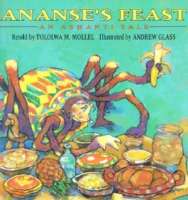
Ananse’s Feast: An Ashanti Tale
Unwilling to share his feast, Ananse the spider tricks Akye the turtle so that he can eat all the food himself, but Akye finds a way to get even.
The Lonely Lioness and the Ostrich Chicks
In this retelling of a Masai tale, a mongoose helps an ostrich get her chicks back from the lonely lioness who has stolen them.
Peering down from her treetop perch, a lonely lioness admires the noisily cheeping clan of Mother Ostrich and thinks, “I would be happy to have just one child.” So she leaps down, gurum! and steals all four ostrich chicks. Accepting the lioness as their mother, the chicks follow right behind he. Mother Ostrich is frantic! As she chases after the lioness, she enlists the help of gazelle, hyena, jackal, and mongoose.
One Sun Rises
The varied wild creatures of Africa introduce young readers to the world of numbers and counting, as well as to the diverse landscapes and wildlife of the African continent.
Nii Kwei’s Day
Nii Kwei lives in Accra, the capital of Ghana. He gets up at 6 o’clock every morning. He helps his sisters and brother tidy up the compound, then he eats a breakfast of coco (corn porridge), bread, fried eggs and a chocolate drink. At 7:30 he goes to school in a taxi. Later, on his way home, he goes to Abraham’s material store with his mother. He ends the day playing football with his cousins, back at the compound. This book is part of the series A Child’s Day, photographic information books concentrating on the daily lives and experiences of children in countries around the world, published in association with Oxfam.