Martin And The River

Martin loves to play by the river near his house. He watches the great blue herons and looks for crayfish and otters. He builds forts and lies in the tall grass near the water. But one day Martin’s parents tell him they have to move away, to the city. The family spend a day in the city, exploring their future home. Martin rides the subway, visits the market, explores the museum and watches a street performer, but none of the city’s charms can compare with the river. Then his parents show him a small stream running through the park, and Martin senses something familiar in the air. When moving day arrives, Martin fills a small glass jar with river water as a keepsake. And when he returns to the stream, he discovers that his connection to nature can be just as wondrous in the city.
I’ll Go And Come Back

When Jyoti visits her grandmother halfway around the world, she is overwhelmed by the differences between India and home. At first she feels lonely and out of place, but soon, despite a language barrier, she and Sita Pati are able to understand each other. They form a bond-looking at books together, making designs with colored sand, shopping at the market, playing games, eating chapatis, and sipping warm milk with saffron to bring sweet dreams. When it’s time to part, Jyoti doesn’t want to leave, but then she remembers that in Tamil, people don’t say goodbye, they say “I’ll go and come back.” Sure enough, the two reunite the next summer when Pati visits Jyoti in America, and it’s Jyoti’s turn to make her grandmother feel welcome. Can they create some special memories that will last until the next time they see each other?

Featured in WOW Review Volume XV, Issue 2.

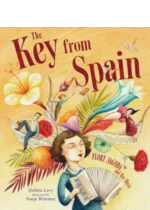
Key From Spain

Just as her ancestors were forced to leave Spain during the Inquisition, Flory flees Europe for a new life in the United States, bringing with her a precious harmoniku and a passion for Ladino music.

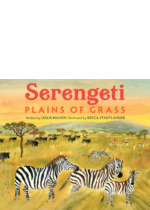
Serengeti

Award-winning science poetry master Leslie Bulion presents a lyrical salute to Africa’s Serengeti Plain, one of the most spectacular and productive ecosystems on Earth.

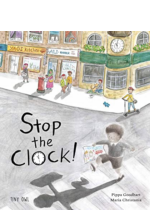
Stop The Clock!

When Mr. Khan asks the children to paint what they saw on their way to school, Joe notices his baby sister is crying in the picture. He stops the clocks and goes back to the street to find out why… This sweet story reminds us to slow down, take a breath and notice the small details in our busy everyday life.

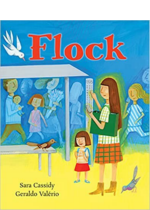
Flock

Lunch turns into bird food when a little girl starts feeding birds at the bus stop. First, a pigeon she names Serious comes pecking, and then Fancy and Sleepy gather to gobble up the offerings. But what happens when more and more birds want to join in on the feast? And what are all these fantastical birds doing in the city, anyway?

Saving Sorya: Chang And The Sun Bear

When endlessly curious and tenacious Chang discovers a bear bile farm near her home in Vietnam, she decides to do everything she can to save wild animals—by becoming a conservationist! After teaching herself survival skills, documenting each rainforest plant and animal she sees in her field notebook, and disproving the critics who think she isn’t old enough or strong enough, Chang is finally accepted as a rescue center volunteer. But her toughest challenge yet comes when she’s tasked with returning Sorya—the sun bear she raised from infancy—back into the wild. Because despite being a different species, Sorya is Chang’s best friend. And letting a friend go is never easy . . . even when it’s the right thing to do.

As Glenn As Can Be

Glenn was a child who knew his own mind ― he liked boats but did not like fishing; he enjoyed puns and pranks but did not like bullying; he loved learning but did not like school … but more than anything else he loved to play the piano. Glenn had a professional performing career by the time he was fifteen; he gave concerts all over the world in his twenties. He became best known for his interpretation of Bach’s Goldberg Variations. But Glenn grew to dislike concerts ― the hall was too cold, or he didn’t feel well, or the audience made too much noise (he didn’t even like their applause!). He discovered that when he played and recorded music in an empty concert hall, he could make it sound exactly the way he wanted. He could do what he loved best, while being completely himself.

King Sejong Invents An Alphabet

In 15th-century Korea, King Sejong was distressed. The complicated Chinese characters used for reading and writing meant only rich, educated people could read-and that was just the way they wanted it. But King Sejong thought all Koreans should be able to read and write, so he worked in secret for years to create a new Korean alphabet. King Sejong’s strong leadership and determination to bring equality to his country make his 600-year-old story as relevant as ever.