Robin, Philip, and Frances, exiled Portuguese Jews secretly practicing their faith in intolerant sixteenth-century London, fight against the poison of prejudice in trying to save the life of Queen Elizabeth’s Jewish doctor.

Historical Fiction genre
Robin, Philip, and Frances, exiled Portuguese Jews secretly practicing their faith in intolerant sixteenth-century London, fight against the poison of prejudice in trying to save the life of Queen Elizabeth’s Jewish doctor.
World War II has just been won, and everything seems possible to young Keely Connor. She sees herself as a hero on a white charger, able to conquer the world, even though in reality her charger is Lola, the placid horse that lives in the field behind her house. One fateful summer day her brother Patrick is stricken with polio. Here is an enemy Keely cannot conquer. With all the will in the world, she cannot pass on to Patrick her zest or her energy or her own good health.
Based on a true events, this inspiring picture book tells the story of an American family who establishes contact with a German family after World War II and sends them a package of much-needed supplies, including shoes.
Joan BlosIt is Germany in 1932, and Hitler is rising to power. This critical place and time in modern history is poignantly re-created through the observations of a young Jewish girl named Eva, who is caught up in the sense of dread shared by the adults around her.
A girl’s escape from Nazi Germany.The city Eva Bentheim once adored is no longer familiar. A swastika is emblazoned on the flag atop the City Hall. Teachers, family, and friends are beginning to disappear. Her father seems gone in a different way; he has become ill, fragile, and despondent as the Nazis gain power. When things get worse, Eva’s mother desperately tries to obtain the proper papers for her family to leave the country. Then a horrible night of roundups occurs and Eva’s father is taken away. A nocturnal search begins for someone who can help release him from the city jail. Eva’s boyfriend, Arno, may have a way to save her father from deportation, but it soon becomes clear that their struggles have just begun. Exquisitely felt and written, Walk the Dark Streets resonates with the indomitability of the human spirit even as a loving family’s attempts to stay together grow more and more hopeless.
Baer’s previous novel, A Frost in the Night, relates earlier episodes in the lives of the family in Walk the Dark Streets.
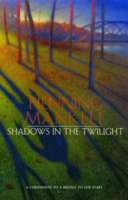
Joel will soon be 12, and he thinks nothing is going on in the small community where he lives. But he’s wrong. One day, an incident that could easily have been a catastrophe turns into a miracle. Now Joel believes he owes the world a good deed, to prove that he deserved what might have been divine intervention. He thinks up an elaborate scheme, but it doesn’t go as anticipated. Even though his heart is in the right place, feelings are hurt. If he confesses what he’s done and why, will things be put right again?
Readers who met Joel Gustafson, his father, and their friends in A Bridge to the Stars will follow, with appreciation, Henning Mankell’s shrewd depiction, in this companion novel, of the surprising changes in Joel’s existence. Mankell deftly explores Joel’s self-discovery, his realization that lives can be altered in a single moment, and his new understanding that a choice between telling the truth and keeping silent can make all the difference.
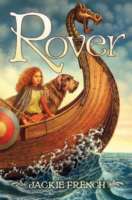
Captured by Vikings, young Hekja is taken as a slave to Greenland by the daughter of Erik the Red, and accompanied by no one from her homeland but her loyal dog, shares adventures with her new mistress, who is determined to make a name for herself as her father and brother have.
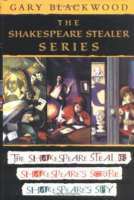
The three novels in Gary Blackwood’s award-winning Shakespeare Stealer series are in one volume, which includes the complete texts of The Shakespeare Stealer, Shakespeare’s Scribe, and Shakespeare’s Spy. Each novel is about the adventures of an orphan named Widge who becomes an actor with Will Shakespeare’s acting troupe. He navigates intrigue, betrayal and romance in Elizabethan London.
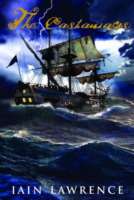
Tom Tin and his four convict companions are only too glad when they come upon a deserted ship. The boys clamber aboard, not knowing whether they’ve been saved or set on a course toward doom. But after rescuing two men stranded on a melting iceberg, Tom begins to suspect that these unsavory sailors are dangerous castaways from this very vessel. The more Tom questions the men, the more they dislike him. So, when Tom overhears them plotting to get rid of him, he knows they mean it. But the other boys don’t feel threatened – at least not until the sailors attempt to sell them as slaves, a decision that ends with death for some and with Tom sailing the ship home to England. Soon Tom discovers that he has to cast away every ill-intentioned companion from his voyage home before he can truly be free.
The adventure that began in The Convicts and continued in The Cannibals has its conclusion in The Castaway.

For thirteen-year-old Kim, travel to South Africa with her journalist mother will mark the end of her childhood and the beginning of a remarkable journey. Expecting nothing more than three months in her mother’s homeland, Kim comes to terms with the country’s diverse and often shocking history. The Truth and Reconciliation Hearings in post-apartheid South Africa open her eyes to the tragedy and brutality of its segregationist policies.
Kim’s first meeting with her relatives, her contact with schoolmates and cousins, bring her face-to-face with the realization that she is not as removed from this powerful story as she thought. As her mother struggles with her past, Kim becomes more and more determined to unlock the secret that has always kept her from knowing her father. Helped by the young son of a long-time family servant, whose own father was a casualty of Apartheid history, Kim eventually unlocks her mystery and brings her mother and herself to their own truth and reconciliation.