Holly Johnson, University of Cincinnati, Cincinnati, OH
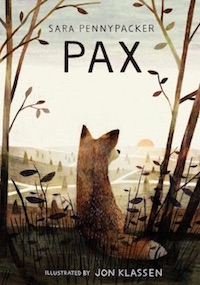 The environment has become a critical issue for a majority of people around the world. There are a number of ways to address the issue, and one of those ways is through an eco-cosmopolitan perspective. Eco-cosmopolitanism is “an attempt to envision individuals and groups as part of planetary ‘imagined communities’ of both human and nonhuman kinds” (Heise, 2008, p. 61). In children’s literature, we often get the perspective of an animal or insect. From Peter Rabbit (Potter, 1999) to Watership Down (Adams, 2014) to Charlotte’s Web (White, 2012) to more current texts such as Alice’s Farm (Wood, 2020) and Pax (Pennypacker, 2019), readers are delighted by the antics and/or adventures found within these marvelous examples of non-human creatures interacting in the world. Humorous tales such as the two Skunk and Badger stories (Timberlake, 2020; 2021) make us laugh, while Pax (Pennypacker, 2019), Pax Journey Home (2021) and Charlotte’s Web (White, 2012) can develop empathy for the living things outside the “human” realm. Continue reading
 “Rompe nuestra burbuja” were the words that Mariposa (self-selected pseudonym), an eight-grade Chilean student, used when giving her opinion about the benefits of reading stories that explore how people from different cultures live. She revealed, “Porque uno aprende nuevas cosas y rompe nuestra burbuja, nos muestra diferentes realidades de la vida diaria [because we learn new things, and it pops our bubbles. It shows us different realities from daily life].”
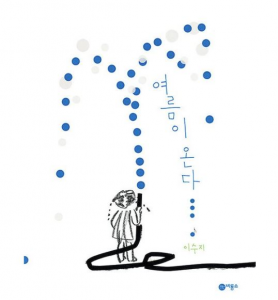 In recent years, increasing numbers of translated and non-translated Korean children’s literature are available to Japanese readers. Yes, Japanese readers read and consume Hangul (written Korean) directly beyond literature experiences (e.g., language learning). We’ve found several major Japanese publishing companies, JBBY (Japanese Board on Books for Young People), bookstores, and public and school libraries feature books by Korean authors and illustrators through social media and physical spaces. Three beloved Korean authors who also illustrate their work influenced Korean picturebooks’ reputations in Japan positively beyond what Japanese audiences are familiar with over the years (i.e., postcolonial texts). In this post, we share three Korean authors, Heena Baek, Suzy Lee and Heeyoung Ko who are among those gaining great popularity in Japan.
 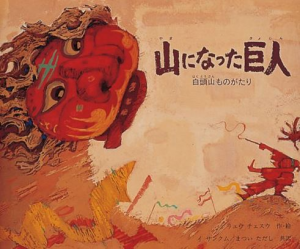 This month, Junko and I explore Korean picturebooks translated and published in Japan to analyze colonization patterns in Korea. In 1910, Korea was annexed by the Empire of Japan after years of war, intimidation and political machinations;
 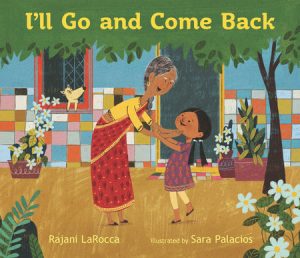 The increasing global mobility and multilingualism of our world are playing out in interesting ways in recent books for children. Some of these books focus on children learning to speak English or on English-speakers struggling to pronounce a child’s name. Still others naturally integrate multiple languages in a translingual book where characters weave additional languages into their dialogue, drawing from the multiple languages they speak and understand. Another trend is an increase in bilingual books with the entire text in two languages.
 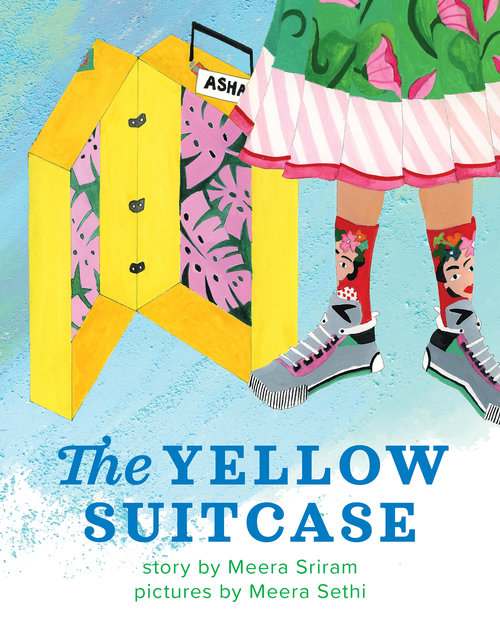 The lack of books depicting contemporary global cultures has been an issue for many years with historical fiction, traditional literature and fantasy dominating the global books published in the U.S. This over-representation of history and traditions often results in stereotypes and misconceptions of these cultures as set back in time or no longer existing in the contemporary world. The recent emergence of picturebooks with contemporary depictions is thus a positive trend in providing books that invite children to make connections between their own culture and global cultures in today’s world.
 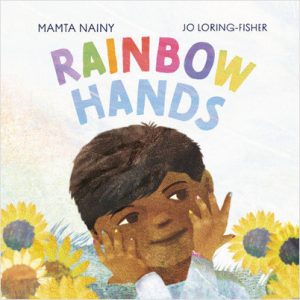 WOW Currents for this month highlights the trends in global books published and/or distributed in the U.S. between Summer 2021 and 2022. Each year, we examine the new books published in that period of time and check out review sources and awards to identify books we believe will be of most interest to K-12 educators for use in their contexts. This process allows us to update the
 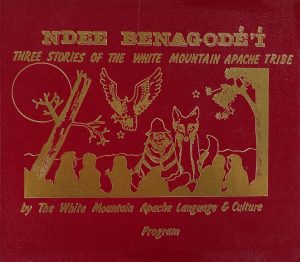 Culturally authentic Indigenous American children’s literature is composed of traditional stories that consist of myths, legends and folktales in the oral storytelling traditions of a given people. This literature also includes contemporary stories and poetry. An affirmation of Indigenous children’s literature is noted by Dr. Debbie Reese (2007, p. 245):