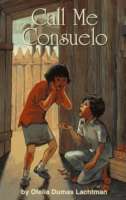
Intrigue and danger weave a web around young Consuelo as she is thrust into a new life in unfamiliar surroundings and a real life mystery that begs to be resolved.

Material appropriate for intermediate age groups
Intrigue and danger weave a web around young Consuelo as she is thrust into a new life in unfamiliar surroundings and a real life mystery that begs to be resolved.
 The further adventures and misadventures of twelve-year-old Paolo, his six-year-old brother Georgie, and their nine-year-old deaf cousin Billy as they try to find their missing dog, cope with a new paper route, and discover romance in their small California town in 1951.
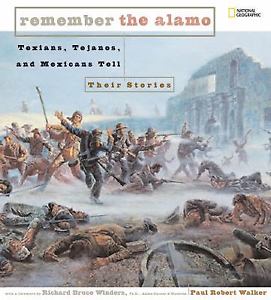 An account of the famous battle of the Alamo which presents different points of view of the event.
Marina and Fern, eager to learn magic just for fun, convince Xochitl to ask her grandmother, a curandera, to teach them, and as her apprentices the three learn about casting spells, healing, and life.
When eleven-year-old Lolo captures a tarantula, it turns an ordinary summer into a series of adventures that take him and his friends beyond their Mexican-American neighborhood in East Los Angeles.
This comprehensive activity book for children offers action-packed fun highlighting the contributions of the Hispanic Colonial settlers in the multi-cultural environment of the American Southwest. There are eight sections: The Age of Discovery, The New World, Colonial Life, The Camino Real, The Native Americans, Hispanic Art, Hispanic Architecture, and Hispanic Crafts. Projects are presented in a variety of formats such as illustrations to complete, word searches, matching names and ideas, picture construction, puzzles, and more. This entertaining activity book, richly illustrated by the author, provides a wonderful introduction into the romance and excitement of the Hispanic settlement of America.
Enrique, a young boy in Peralta Middle School, faces abuse at home and danger on the barrio streets. Yet he is driven to succeed by the desire to join that “other America” he sees on TV and in the movies, and is aided in his quest by compassionate teachers. His ambition finds expression in his determination to drop his ESL class in favor of taking French, and his story begins, “Call me Henr.”
Lorraine Lpez (author of Soy la Avon Lady and Other Stories) has created a vivid picture of barrio life, filled with honesty, insight, and humor for young adults. She paints a balanced and detailed landscape of Enrique’s world. Although Enrique is confused and angered by his mother’s refusal to stand up for him against the abuse of his stepfather, he also draws strength from the supportive and loving family of his friend Francisco. While some of his teachers are uncaring or inept, others provide help and encouragement at critical moments in his life.
When Enrique witnesses his friend Horacio gunned down in a drive-by shooting and is seen by the assailants, gang members set out to kill him. As the novel reaches its climax, Enrique must make some agonizing decisions.
Although specifically about barrio life, this novel is universal in its themes-the drive for success, the desire for love and family support, and the need for true friendship. Lpez’s fully delineated characters provide a rich and credible mural of our human comedy.
Lorraine Lpez‘s Soy la Avon Lady and Other Stories was selected for the Marmal Prize, and also won the IPPY Award for Multicultural Fiction.
 Twenty photographs mark an overview of the life and struggle of Cesar Chavez, the union leader who has spent his life trying to improve the lives of migrant farm workers.
Miguel and Ramón are in big trouble with their family. The cousins were almost expelled from school for fighting, and just as they’re finishing up their final year in middle school and preparing to enter high school, their grades have dropped. Miguel’s father Rodrigo who, with his wife Connie, has raised Ramón since his father’s tragic death in a car accident has decided the boys need to be punished. So instead of going on the family’s summer vacation to Santa Fe, they’ll stay with their Abuelita Rosa in a remote town in northern Arizona and do chores around her place.Dreading a long, boring month with their grandmother in the middle of nowhere, the boys get started on the extensive list of tasks they are supposed to complete. Cleaning the shed seems like the least disagreeable one, and soon they find something interesting: a two-wheeled Vespa scooter covered with dust and cobwebs. Excited at their find, the boys decide fixing the scooter might enliven their stay. If they can get it to run, they’ll at least be able to get around town.The next morning, though, Miguel and Ramón wake to a quiet house, and they’re shocked to find their grandmother unconscious in her bed. When the ambulance takes her away to the hospital, the boys are left alone and unable to contact Miguel’s parents. Suddenly, the scooter seems to be the only answer to reaching their family, and so the boys gather food, water, sleeping bags, and the small amount of money they have and begin the long trip to New Mexico.Miguel and Ramón quickly learn that traveling across the country isn’t as easy as they had expected. Sharing the road with fast-moving eighteen-wheelers and camping in the cold desert all make for an exhausting trip. But along the way the boys see many wonderful sights including the Grand Canyon and the red rocks of Sedona and meet lots of interesting people: Frank, an old friend of their grandfather’s who helps them get the scooter ready for the trip; Turner, an attentive youth group counselor they meet at the Grand Canyon; and a group of scientists exploring an ancient Native American site. Most importantly, Miguel and Ramón will discover a lot about themselves through their growing independence as emergent young men.
“Ramiro Lopez and Jake Upthegrove don’t appear to have much in common. Ram lives in the Mexican-American working-class barrio of El Paso called “Dizzy Land.” His brother is sinking into a world of drugs, wreaking havoc in their household. Jake is a rich West Side white boy who has developed a problem managing his anger. An only child, he is a misfit in his mother’s shallow and materialistic world. But Ram and Jake do have one thing in common: They are lost boys who have never met their fathers. This sad fact has left both of them undeniably scarred and obsessed with the men who abandoned them. As Jake and Ram overcome their suspicions of each other, they begin to move away from their loner existences and realize that they are capable of reaching out beyond their wounds and the neighborhoods that they grew up in. Their friendship becomes a healing in a world of hurt.