
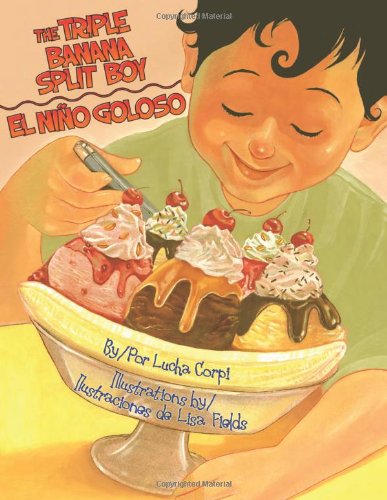
 ”How come you can have sweets and I can’t?” Enrique asks the hummingbirds as they flutter over the flowers in the garden. His craving for sugar is getting out of control, and his father has forbidden him to eat anything sweet. Enrique’s birthday is coming up and he won’t be allowed to help his grandma with her baking. It’s not fair! Enrique’s cravings multiply by the minute. Even numbers in his math book start to look like yummy desserts. His life is over! The next day, though, he comes up with an ingenious plan to outwit his father. Unfortunately, his mother soon catches on. But she has a plan of her own. On Mondays and Fridays only, after school, Enrique may have any dessert he likes, but none during the rest of the week. What a sweet deal!On his first outing with his mother, Enrique orders a huge triple banana split, with strawberry, chocolate and vanilla scoops of ice cream, nuts, sprinkles and chocolate syrup. Later that night, Enrique’s stomach aches, and El Coco, a fearsome creature with a huge mouth and sticky hair, haunts his dreams. Enrique’s mother wonders if he will ever learn to eat in moderation. Will he be able to bake with Grandma? And what about having a special treat on his birthday? Lucha Corpi’s poetic prose is combined with Lisa Field’s enticing illustrations in this engaging story that will resonate with kids and their parents as they struggle to balance healthy eating habits with the natural desire for sweets.
Age
Catalog sorted by age group
F Is For Fiesta
From adornos (decorations) going up all over the house, biscochitos (cupcakes) baking in the oven, and a special treat of churros (doughnut sticks) for breakfast, this can only be the beginning of a fabulous cumpleaños (birthday)! As the alphabet continues, the story highlights fun elements of a boy’s never-ending birthday celebration, including entries for ch, ll, ñ, and rr that make this a truly Latino ABC fiesta.
Clever verse and exuberant illustrations make the meaning of each Spanish word clear, and an author’s note explains the difference between the English and Spanish alphabets.
Magic Windows / Ventanas Mágicas
In Spanish and English, Carmen Lomas Garza portrays her family’s Mexican customs and her life as an artist, and the legends of her Aztec past through cut-paper work (papel picado).
Radio Man/Don Radio
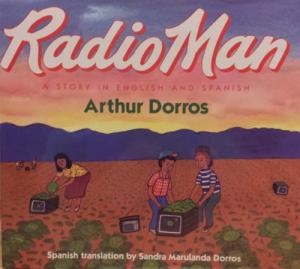 As he travels with his family of migrant farmworkers, Diego relies on his radio to provide him with companionship and help connect him to all the different places in which he lives.
Gracias, Rosa
 At first, a young girl does not like her new babysitter, Rosa, but after getting to know her and learning some Spanish language and customs, she is sad when Rosa returns to her family in Guatemala.
Confetti: Poemas Para Ninos/ Poems For Children (Spanish Edition)
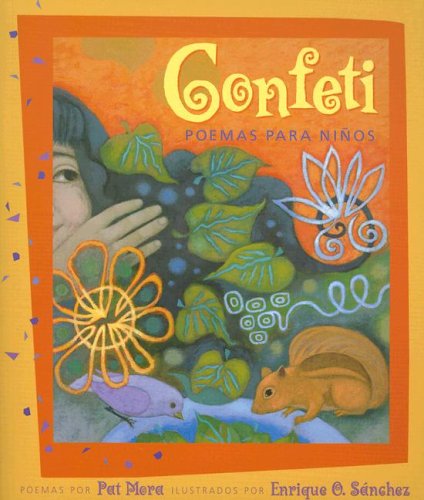 In this joyful and spirited collection, award-winning poet Pat Mora and fine artist Enrique O. Sanchez celebrate the vivid landscape of the Southwest and the delightful rapport that children share with the natural world. Through language that resounds with the harmony of both English and Spanish, Confetti is also an anthem to the power of a child’s imagination and pride.
Count on Culebra: Go from 1 to 10 in Spanish
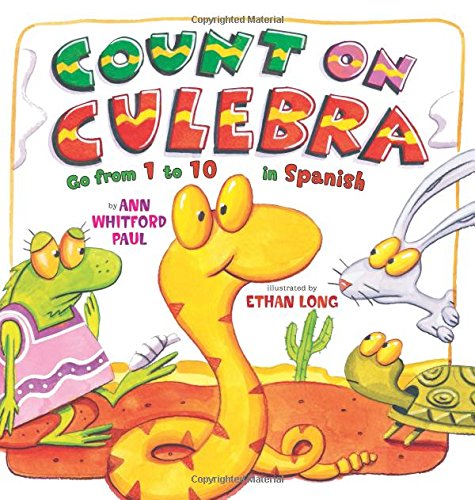 A companion to the popular Manana, Iguana that teaches how to count in spanish. When Iguana stubs her toe, Doctor Culebra comes to the rescue. But his suggestions sound a little loco to everyone else. How will tying un rolling pin and dos kettles to Iguana’s tail make her better? And more importantly, will Iguana feel well enough to make her cactus butter dulces? The extremely popular “Manana, Iguana” has sold and reprinted quickly, and Ann Whitford Paul and Ethan Long’s previous titles have received much praise.
Snapshots from the Wedding
Maya attends a family wedding and captures it all on film, from her cousin getting rice in his eye to the cake that tasted as delicious as it looked, in a beautifully illustrated tale of a special family day.
Growing Up with Tamales/Los Tamales De Ana (Spanish Edition)
“My name is Ana. Every year, my family makes tamales for Christmas. This year, I am six, so I get to mix the dough, which is made of cornmeal. My sister Lidia is eight, so she gets to spread the dough on the corn husk leaves. I wish I was eight, so that my hands would be big enough to spread the dough just right–not too thick and not too thin.” And so the years pass, and Ana turns eight, ten, twelve, fourteen, sixteen. But every year, big sister Lidia is always two years older. Ana envies her elder sibling and wishes she could do what Lidia does: put just the right amount of meat inside the tamales and roll them up; steam the tamales without scalding herself with the hot, hot steam; chop and cook the meat for the tamales without cutting or burning her hands. When she turns eighteen, though, Ana knows she will keep making tamales and she will be able to do all of the steps herself in her very own factory. When Christmas comes around, Ana will deliver tamales to all of her customers around the world, in delivery trucks that say “Ana’s Tamales.” And maybe Ana will even let Lidia work for her. Gwendolyn Zepeda’s rhythmic prose is combined with April Ward’s bright illustrations to create an affectionate and amusing story about sibling relationships that introduces an important Hispanic holiday tradition–making tamales!
I Am Mexican American (Our American Family)
 A Mexican-American child talks about aspects of his Mexican heritage, including language, foods, and customs.