 The author/photographer and his eight-year-old son journey to the ice floes of eastern Canada to observe the thousands of harp seal pups born there each year.

Nonfiction genre
The author/photographer and his eight-year-old son journey to the ice floes of eastern Canada to observe the thousands of harp seal pups born there each year.
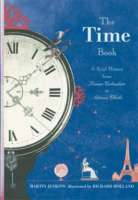
This book explores many other timely questions, such as how the first calendars and clocks were invented, why February is such an odd month, and what strange and wonderful things Einstein discovered about the nature of time itself.
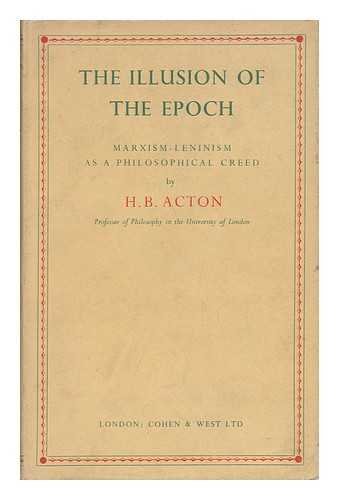 Written nearly fifty years ago, at a time when the world was still wrestling with the concepts of Marx and Lenin, ‘The Illusion of the Epoch’ is the perfect resource for understanding the roots of Marxism-Leninism and its implications for philosophy, modern political thought, economics, and history. As Professor Tim Fuller has written, this “is not an intemperate book, but rather an effort at a sustained, scholarly argument against Marxian views.” Far from demonising his subject, Acton scrupulously notes where Marx’s account of historical and economic events and processes is essentially accurate. However, Acton also points out that Marx is generally right about things that were already widely known and accepted in his own time and indeed had been long understood in the nineteenth century. On the other hand, Acton shows that in many cases Marx either is simply wrong or has stated his views so as to render his theories immune to disproof. Acton also explains why the embodiment of Marxist-Leninist theory in an actual social order would require coercive support if it were not, sooner or later, to collapse of its own contradictions.
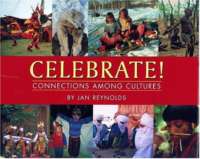
Every culture has its own special traditions and reasons for celebrating. At first glance these practices seem quite different from one another, but they are actually much more alike than you may realize.
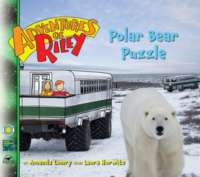
Riley and his family fly north to Churchill, Canada, wo watch polar bear hunt deals from the ice of Hudson Bay. There’s just one problem: no ice! For Polar Bears, no ice means no seals, and without food, the bears can quickly become hungry, weak and dangerous! It’s a race against time as everyone searches for clues to this puzzling climate mystery. Will the ice freeze in time–or at all? And will the polar bears finally get to eat again? The answer is up to you!
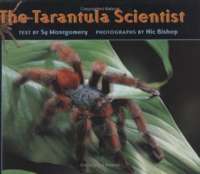
Yellow blood, silk of steel, skeletons on the outside! These amazing attributes don”t belong to comic book characters or alien life forms, but to Earth”s biggest and hairiest spiders: tarantulas. Here you are invited to follow Sam Marshall, spider scientist extraordinaire (he”s never been bitten), as he explores the dense rainforest of French Guiana, knocking on the doors of tarantula burrows, trying to get a closer look at these incredible creatures. You”ll also visit the largest comparative spider laboratory in America—where close to five hundred live tarantulas sit in towers of stacked shoeboxes and plastic containers, waiting for their turn to dazzle and astound the scientists who study them.
This story describes the formation, naming, and colonization of the twenty-seven-year-old volcanic island Surtsey and how the first animals and plants became established there.
Two brothers, Peter and William Moeller save the rapidly diminishing herds of elephants and other wildlife living in the Queen Elizabeth National Park in Uganda.
Meet the Word Snoop. She’s dashing and daring and witty as can be—and no one knows more about the evolution of the English language than she does. Luckily, she’s spilling her secrets in this gem of a book. From the first alphabet in 4000 BC, to anagrams, palindromes, and modern-day text messages, readers will learn all about the fascinating twists and turns our fair language has taken to become what it is today. With playful black-and-white illustrations, riddles to solve, and codes to break, The Word Snoop is definitive proof that words can spark the imagination and are anything but dull. This is a book for every aspiring writer, and every true reader.ima
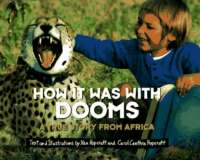
The story presents an extraordinary personal portrait of a wild African cheetah named Dooms and the human family with whom he chose to make his home.