Teresa, the young daughter of Mexican American migrant workers, has a hard life but keeps memories of her grandmother and Mexico alive in her heart.
Prejudice and racism
My Name Is Bilal
When Bilal and his sister transfer to a school where they are the only Muslims, they must learn how to fit in while staying true to their beliefs and heritage.
The Year Of The Rat
In this sequel to Year of the Dog, Pacy has another big year in store for her. The Year of the Dog was a very lucky year: she met her best friend Melody and discovered her true talents. However, the Year of the Rat brings big changes: Pacy must deal with Melody moving to California, find the courage to forge on with her dream of becoming a writer and illustrator, and learn to face some of her own flaws. Pacy encounters prejudice, struggles with acceptance, and must find the beauty in change.Based on the author’s childhood adventures, Year of the Rat, features the whimsical black and white illustrations and the hilarious and touching anecdotes that helped Year of the Dog earn rave reviews and satisfied readers.
Cry of the Giraffe
One girl’s harrowing trek from exile and slavery to hope in a new land — all based on a true story. In the early 1980s, thousands of Ethiopian Jews fled the civil unrest, famine and religious persecution of their native land in the hopes of being reunited in Jerusalem, their spiritual homeland, with its promises of a better life. Wuditu and her family risk their lives to make this journey, which leads them to a refugee camp in Sudan, where they are separated. Terrified, 15-year-old Wuditu makes her way back to Ethiopia alone. “Don’t give up, Wuditu! Be strong!” The words of her little sister come to Wuditu in a dream and give her the courage to keep going. Wuditu must find someone to give her food and shelter or she will surely die. Finally Wuditu is offered a solution: working as a servant. However, she quickly realizes that she has become a slave. With nowhere else to go, she stays — until the villagers discover that she is a falasha, a hated Jew. Only her dream of one day being reunited with her family gives her strength — until the arrival of a stranger heralds hope and a new life in Israel. With her graceful long neck, Wuditu is affectionately called “the giraffe.” And like the giraffe who has no voice, she must suffer in silence. Based on real events, Wuditu’s story mirrors the experiences of thousands of Ethiopian Jews.
Homestretch
A runaway boy with nothing finds everything he needs, including a family, in the most unlikely of places–at a racetrack.
Smoky Night
When the Los Angeles riots break out in the streets of their neighborhood, a young boy and his mother learn the values of getting along with others no matter what their background or nationality.
Kira-Kira (Newbery Medal Book)
kira-kira (kee’ ra kee’ ra): glittering; shining
Glittering. That’s how Katie Takeshima’s sister, Lynn, makes everything seem. The sky is kira-kira because its color is deep but see-through at the same time. The sea is kira-kira for the same reason. And so are people’s eyes. When Katie and her family move from a Japanese community in Iowa to the Deep South of Georgia, it’s Lynn who explains to her why people stop them on the street to stare. And it’s Lynn who, with her special way of viewing the world, teaches Katie to look beyond tomorrow. But when Lynn becomes desperately ill, and the whole family begins to fall apart, it is up to Katie to find a way to remind them all that there is always something glittering — kira-kira — in the future.
Luminous in its persistence of love and hope, Kira-Kira is Cynthia Kadohata’s stunning debut in middle-grade fiction.
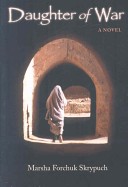
Daughter of War
ALA Best Books for Young Adults 2009 nominee On the 2009 USBBY list of Outstanding International Books White Pine nominee, 2009 On Resource Link’s “Best of 2008” List Teenagers Kevork and his betrothed Marta are the lucky ones. They have managed so far to survive the Armenian genocide in Turkey, and both are disguised as Muslims. But Marta is still in Turkey, pregnant with another man’s child. And Kevork is living as an Arab in Syria.Kevork yearns to get back into Turkey and search for Marta, but with the war raging and the genocide still in progress, the journey will be impossibly dangerous. Meanwhile, Marta worries that even if Kevork has survived and they are reunited, will he be able to accept what she has become? And what has happened to her sister, Mariam, who was sold as a slave to the highest bidder?Daughter of War is a gripping story of enduring love and loyalty set against the horrors of Turkey during World War I.
Vatos
One evening, Pulitzer Prize-winning photographer Jos Galvez heard Luis Alberto Urrea read “Hymn to Vatos Who Will Never Be in a Poem” with its chant-like repetitions and its evocation of Chicano manhood. As Luis read each line, an image clicked in Jos’s memory, and he knew that he had already taken that photograph. The result of that experience is this remarkable book. Vatos is street slang for dude, guy, pal, brother. It sprang from the highly stylized language of the Pachucos (los chukotes) in the ’50s. It’s a Chicano term derived from the once-common friendly insult chivato, or goat. It had a slightly unacceptable air to it, which the Locos and Weesas of the Chuco world enjoyed. They were able to take the sting out of racism by calling themselves a bunch of names assimilated “good Mexicans” didn’t like.
Under The Same Sky
A teenager discovers racism and romance on his father’s farm. For his fourteenth birthday, Joe Pedersen wants a motorbike that costs nearly a thousand dollars. But his mom says the usual birthday gift is fifty dollars, and his dad wants Joe to earn the rest of the money himself and “find out what a real day’s work feels like.” Angry that his father doesn’t think he’s up to the job, Joe joins the Mexican laborers who come to his father’s farm each summer. Manuel, the crew boss, is only sixteen, yet highly regarded by the other workers and the Pedersen family. Joe’s resentment grows when his father treats Manuel as an equal. Compared with Manuel, Joe knows nothing about planting and hoeing cabbage and picking strawberries. But he toughs out the long, grueling days in the hot sun, determined not only to make money but to gain the respect of his stern, hardworking father. Joe soon learns about the problems and fears the Mexicans live with every day, and, before long, thanks to Manuel, his beautiful cousin Luisa, and the rest of the crew, Joe comes to see the world in a whole different way.In her sensitive new novel, Cynthia DeFelice explores our dependency on migrant workers and simultaneous reluctance to let these people into our country and into our lives.