
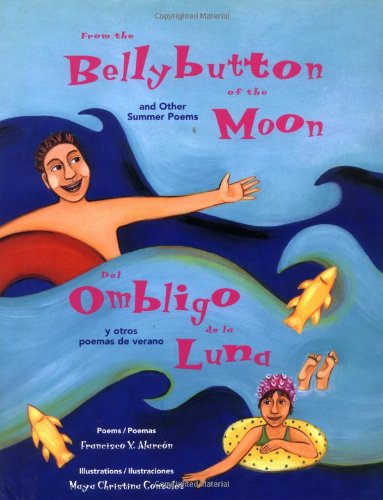
 From the Bellybutton of the Moon is renowned poet Francisco X. Alarcon’s fresh collection of 22 bilingual poems inspired by his touching recollections of childhood summers in Mexico. With a poet’s magical vision, Alarcon takes us back to his childhood when he traveled with his family to Mexico to visit his grandma and other relatives. We travel with him in the family station wagon, across the misty mountain range to the little town of Atoyac. There, in the beloved town of his ancestors, we hear his grandma’s stories, sample Auntie Reginalda’s tasty breakfasts, learn about the keys to the universe, and take playful dips in the warm sea. The lighthearted illustrations of Maya Christina Gonzalez perfectly capture the spirit of a summer in Alarcon’s Mexico where “colors are more colorful, tastes are tastier, and even time seems to slow down.”
Author: Book Importer

Iguanas In The Snow / Iguanas En La Nieve: And Other Winter Poems / Y Otros Poemas De Invierno
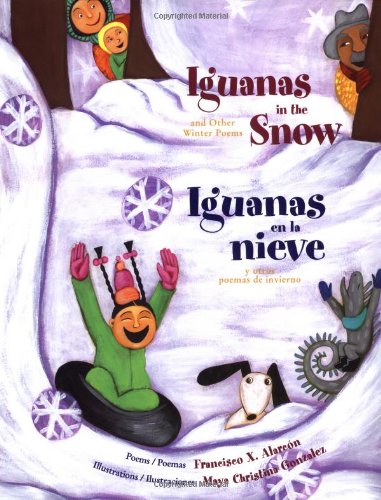 This collection invites us to celebrate winter — by the seashore, in the city of San Francisco, and in the ancient redwood forests of the Sierras. We see a city where people have become bridges to each other and children sing in two languages. A family frolic in the snow reminds the poet of the iguanas playing by his grandmother’s house in Mexico. The seedling redwoods promise tomorrow. Maya Christina Gonzalez creates a spirited family of children and adults making their way through lively settings.
Laughing Tomatoes And Other Spring Poems / Jitomates Risuenos Y Otros Poemas De Primavera
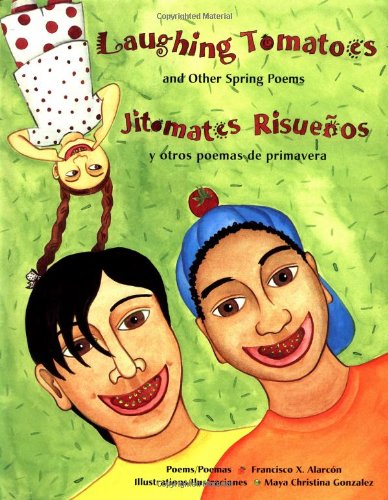 Tomatoes laugh, chiles explode, and tortillas applaud the sun in this playful and moving collection of twenty English and Spanish poems written in honor of the wonders of life and nature.
The Santero’s Miracle: A Bilingual Story
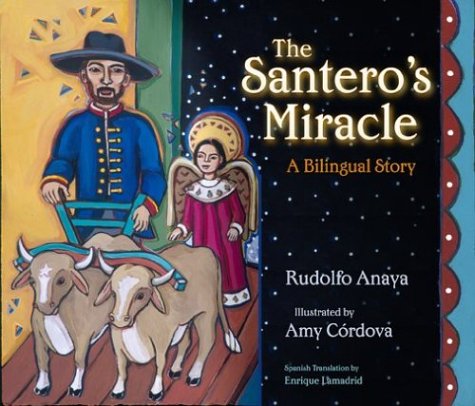 In this bilingual story of faith, Don Jacobo has a dream that, in the end, is a reminder that miracles do happen. Jacobo is teaching his visiting grandson Andrés how to become a santero. Christmas is coming, snow is falling in the village, and the two are working on a carving of San Isidro, the patron saint of farmers. The half-finished carving stands in the living room beside the two oxen and the angel that don Jacobo carved earlier in the month. The snow-covered mountains are beautiful, but the road to the village is impassable. Andrés’s parents will not be able to get to the house for the holiday, and Jacobo’s neighbor Leopoldo is desperately ill but cannot get to the hospital. Then comes Jacobo’s dream; San Isidro is plowing with the two oxen and the angel is helping. \”But we don’t plow ’til April\” don Jacobo muses upon awakening. \”What does it mean?\” The night had been bitterly cold and don Jacobo must bundle up to go to the barn to feed his cows and chickens. As he steps outside, he can hardly believe his eyes. The snow-packed road is clear. Rudolfo Anaya’s story of the power of faith, hope, and love will be enjoyed by readers of all ages.
Americas Award For Children’s And Young Adult Literature. Commended (Awards)
Fiesta U.S.A.
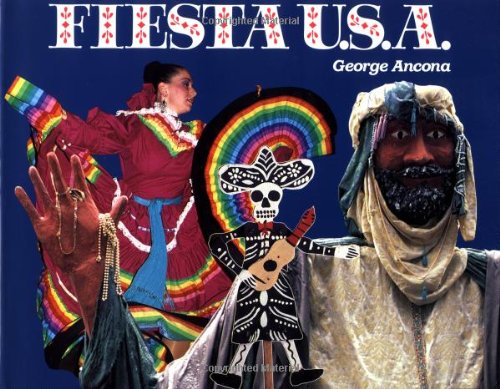 In a tribute to the customs and traditions of Latinos in the United States, engaging photographs capture four fiestas: the Day of the Dead, las Posadas, the dance of the Matachines, and Three Kings’ Day.
The Piñata Maker / El Piñatero
Told in both English and Spanish by award-winning author-photographer George Ancona, The Pinata Maker/El pinatero documents this traditional Latin American artform and includes a note on how to make pinatas at home. Set in Mexico.
Carnaval
For weeks the people of the Brazilian town of Olinda have been sewing costumes, painting masks, and creating giant puppets–preparing for carnaval. Like Mardi Gras in New Orleans, carnaval is a five-day festival of parades, dancing, and singing. But unlike Mardi Gras, Olinda’s carnaval still celebrates the traditions and folklore of the people and the shared cultures–indigenous, European, and African–that make up Brazil. As generations have done each year, the people of Olinda and their visitors give themselves over to the music, dance, and joy of carnaval.
Charro (Spanish-Language)
Charro is the Mexican term for horseman, but for a Mexican a charro is much more than a cowboy. A skilled rider of horses and bulls and bucking broncos, an artist with a lariat, and a model of gentlemanly dress and behavior, the charro is also a living symbol of Mexico’s patriotic past. In the rodeo-like sport called la charrería, male charros and female charras, children and adults, show off their skill and daring. But more than that they are showing off their pride in their country–because to be a charro is to be a Mexican.
Fiesta U.S.A./Spanish (Spanish Edition)
In a tribute to the customs and traditions of Latinos in the United States, engaging photographs capture four fiestas: the Day of the Dead, las Posadas, the dance of the Matachines, and Three Kings’ Day.
Pablo Remembers
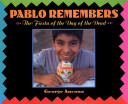
From October 31 to November 2, people in Mexico celebrate the festival of el Dia de Los Muertos, the Day of the Dead. This photodocumentary follows Pablo and his family as they prepare to honor the memory of Pablo’s grandmother. Ancona’s photographs catch the affirmation of life that fills the Mexican festival arising from both Aztec and Christian customs honoring the dead.