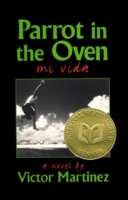
Manny relates his coming of age experiences as a member of a poor Mexican American family in which the alcoholic father only adds to everyone’s struggle.
Featured in Volume VI, Issue 1 of WOW Review.

Catalog sorted by age group
Manny relates his coming of age experiences as a member of a poor Mexican American family in which the alcoholic father only adds to everyone’s struggle.
Featured in Volume VI, Issue 1 of WOW Review.
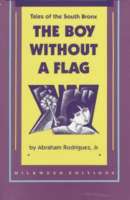
The violent world of the underclass and the daily battle with hopeless poverty, drug addiction, and other urban horrors come vividly to life in a collection of stories about being young and desperate in the South Bronx. A first collection. Original.
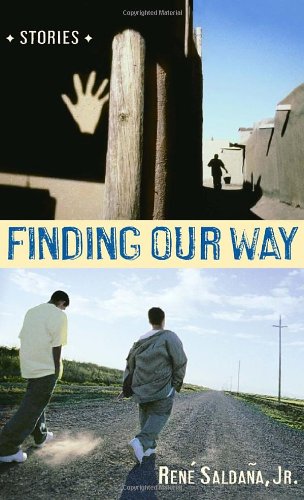 THESE STORIES TAKE the reader to meet mochos; cholos; Mr. and Mrs. Special; Manny with his mysterious phone calls; Melly, who dreams of being the first girl to take the Dive; Andy and Ruthie, who find that being “boyfriend-girlfriend” takes on new meaning the night of the prom; and Chuy, who seems determined to get kicked out of school. Each distinct voice shares secret thoughts that draw the reader into daily dramas of love, danger, loyalty, and pride. In the final story, a shocking tragedy reverberates through the barrio.“With this collection, Saldaña makes a significant contribution to the field of Latino short stories for young readers.”—VOYA, Starred“These powerfully written, provocative selections have universal appeal and subtle, thoughtful themes.”—School Library Journal“While much is revealed, just as much is implied, making the stories layered and rich while still rendering them accessible.”—The BulletinFrom the Hardcover edition.
When Miata leaves on the school bus the skirt that she is to wear in a dance performance, she needs all her wits to get it back without her parents’ finding out that she has lost something yet again.
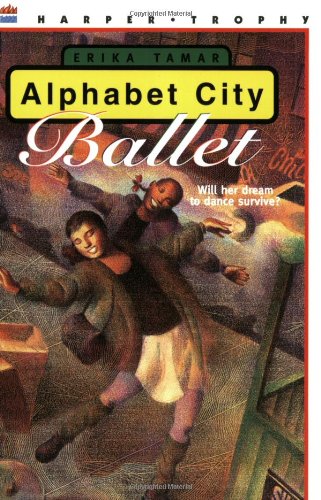 Marisol has always loved to dance–from the salsa at family parties to the boom boxes on Loisada Avenue. Then she wins a scholarship to ballet school and discovers an inspiring new world of beauty and discipline. When violence erupts in Alphabet City, Marisol’s dream starts to slip away. To keep dancing she must make heartbreaking choices–perhaps impossible ones.
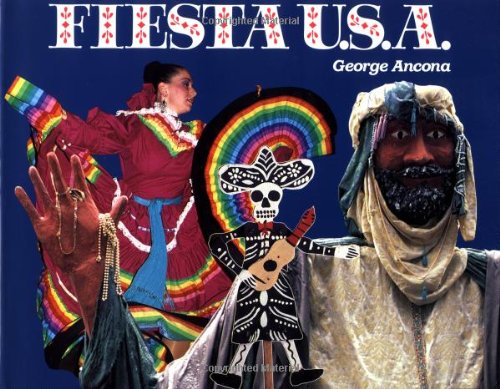 In a tribute to the customs and traditions of Latinos in the United States, engaging photographs capture four fiestas: the Day of the Dead, las Posadas, the dance of the Matachines, and Three Kings’ Day.
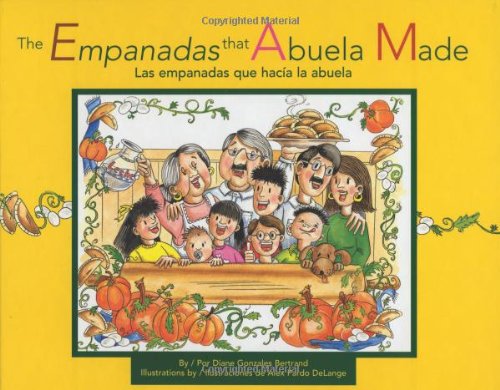 A sweet bilingual story about a family tradition. Baking is always a treat, particularly when you throw family and fun into the mix. In this whimsical look at the making of empanadas, popular children’s author Gonzales Bertrand serves up the festive fun of a family’s effort to concoct the delicious pastries. In the tradition of popular rhymes like “The Old Lady Who Swallowed a Fly,” the laughter and fun rise from page to page. The Empanadas that Abuela Made/Las empanadas que Abuela hacía is filled with humorous cooks and family: Abuela, Abuelo, the cousins, aunts, uncles, and even the family dog join the parade of fluttering flour and swirling sugar. Alex Pardo de Lange fills the pages with offbeat illustrations of blankets of dough and dancing rolling pins.

After school, Marisol eagerly starts for home to see if her cat, Luisa, has had her kittens. But before she can get there, Uncle Tomás calls to her. He needs Marisol to tell the poultry man that his chickens cost too much. Uncle Tomás cannot speak English so Marisol must do the talking–and she does. Marisol hurries on her way, but soon Auntie Flora stops her for help. Then Mrs. Lopez needs her, too. When Marisol finally gets home, her own mama needs her to hurry to the phone company to straighten out a bill. Luisa will have to wait.
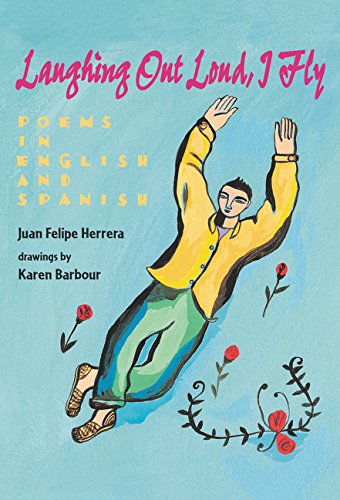 From one of the most prominent Chicano poets writing today, here are poems like sweet music-to make the body shake and move to the rhythm of rhyme, to the pulse of words. Juan Felipe Herrera writes in both Spanish and English about the joy and laughter and sometimes the confusion of growing up in an upside-down, jumbled-up world-between two cultures, two homes. With a crazy maraca beat, Herrera creates poetry as rich and vibrant as mole de ole and pineapple tamales…an aroma of papaya…a clear soup with strong garlic, so you will grow not disappear Herrera’s words are hot& peppery, good for you. They show us what it means to laugh out loud until it feel like flying.Juan Felipe Herrera’s vibrant poems dance across these pages in a dazzling explosion of two languages English and Spanish. Skillfully crafted, beautiful, joyful, fun, the poems are paired with whimsical black and white drawings by Karen Barbour. The resulting collage fills the soul and the senseshot and peppery, good for you and celebrates a life lived between two cultures.Laughing out loud, I fly, toward the good things,to catch Mama Lucha on the sidewalk, afterschool, waiting for the green-striped bus,on the side of the neighborhood store, next to almonds,Jose’s tiny wooden mule, the wiseboy from San Diego,teeth split apart, like mine in the coppery afternoon . . .22000 Pura Belpre Award