Slash

Slash is Jeannette Armstrong’s first novel. Slash poignantly traces the struggles, pain, alienation and accounts of a young Okanagan man’s search for truth and meaning in his life. Slash has been adopted for use in high schools, colleges and universities.

Touching Spirit Bear

Within Cole Matthews lie anger, rage and hate. Cole has been stealing and fighting for years. This time he caught Alex Driscal in the, parking lot and smashed his head against the sidewalk. Now, Alex may have permanent brain damage’and Cole is in the Biggest trouble of his life.

Cole is offered Circle Justice: a system based on Native American traditions that attempts to provide healing for the criminal offender, the victim and the, community. With prison as his only alternative, Cole plays along. He says he wants to repent, but in his heart Cole blames his alcoholic mom his, abusive dad, wimpy Alex — everyone but himself — for his situation.

Cole receives a one-year banishment to a remote Alaskan island. There, he is mauled by Mysterious white bear of Native American legend. Hideously injured, Cole waits for his death His thoughts shift from from Anger to humility. To survive, he must stop blaming others and take responsibility for his life. Rescuers arrive to save Cole’s but it is the attack of the Spirit Bear that may save his soul.

Ben Mikaelsen paints a vivid picture of a juvenile offender, examining the roots without absolving solving him of responsibility for his actions, and questioning a society in which angry people make victims of their peers and communities. Touching Spirit Bear is a poignant testimonial to the power of a pain that can destroy, or lead to healing

Just Talking About Ourselves: Voices of Our Youth

just talkCollection of stories depicting Native life in urban and reservation settings.

A Really Good Brown Girl

Marilyn Dumont’s Metis heritage offers her challenges that few of us welcome. Here she turns them to opportunities in a voice that is fierce, direct, and true, she explores and transcends the multiple boundaries imposed by society on the self. She mocks, with exasperation and sly humour, the banal exploitation of Indianness, more-Indian-than-thou oneupmanship, and white condescension and ignorance. She celebrates the person, clearly observing, who defines her own life. These are Indian poems, Canadian poems, human poems.

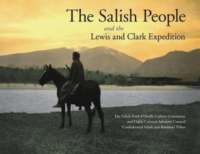
The Salish People and the Lewis and Clark Expedition

On September 4, 1805, in the upper Bitterroot Valley of what is now western Montana, more than four hundred Salish people were encamped, pasturing horses, preparing for the fall bison hunt, and harvesting chokecherries as they had done for countless generations. As the Lewis and Clark expedition ventured into the territory of a sovereign Native nation, the Salish met the strangers with hospitality and vital provisions, while receiving comparatively little in return. For the first time, a Native American community offers an in-depth examination of the events and historical significance of their encounter with the Lewis and Clark expedition. The result is a new understanding of the expedition and its place in the wider context of U.S. history. Through oral histories and other materials, Salish elders recount the details of the Salish encounter with Lewis and Clark-their difficulty communicating with the strangers through multiple interpreters and consequent misunderstanding of the expedition’s invasionary purpose, their discussions about whether to welcome or wipe out the newcomers, their puzzlement over the black skin of the slave York, and their decision to extend traditional tribal hospitality and gifts to the guests. What makes The Salish People and the Lewis and Clark Expedition a startling departure from previous accounts of the Lewis and Clark expedition is how it depicts the arrival of non-Indians-not as the beginning of history, but as another chapter in a long tribal history. Much of this book focuses on the ancient cultural landscape and history that had already shaped the region for millennia prior to the arrival of Lewis and Clark. The elders begin their vivid portrait of the Salish world by sharing creation stories and the traditional cycle of life. The book then takes readers on a cultural tour of the Native trails that the expedition followed. With tribal elders as our guides, we now learn of the Salish cultural landscape that was invisible to Lewis and Clark. The Salish People and the Lewis and Clark Expedition also brings new clarity to the profound upheaval of the Native world in the century prior to the expedition’s arrival, as tribes in the region were introduced to horses, European diseases, and firearms. The arrival of Lewis and Clark marked the beginning of a heightened level of conflict and loss, and the book details the history that followed the expedition: the opening of Salish territory to the fur trade, the arrival of Jesuit missionaries, the establishment of Indian reservations, the non-Indian development of western Montana, and more recently, the revival and strengthening of tribal sovereignty and culture. Conveyed by tribal recollections and richly illustrated, The Salish People and the Lewis and Clark Expedition not only sheds new light on the meaning of the expedition, but also illuminates the people who greeted Lewis and Clark, and despite much of what followed, thrive in their homeland today.
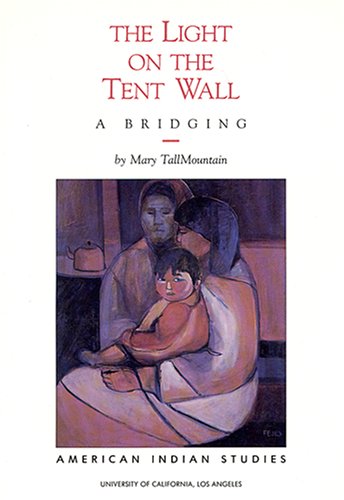
The Light On The Tent Wall: A Bridging (Native American Ser)

Mary TallMountain is a Native writer whose “lantern voices seek to lead us out of the given darkness,” and “her work, like seasoned oak, is full of heat and fire, simplicity and compassion,” writes poet and scholar Alfred Robinson. The poems in this collection confront death and engage the sacred. Joy Harjo calls each poem “a track, and the series of tracks makes a bridge back to the ‘light on the tent wall,’ which is the sacred place of the songs, the stories that created us.”

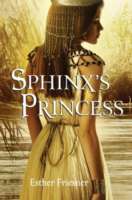
Sphinx’s Princess

Friesner, author of Nobody’s Princess, offers readers another fresh new look at an iconic figure–the Egyptian queen Nefertiti–by blending historical fiction and mythology in a thrilling concoction.

Ashes

Thirteen-year-old Gabriella Schramm’s favorite pastime is reading. With Adolf Hitler slowly but unstoppably rising to power, Gaby turns to her books for comfort while the world around her changes dramatically: The streets become filled with soldiers, her sister’s boyfriend raises his arm in a heil Hitler salute, and the Schramm’s family friend Albert Einstein flees the country. When Gaby’s beloved books come under attack, she fears she may have to leave behind the fiction and the life she has always cherished.

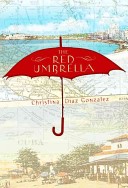
The Red Umbrella

The Red Umbrellais the moving tale of a 14-year-old girl’s journey from Cuba to America as part of Operation Pedro Pan-an organized exodus of more than 14,000 unaccompanied children, whose parents sent them away to escape Fidel Castro’s revolution. In 1961, two years after the Communist revolution, Lucecita Aacute lvarez still leads a carefree life, dreaming of parties and her first crush. But when the soldiers come to her sleepy Cuban town, everything begins to change. Freedoms are stripped away. Neighbors disappear. Her friends feel like strangers. And her family is being watched. As the revolution’s impact becomes more oppressive, Lucecita’s parents make the heart-wrenching decision to send her and her little brother to the United States-on their own. Suddenly plunked down in Nebraska with well-meaning strangers, Lucecita struggles to adapt to a new country, a new language, a new way of life. But what of her old life? Will sheeve see her home or her parents again? And if she does, will she still be the same girl?   The Red Umbrellas a moving story of country, culture, family, and the true meaning of home.