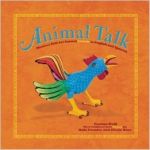
Animal Talk

Animals that live in one country don’t always talk the same language as animals from somewhere else. Take a rooster, for instance. In English-speaking countries, he says cock-a-doodle-doo when he has a notion to announce himself or to greet the dawn. But in Spanish-speaking countries, he says ki-kiri-ki. Emerging readers will delight in identifying the animals depicted on each new page. And the bilingual text invites parent and child into an interactive and playful reading experience for acting out animal sounds in English and Spanish.Craftsman Rubi; Fuentes and Efrai;n Broa from the Mexican state of Oaxaca fill the pages of Animal Talk with vibrant, wildly imaginative figures of familiar animals.Animal Talk is the fifth book in Cynthia Weill’s charming First Concepts in Mexican Folk Art series. It is her passion to promote the work of artisans from around the world through early concept books.
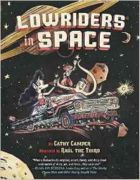
Lowriders In Space

Lupe, Flapjack, Elirio customize their car into a low rider for the Universal Car Competition to win the cash prize that will enable them to buy their own garage.

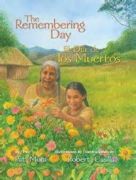
The Remembering Day

Long ago in what would come to be called Mexico, as Mama Alma and her granddaughter, Bella, recall happy times while walking in the garden they have tended together since Bella was a baby, Mama Alma asks that after she is gone her family remember her on one special day each year. Includes facts about The Remembering Day, El dia de los muertos.

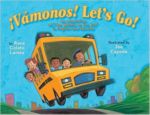
¡Vámonos! Let’s Go!

An adaptation of the song “The wheels on the bus,” written in Spanish and English, which follows two children who see and hear a train, a fire truck, an ambulance, and other vehicles on their way to an amusement park. Includes music.

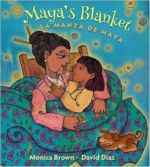
Maya’s Blanket

“When a little girl’s cherished baby blanket becomes old and worn, it is made into a dress, and over the years it is made into even smaller and smaller items, eventually ending up as a bookmark and inspiring the creation of a book. Includes an author’s note and a glossary.”

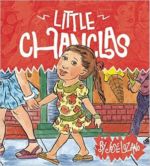
Little Chanclas

Lily Lujan is known as Little Chanclas because she wears her chanclas, or flip flops, wherever she goes, especially to parties, so when the chanclas come apart while she is dancing at a family barbecue and Chewcho the bulldog eats one, Lily is inconsolable until Granny Lola arrives with a solution.

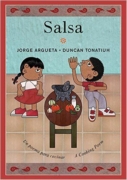
Salsa: Un poema para cocinar/A Cooking Poem (Bilingual Cooking Poems)

A young boy and his sister gather the ingredients and grind them up in a molcajete, just like their ancestors used to do, singing and dancing all the while. The children imagine that their ingredients are different parts of an orchestra, the tomatoes are bongos and kettledrums, the onion, a maraca, the cloves of garlic, trumpets and the cilantro, the conductor. They chop and then grind these ingredients in the molcajete, along with red chili peppers for the “hotness” that is so delicious, finally adding a squeeze of lime and a sprinkle of salt. When they are finished, their mother warms tortillas and their father lays out plates, as the whole family, including the cat and dog, dance salsa in mouth-watering anticipation.