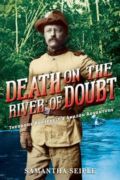
I did have a murderous trip down South, but it was mighty interesting.” In October 1913, Theodore Roosevelt arrived in Rio de Janeiro, Brazil, on a tour of South America. The thrill-seeking adventurer had no idea that he would soon receive an offer he couldn’t refuse: the chance to lead an expedition deep into the Amazon jungle to chart an unmapped river with his son Kermit and renowned Brazilian explorer Candido Mariano da Silva Rondon. Death on the River of Doubt takes readers inside the thrilling journey that unfolds as Roosevelt, Rondon, Kermit, and their companions navigate an unpredictable river through an unforgiving jungle. With new threats at every turn, from bloodthirsty piranhas and raging rapids to starvation, disease, and a traitor in their own ranks, it seems that not everyone will make it out alive. Through it all, the indomitable Teddy Roosevelt remained determined to complete their mission and rewrite the map of the world. Or die trying.
Biography – Autobiography- Memoir
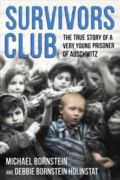
Survivors Club
The incredible true story of Michael Bornstein–who at age 4 was one of the youngest children to be liberated from Auschwitz–and of his family.
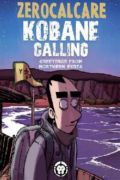
Kobane Calling: Greetings from Northern Syria
Autobiographical memoir of a young Italian cartoonist, writing and drawing under the nom-de-plume Zerocalcare, who volunteers with the Rojava Calling organization and heads into the Middle East to support and observe the Kurdish resistance in Syria as they struggle against the advancing forces of the Islamic State. He winds up in the small town of Mesher, near the Turkish-Syrian border as a journalist and aid worker, and from there he travels into Ayn al-Arab, a majority-Kurd town in the Rojava region of Syria. As he receives an education into the war from the Kurdish perspective, he meets the women fighting in the all-female Kurdish volunteer army (the Yekeineyen Parastina Jin, or Women’s Defense Units), struggling to simultaneously fight off the Islamic State even as they take strides for Kurdish independence and attempt a restructuring of traditional patriarchal Kurdish society.
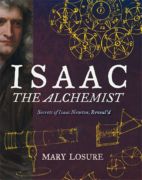
Isaac the Alchemist
A surprising true story of Isaac Newton’s boyhood suggests an intellectual development owing as much to magic as science. Before Isaac Newton became the father of physics, an accomplished mathematician, or a leader of the scientific revolution, he was a boy living in an apothecary’s house, observing and experimenting, recording his observations of the world in a tiny notebook. As a young genius living in a time before science as we know it existed, Isaac studied the few books he could get his hands on, built handmade machines, and experimented with alchemy—a process of chemical reactions that seemed, at the time, to be magical. Mary Losure’s riveting narrative nonfiction account of Isaac’s early life traces his development as a thinker from his childhood, in friendly prose that will capture the attention of today’s budding scientists—as if by magic. Back matter includes an afterword, an author’s note, source notes, a bibliography, and an index.
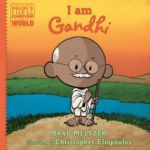
I Am Gandhi
As a young man in India, Gandhi saw firsthand how people were treated unfairly. Refusing to accept injustice, he came up with a brilliant way to fight back through quiet, peaceful protest. He took his methods with him from South Africa back to India, where he led a nonviolent revolution that freed his country from British rule. Through his calm, steady heroism, Gandhi changed everything for India and inspired civil rights movements all over the world, proving that the smallest of us can be the most powerful.
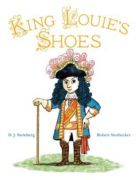
King Louie’s Shoes
King Louie was a very BIG king in all ways but one: He was five-feet-four-inches short. So Louie and his royal cobbler cooked up the perfect high-heeled solution to help Louie appear taller. But after an embarrassing tumble (on the dance floor, no less!) Louie learned that his subjects were loyal no matter how big—or how shrimpy—their beloved Louie might have been. Readers young and old will relate to this silly and sweet story of King Louie XIV—a man who had it all, but still felt small.
Marti’s Song For Freedom
A bilingual biography of José Martí, who dedicated his life to the promotion of liberty, the abolishment of slavery, political independence for Cuba, and intellectual freedom.
Tecumseh
Two hundred years after his death, the Shawnee chief Tecumseh is still considered one of the greatest leaders of North America’s First Peoples. This pictorial biography tells the story of his remarkable life, culminating in the events of the War of 1812.
Sitting Bull
A detailed time line and author’s note reflect extensive research and a depth of understanding about the topic. The book is engagingly told in the first person, with Sitting Bull describing his childhood training to be a warrior and a hunter. White people had been in the area for many years, but increased westward expansion and the decision to build forts brought the tensions among the various Native groups and white settlers and soldiers to a higher level. The book does not attempt to present all sides of the issue but instead concentrates on what happened to the Hunkpapa people and other Sioux groups and the pivotal battles of Killdeer Mountain, Rosebud Creek, and Little Bighorn.
Pipestone
A renowned activist recalls his childhood years in an Indian boarding school