
Surprising Cecilia is the second novel-following the success of Cecilia’s Year-about a girl whose dreams carry her far beyond the small farm community she lives in. Both novels are set in the rich Hispanic culture of the Rio Grande Valley in the 1930s. Cecilia has worked hard so that she can go to high school. Now it’s September-the school bus is bringing Cecilia to the new adventures, surprises, and responsibilities of growing up. Susan Gonzales Abraham and Denise Gonzales Abraham are the daughters of Cecilia Gonzales Abraham, the hero of the Cecilia books. Cecilia’s Year has been selected as the Best Book for Young Adults in 2004 by the Texas Institute of Letters.
Historical Fiction
Historical Fiction genre
Esperanza Rising
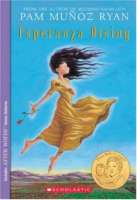
When Esperanza and Mama are forced to flee to the bountiful region of Aguascalientes, Mexico, to a Mexican farm labor camp in California, they must adjust to a life without fancy dresses adn servants they were accustomed to on Rancho de las Rosas. Now they must confront the challenges of hard work, acceptance by their own people, and economic difficulties brought on by the Great Depression. When Mama falls ill and a strike for better working conditions threatens to uproot their new life, Esperanza must relinquish her hold on the past learn to embrace a future ripe with the riches of family and community.
This book has been included in WOW’s Language and Learning: Children’s and Young Adult Fiction Booklist. For our current list, visit our Booklist page under Resources in the green navigation bar.
Pillars of Gold and Silver
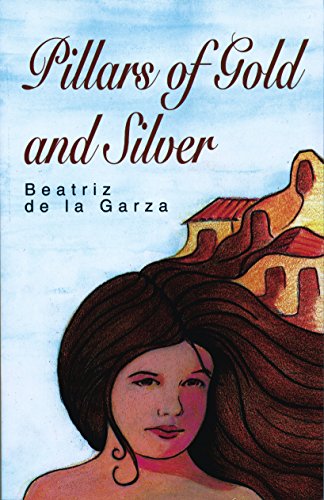 After her father is killed in the Korean War, young Blanca Estela and her mother leave California to spend the summer in Revilla, an old town in Northern Mexico with Blanca’s grandmother. At first, Blanca is unhappy in their holiday retreat, but gradually makes friends and becomes part of the community.
Young Zorro: The Iron Brand (Young Zorro)
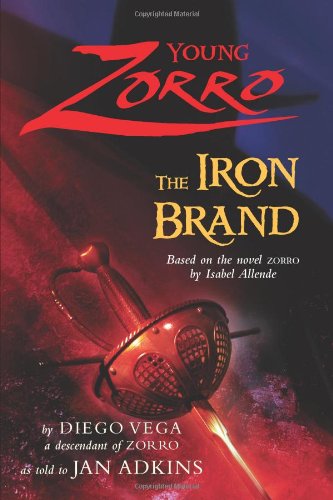 Diego de la Vega is more concerned with riding horses and making mischief with his best friend, Bernardo, than about fighting injustice. But all that changes when men start disappearing from the pueblo of Los Angeles and cattle go missing from his father’s rancho. Diego and Bernardo are about to encounter an injustice so evil that they will have no choice but to take action. Inspired by Isabel Allende’s novel Zorro, which reveals how Diego de la Vega became the legendary masked hero, Young Zorro: The Iron Brand introduces readers to a land of vaqueros and kidnappers—an exciting world in which a young hero is formed.
Noche de Humo
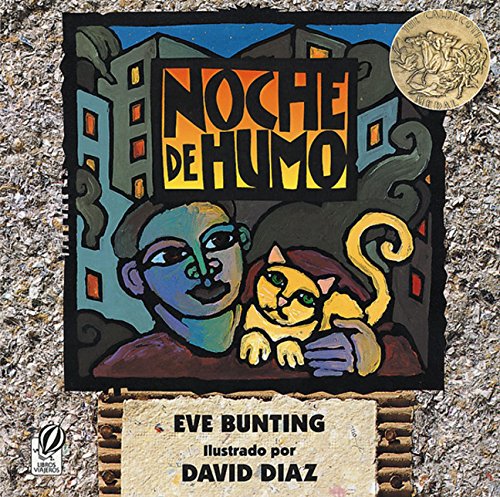 Eve Bunting’s heartfelt story and David Diaz’s dramatic illustrations create a compelling child’s-eye view of urban violence. A young boy and his mother are forced to flee their apartment during a night of rioting in Los Angeles. Fires and looting force neighbors–who have always avoided one another–to come together in the face of danger and concern for their missing pets. David Diaz was awarded the Caldecott Medal for his bold acrylic paint and photo-collage illustrations.
The Boys of San Joaquin
Paolo calls Rufus “a Mack truck with no one driving.” Rufus is the O’Neil family dog, and he shows up one morning with part of a twenty-dollar bill in his teeth.Paolo, age twelve, figures that there must be more where that bill came from, and since his cousin Billy needs to repair a bent wheel on his bike, there’s a reason for looking. He, Georgie, and Billy end up in the monsignor’s garden behind the Cathedral of San Joaquin, but it’s not exactly treasure they find, it’s a hand that shoots out of the undergrowth to grab Paolo’s neck. The search for the stash leads the boys — sometimes scared spitless — on many a byway around Orange Grove City, California, in the summer of 1951. And onto the byway of conscience.”Suppose you found a treasure. Couldn’t you keep it?” Paolo asks his uncle. “I mean, say you know who it belongs to, and they probably need it….But when you find it, nobody has it. Isn’t nobody’s property in particular, then,” he reasons. “Well, maybe somebody has it, but it isn’t theirs. It would be yours, wouldn’t it?”No answer. “How in the heck is a guy supposed to be somebody in this world without any money?”
Sammy and Juliana in Hollywood

As a Chicano boy living in the unglamorous town of Hollywood, New Mexico, and a member of the graduating class of 1969, Sammy Santos faces the challenges of “gringo” racism, unpopular dress codes, the Vietnam War, barrio violence, and poverty.
Bandit’s Moon
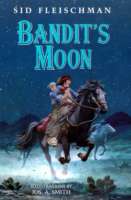
Newly orphaned, young Annyrose escapes from the villainous O.O. Mary and falls under the protection of a proud and fearless Mexican bandit, regarded as the Robin Hood of the California Gold Rush. Annyrose wants only to search for her older brother who had run off to the gold diggings, but she finds herself galloping beside the celebrated outlaw in his own quest. He is hunting down the last of a band of “Yankee” riffraff who wronged him, an event that turned the innocent young Mexican into an avenging terror of the roads. With his characteristic story twists and turns and surprises, Newbery Award winner Sid Fleischman lights up a dark corner in this Gold Rush drama set against a firestorm of bigotry ignited by the lust for riches. As for this legendary bandit, dashing about on his silken black horse and breathing fire, he actually lived.02 Rebecca Caudill Young Reader’s Book Award Nominee Master List, 00-01 Charlie May Simon Book Award Reading List, 02 Nutmeg State Children’s Book Award Masterlist, 00-01 Children’s Choice Award Masterlist, 00-01 William Allen White Children’s Book Award Masterlist, 01-02 Land of Enchantment Book Award Masterlist (Gr. 6-9), and 00-01 Sequoyah Children’s Book Award Masterlist.
Chicken Foot Farm
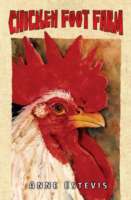
On the eve of World War II, young Alejandro comes of age on his family’s South Texas farm, known as Chicken Foot Farm because of how his mother marks her chicks. “Mama held the chick against her breast and splayed its left foot between her thumb and index finger. With her free hand she… quickly cut off the end of the chick’s shortest toe.” Rich with the customs and traditions of rural, Mexican-American life, Chicken Foot Farm depicts a multi-generational family in flux as change crawls relentlessly toward their land and lifestyle. As the seasons–and loved ones–come and go and misfortunes befall the family, Alejandro learns the lessons of life: the importance of family, honesty, hard work, and compassion. When the kitchen burns down one night, Alejandro feels they have lost something integral to their family unity. But his father promises they will build another kitchen, the new one better than the old. As Abuela Luciana ages, she begins to behave erratically, burning tortillas, forgetting to add water to the beans she is cooking, and even disappearing from the farm. She is certain someone has cursed her–put mal de ojo on her. How can the family cure her when she is the curandera, the one who has always taken care of them? Most importantly, Alejandro works hard to win his father’s approval, even though Papa generally ignores him in favor of the eldest son, Ernesto, who Papa says will inherit the farm. When Ernesto joins the Army, the family must face the possibility that he may not return as the entire country is thrown into the uncertainty of war. Following the attack on Pearl Harbor, young Alejandro notices something new in his family’s kitchen: a framed United States flag now hangs on the wall. “It’s something I can do for the war,” his Abuela Luciana tells him. Not understanding, she explains to him, “I can remind people that we are Americans.” In these poignant images of a time and place long gone, Anne Estevis sketches a tight-knit, Mexican-American community on the cusp of a new way of life as tractors replace mules and modern science competes with superstitious beliefs.
Probably the World’s Best Story about a Dog and the Girl Who Loved Me
 The further adventures and misadventures of twelve-year-old Paolo, his six-year-old brother Georgie, and their nine-year-old deaf cousin Billy as they try to find their missing dog, cope with a new paper route, and discover romance in their small California town in 1951.