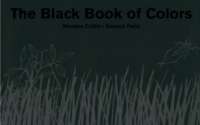
The Black Book of Colors

Living with the use of one’s eyes can make imagining blindness difficult, but this innovative title invites readers to imagine living without sight through remarkable illustrations done with raised lines and descriptions of colors based on imagery. Braille letters accompany the illustrations and a full Braille alphabet offers sighted readers help reading along with their fingers. This extraordinary title gives young readers the ability to experience the world in a new way.

See the review at WOW Review, Volume 3, Issue 1
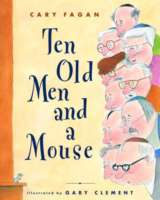
Ten Old Men and a Mouse

The synagogue was once a busy, bustling place, but now only ten old men come to tend it and pray each day. Then one day, a little scritch-scratch betrays the first new member in years: a tiny mouse who has taken up residence among the holy books. Of course, a trap must be set, but who will do it? Al volunteers, but in the morning the mouse is still there, and is just a little more appealing than he was before. Day after day, the men become more engaged, until the mouse has a bed, pictures on the wall, and a little carpet, not to mention all the treats the men bring. Then comes the biggest surprise of all. He is a she, giving the ten old men reason to celebrate with peach schnapps — and to plan a trip to the country where they find the perfect place to release their numerous charges. Back at the synagogue, fall turns to winter. The ten old men miss their mice until a little scritch-scratch returns.

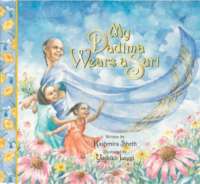
My Dadima Wears a Sari

This warm, multigenerational story offers a glimpse into the distinctive culture and customs of India, while reinforcing universal themes of love and the importance of family. Every day, Rupa’s grandmother wears a beautiful sari. She shares with her young granddaughter all the wonderful things that saris can do-from becoming an umbrella in a rainstorm to providing a deep pouch to carry seashells collected from the beach. Soon Rupa’s own imagination is sparked with new uses for the saris. A note from the author and instructions for wrapping a sari are included.

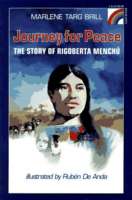
Journey for Peace: The Story of Rigoberta Menchu

The winner of the 1992 Nobel Peace Prize, Rigoberta Menchu is a poor, uneducated Mayan woman who has helped her native people fight oppression in Guatemala and who has told the world about their suffering. Part of the Rainbow Biography series, the account is quiet, but it tells of violence and poverty and amazing courage. Beginning with Menchu’s childhood as a field laborer, her personal story is woven together with that of her Indian people and their harsh dislocation at the hands of the landowners and the brutal army. Her father was imprisoned, tortured, and finally murdered for his leadership role in the resistance; so were her mother and her brothers and sisters. Yet, like her father, she has led her people in nonviolent resistance and has given them a voice.

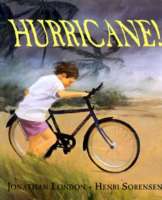
Hurricane!

One moment the sun is shining on the slopes of El Yunque, the largest mountain in eastern Puerto Rico. The next, everything has changed. The sky has turned deep purple, and you feel as if the air has been sucked from your lungs. That can mean only one thing: A hurricane is coming!

The Waorani: People of the Ecuadoran Rain Forest (Global Villages)

Describes the culture and plight of the Waorani, an indigenous tribe of the Ecuadoran rain forest whose environment and way of life are threatened by the encroachment of the industrial world.

The Night of the Stars

The hero is a simple peasant who does not like the night because it is dark. Every evening he complains to the night, who can do nothing to change its ways. Finally, the man pokes his finger through the night and makes a star. He finds the effect so wonderful that he creates many more, and even uses his fist to punch a hole large enough to be the moon. To celebrate the lightness of the night, the whole town turns out for a nighttime celebration.

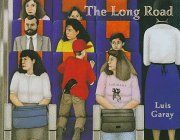
The Long Road

Although life is difficult in José’s Central American village, he enjoys playing football with his friends, sharing the large meals cooked by his aunts, and even going to school. But a civil war breaks out in his country. Outspoken people like his mother are in danger, so José and his mother must flee.The road north to make a new home is arduous and very long, but it is only the beginning of hard times. They face days of paperwork and nights in a hostel for refugees. Even when his mother finds work as an office cleaner, they must rely on a food bank.Slowly, the pieces of this new life begin to come together as José and his mother realize that they have finally arrived at the happy end of a very long road.

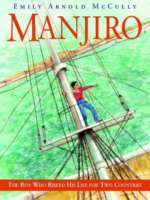
Manjiro: The Boy Who Risked His Life for Two Countries

In 1841, Japan had been closed to the outside world for 250 years, and anyone who tried to return to the country after leaving it could be executed. So when the small fishing boat on which 14-year-old Manjiro was working was shipwrecked, he despaired of ever returning to his village. The captain of the American whaling ship that rescued Manjiro took a special interest in him, inviting him to come live in Massachusetts. There, Manjiro was treated like Captain Whitfield’s son, and he began to feel as though Massachusetts was his second home. Still, he never gave up his dream of finding a way to return to Japan and see his mother again. Watercolor illustrations bring to life the true story of a determined and resourceful young man whose intimate knowledge of two cultures later led him to play an important role in the opening of Japan to Western trade and ideas.