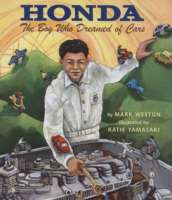
Honda: The Boy Who Dreamed of Cars

One day in 1914 when Soichiro Honda was seven years old, an astonishing, moving dust cloud appeared in his small Japanese town. The cause was a leaky, noisy automobile–the first the boy had ever seen. At that moment Honda fell in love with cars, and a dream took hold. He would one day make them himself. It took Honda many years to reach his goal. Along the way he became an expert mechanic and manufacturer of car parts. After World War II he developed a motorized bicycle, the forerunner of his innovative motorcycles. Eventually Honda began manufacturing cars, first race cars and then consumer cars. Constantly seeking ways to make his products better than his competitors, Honda grew into a global industry leader. Soichiro Honda had an inventive mind and a passion for new ideas, and he never gave up on his dream. A legendary figure in the world of manufacturing, Honda is a dynamic symbol of lifelong determination, creativity, and the power of a dream.

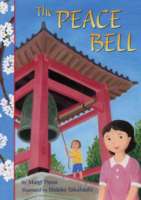
The Peace Bell

Yuko’s grandmother remembers that when she was a little girl many years ago in Japan, her town’s beautiful temple bell was taken away to be used as scrap metal for the war effort. She thought she’d never see it again. After the war the bell was brought to America by a U. S. Navy crew who found it abandoned in a Japanese shipyard. Most amazing of all, the bell was later returned to Japan as a gesture of friendship between the former warring countries.

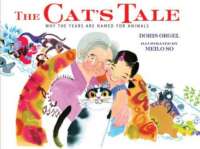
The Cat’s Tale: Why the Years Are Named for Animals

Willow’s pet cat Mao relates how the Jade Emperor chose twelve animals to represent the years in the Chinese calendar.

Seven Paths to Death: A Samurai Mystery

Samurai Seikei and Judge Ooka, his foster-father, seek seven men who have seven maps on their backs in order to locate a cache of dangerous weapons before they fall into the wrong hands.

Kamishibai Man

The Kamishibai man used to ride his bicycle into town where he would tell stories to the children and sell them candy, but gradually, fewer and fewer children came running at the sound of his clappers. They were all watching their new televisions instead. Finally, only one boy remained, and he had no money for candy. Years later, the Kamishibai man and his wife made another batch of candy, and he pedaled into town to tell one more story—his own. When he comes out of the reverie of his memories, he looks around to see he is surrounded by familiar faces—the children he used to entertain have returned, all grown up and more eager than ever to listen to his delightful tales.

Manjiro: The Boy Who Risked His Life for Two Countries

In 1841, Japan had been closed to the outside world for 250 years, and anyone who tried to return to the country after leaving it could be executed. So when the small fishing boat on which 14-year-old Manjiro was working was shipwrecked, he despaired of ever returning to his village. The captain of the American whaling ship that rescued Manjiro took a special interest in him, inviting him to come live in Massachusetts. There, Manjiro was treated like Captain Whitfield’s son, and he began to feel as though Massachusetts was his second home. Still, he never gave up his dream of finding a way to return to Japan and see his mother again. Watercolor illustrations bring to life the true story of a determined and resourceful young man whose intimate knowledge of two cultures later led him to play an important role in the opening of Japan to Western trade and ideas.