
When the ancient Tablet of Destinies falls into the wrong hands, it is up to Sikander Aziz and his friends to save humanity from having its future erased by two fearsome Mesopotamian gods.
Iraq
Materials from Iraq
Banana Dream
Eleven-year-old Iraqi, Mooz, yearns to taste the bananas that have been made unavailable by warfare.
Lost Boys
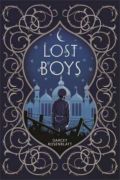
In 1982, twelve-year-old Reza has no interest in joining Iran’s war effort against Iraq. But in the wake of a tragedy and at his mother’s urging, he decides to enlist, assured by the authorities that he will achieve paradise should he die in service to his country. War does not bring the glory the boys of Iran have been promised, and Reza soon finds himself held in a prisoner-of-war camp in Iraq, where the guards not only threaten violence―they act upon it. Will Reza make it out alive? And if he does, will he even have a home to return to? Friendship, heartbreak, and Reza’s very survival are at stake as he finds solace through music and forges his own path―wherever that might take him.
Lost and Found Cat
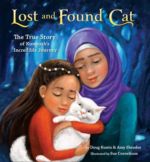
When an Iraqi family is forced to flee their home, they can’t bear to leave their beloved cat, Kunkush, behind. So they carry him with them from Iraq to Greece, keeping their secret passenger hidden away. But during the crowded boat crossing to Greece, his carrier breaks and the frightened cat runs from the chaos. In one moment, he is gone. After an unsuccessful search, his family has to continue their journey, leaving brokenhearted. A few days later, aid workers in Greece find the lost cat. Knowing how much his family has sacrificed already, they are desperate to reunite them with the cat they love so much. A worldwide community comes together to spread the word on the Internet and in the news media, and after several months the impossible happens—Kunkush’s family is found, and they finally get their happy ending in their new home.
Featured in WOW Review Volume XIII, Issue 3.
The White Zone
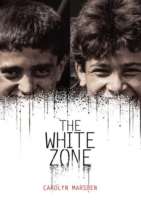
As American bombs fall on Baghdad during the Iraq War, ten-year-old cousins Nouri and Talib witness the growing violence between Sunni and Shiite Muslims.
Dear Blue Sky
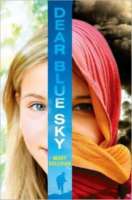
Shortly after Cass’s big brother is deployed to fight in Iraq, Cass becomes pen pals with an Iraqi girl who opens up her eyes to the effects of war.
Ibn Al-Haytham: First Scientist
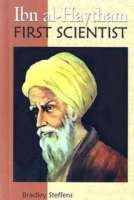
Ibn al-Haytham (“Alhazen” in Library of Congress cataloging) was born in Basra in 965. A Muslim who studied the works of Aristotle, Euclid, Archimedes, and Ptolemy, he developed an approach to science using experimentation and deduction and made significant observations and discoveries, particularly in the field of optics. Translations of his books influenced medieval European scientists and mathematicians from Bacon to Fermat to Kepler. Steffens notes that al-Haytham’s discovery of the cameraobscura may have changed Western art as well. Steffens has organized what is known of his subject’s life and work into a coherent narrative. He is quick to acknowledge gaps, but backs up inferences logically. Like the history of mathematics, the history of science is incomplete without an acknowledgment of early scholars in the Middle East. This clearly written introduction to al-Haytham, his society, and his contributions does that. The book concludes with a time line, source notes, a bibliography, and a list of Web sites.
Mohammed’s Journey: A Refugee Diary
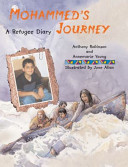
After his home was invaded by Saddam Hussein’s soldiers, a young Kurdish boy named Mohammed and his mother take on a daring quest to flee Iraq; risking their lives to travel through several countries in order to reach freedom in England.
Children Of War: Voices Of Iraqi Refugees
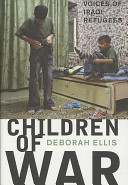
Provides interviews with twenty young Iraqi children who have moved away from their homeland and tells of their fears, challenges, and struggles to rebuild their lives in foreign lands as refugees of war.
Pride of Baghdad
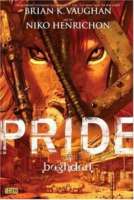
A graphic novel looks at life on the streets of Baghdad during the Iraq War, inspired by true events. In the spring of 2003, a pride of lions escaped from the Baghdad Zoo during an American bombing raid. Lost and confused, hungry but finally free, the four lions roamed the decimated streets in a desperate struggle for their lives. Pride of Baghdad raises questions about the true meaning of liberation – can it be given, or is it earned only through self-determination and sacrifice? And in the end, is it truly better to die free than to live life in captivity?