The Bourbon Street Musicians

In this rollicking retelling of “The Bremen Town Musicians,” a creaky old jack mule, a droopy hound dog, a ragged rooster, and a bony cat, all unwanted and no longer loved, set out for Bourbon Street in New Orleans to play bebop and make their fortune. Presently they encounter a band of thieves in a shack by a bayou, and though things don’t turn out quite as expected, they end up mighty fine just the same. A bluesy dialect that begs to be read aloud, vivid imagery, and distinctively comic illustrations infuse the adventures of these four determined friends with the flavor of rural Louisiana and the rhythm of New Orleans jazz. Glossary.

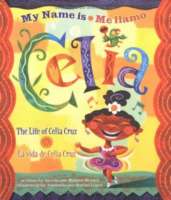
My Name is Celia/Me Llamo Celia: The Life of Celia Cruz/La Vida de Celia Cruz

An exuberant picture-book biography of the Cuban-born salsa singer. From its rhythmic opening, the first-person narrative dances readers through Cruz’s youth in Havana, a childhood bounded by scents of nature and home, the sweet taste of sugar, and the sound of music. A singer from an early age, Cruz sang so continually that one of her teachers finally urged her to share her voice with the world. Thus encouraged, she entered competitions, undeterred when her racial heritage prevented her from competing – undeterred, even, when the advent of Castro’s communist regime forced her to leave Cuba as a refugee. Positive even in exile, Cruz made New York City her own and took Miami by storm. The salsa-influenced prose presented in English and in Spanish is followed by a straightforward vita of the singer, noting her death in July 2003. Lopez’s distinguished, luminous acrylic paintings are alive with motion, lush with brilliantly layered colors, and informed with verve and symbolism. This is a brilliant introduction to a significant woman and her music. The only enhancement required is the music itself.

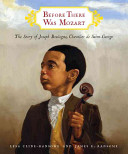
Before There Was Mozart: The Story of Joseph Boulogne, Chevalier De Saint-George

The musical superstar of 18th-century France was Joseph Boulogne—a Black man. This inspiring story tells how Joseph, the only child of a Black slave and her White master, becomes “the most accomplished man in Europe.” After traveling from his native West Indies to study music in Paris, young Joseph is taunted about his skin color. Despite his classmates’ cruel words, he continues to devote himself to his violin, eventually becoming conductor of a whole orchestra. Joseph begins composing his own operas, which everyone acknowledges to be magnifique. But will he ever reach his dream of performing for the king and queen of France? This lushly illustrated book by Lesa Cline-Ransome and James E. Ransome introduces us to a talented musician and an overlooked figure in Black history.

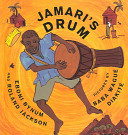
Jamari’s Drum

Little Jamari loves the sound of the great village drum and often sits at drummer Baba’s feet. “Why do you play every day?” he asks. “The drum is the keeper of peace in the village,” Baba replies. Time passes and many of the village elders pass on. One day Jamari agrees to take over the beating of the drum, to keep the peace. But little by little, he forgets his promise until disaster looms. What will Jamari do to bring back peace? Featuring acclaimed artist Baba Diakité’s gorgeous illustrations, Jamari’s Drum offers a simple, compelling lesson about duty and the greater good.

Revolution

An angry, grieving seventeen-year-old musician facing expulsion from her prestigious Brooklyn private school travels to Paris to complete a school assignment and uncovers a diary written during the French revolution by a young actress attempting to help a tortured, imprisoned little boy–Louis Charles, the lost king of France.


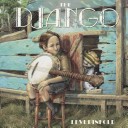
The Django

Jean longs to play the banjo, but the Django keeps on messing things up! So Jean sends the Django away, but wonders if he has lost his most precious inspiration.In this fictional story inspired by the famous jazz musician Jean “Django” Reinhardt, a young boy named Jean meets a special character called the Django. He’s fun and exciting, but he always gets Jean into trouble. Eventually the Django has to be sent away, and Jean misses him very much, until he discovers that he can still feel close to the Django every time he picks up his banjo.

Quesadilla Moon

As a young migrant worker, David is shocked and thrilled when the man running the field store offers him a loaf of bread in exchange for a song. Singing has been strongly discouraged by David’s father, who views it as a less-than-manly activity. But the opportunity to get food for free is a temptation David can’t resist, and the praise he receives afterwards produces a sense of euphoria he has never felt. Someone is actually paying him to sing! But singing always leads to conflict with his father, and the only time David can do it without getting into trouble is when the others start to harmonize to pass the time as they move up and down the rows, picking cotton, asparagus, or other crops. To help get through the grueling labor, David regularly daydreams about performing in front of an adoring audience. As David and his family move from town to town following the crops, he begins to forget his dream of becoming a singer, until one day when he learns about a local competition. Somehow, his feet carry him to the Four Square Apostolic Church where the contest will take place, but he is shaken when the elderly black ladies setting up for the event tell him it’s only for “colored folk.” When he is ultimately given the chance to participate, he eagerly seizes the opportunity. Is it really possible that his dreams might come true? Will the people who believe in him–a group of African-American women and an ambitious young reporter from the Oakland Tribune–be able to help David overcome the racial, social, and familial barriers he faces?

Heartsinger

Smee was born with a great gift: the ability to sing other people’s stories and heal their pain. But Smee also carries his own pain — his failure to reach his deaf mother and heal her grief at his father’s death. As he travels the country, he eases many people’s sorrows, but he cannot connect with anyone himself. Mitou also has a gift: spreading joy through a few notes from her accordion. When she hears about Smee–who was born on the same day she was–she knows that surely they belong together, each of them helping others through their music. They finally meet on the way to the king’s castle to sing for the beautiful Princess Esperanza. But will Mitou’s hopes be fulfilled–or is the pain of the past too great?