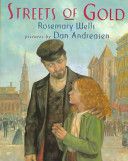
Based on a memoir written in the early twentieth century, tells the story of a young girl and her life in Russia, her travels to America, and her subsequent life in the United States.

Material appropriate for intermediate age groups
Based on a memoir written in the early twentieth century, tells the story of a young girl and her life in Russia, her travels to America, and her subsequent life in the United States.
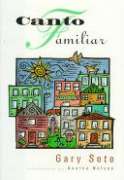
Twenty-five poems about the pleasures and woes that Mexican American children experience growing up. Simple poems, many involving Mexican Americans, celebrate experiences at school, home, and in the street. A companion to Neighborhood Odes, (1992). Touching, vibrant, and humorous, this lively collection of poems accompanied by beautiful illustrations celebrates childhood and the Mexican American experience. Invoking ordinary domestic and community incidents, it’ a fine introduction not only to poetry but to Chicano culture. Nelson debuts with scenes–homey, comfortable, bright–that make the book even more accessible.
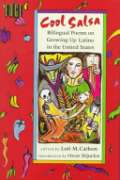
Growing up Latino in America means speaking two languages, living two lives, learning the rules of two cultures. Cool Salsa celebrates the tones, rhythms, sounds, and experiences of that double life. Here are poems about families and parties, insults and sad memories, hot dogs and mangos, the sweet syllables of Spanish and the snag-toothed traps of English. Here is the glory, and pain, of being Latino American.Latino Americans hail from Cuba and California, Mexico and Michigan, Nicaragua and New York, and editor Lori M. Carlson has made sure to capture all of those accents. With poets such as Sandra Cisneros, Martiacute;n Espada, Gary Soto, and Ed Vega, and a very personal introduction by Oscar Hijuelos, this collection encompasses the voices of Latino America. By selecting poems about the experiences of teenagers, Carlson has given a focus to that rich diversity; by presenting the poems both in their original language and in translation, she has made them available to us all.As you move from memories of red wagons, to dreams of orange trees, to fights with street gangs, you feel Cool Salsa’s musical and emotional cross rhythms. Here is a world of exciting poetry for you, y tuacute; tambieacute;n.
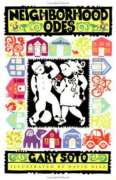
Twenty-one poems about growing up in an Hispanic neighborhood, highlighting the delights in such everyday items as sprinklers, the park, the library, and pomegranates.
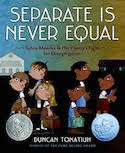
“Years before the landmark U.S. Supreme Court ruling Brown v. Board of Education, Sylvia Mendez, an eight-year-old girl of Mexican and Puerto Rican heritage, played an instrumental role in Mendez v. Westminster, the landmark desegregation case of 1946 in California”–
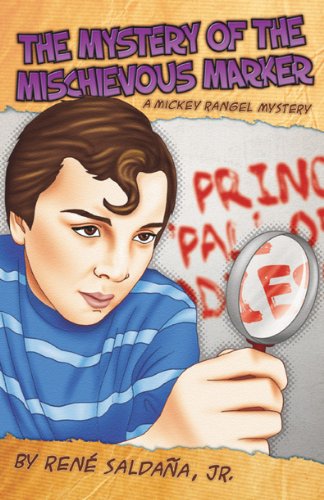 School principal Mrs. Abrego and nemesis Bucho both ask detective Mickey Rangel to help unmask the vandal who has been writing messages all over the school walls.
Presents profiles of fourteen Latino baseball players who, from 1900 through the 1960s, were pioneers of the sport in their home countries and the United States.
In “Cada Nino / Every Child, “acclaimed singer/songwriter Tish Hinojosa presents eleven bilingual songs especially for children. Some are playful toe-tappers like “The Barnyard Dance / El Baile Vegetal” where all the peas and greens and cabbage and beans shimmy in the pale moonlight; some are ballads, telling stories about the Mexican Revolution; while some are lullabies, sweet and dreamy, or celebrations of a grandmother’s love. But all of the songs will teach children about the rich mixture of Latino and American culture and tradition that is spreading out from the border across the United States. Every song is presented in both Spanish and English. Lyrics, music and guitar chords will help kids, parents and teachers to sing and play these wonderful songs themselves. Tish Hinojosa grew up in San Antonio in a house full of music. Moving with equal grace through folk, country, pop and Hispanic idioms, Tish’s music is known for dissolving the boundaries between cultures, languages and musical genres. Her CD “Cado Nino /Every Child “garnered a Parent’s Choice Gold Award and an award from the National Association of Parenting Publications. Hinojosa’s music has been widely praised in the national press and she has appeared on “Austin City Limits, Good Morning America, ” and at the White House for former President and Mrs. Clinton. Tish lives in Austin, Texas. Lucia Angela Perez illustrated her first book, “Little Gold Star/ Estrellita de Oro, “with her mother, Gloria Osuna Perez. The book and the poignant story of this mother and daughter was featured on National Public Radio. “Little Gold Star “was chosen by Nick Jr. Magazine as one of the 30 best books of the year 2000. “Cada Nino / Every Child “is Lucia Angela Perez’ second book. Lucia lives in Fort Worth, Texas.
When his mother is sent to jail in Los Angeles, eleven-year-old Tony goes to live with his forest ranger great-uncle in the Sierra Nevada Mountains, where Tony experiences unconditional love for the first time through his friendship with a rescue dog.

“Diamonds for everyone.” That’s what fifteen-year-old Patson Moyo hears when his family arrives in the Marange diamond fields. Soon Patson is working in the mines himself, hoping find his girazi–the priceless that stone that could change his life forever. But when the government’s soldiers comes to Marange, Patson’s world is shattered. Set against the backdrop of President Robert Mugabe’s brutal regime in Zimbabwe, Diamond Boy is the story of young man who succumbs to greed but finds his way out through a transformative journey to South Africa in search of his missing sister, in search of freedom, and in search of himself.