
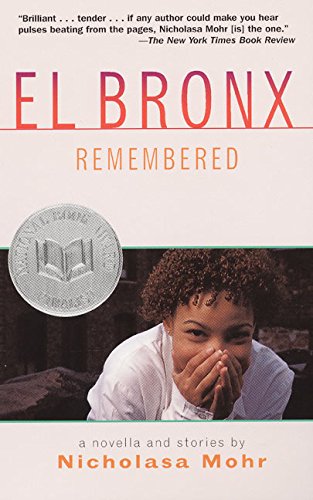
 In a city called New York… In a neighborhood called El Bronx… The Fernandex children own a very special pet: A white hen named after their favorite Hollywood movie star. A new girl comes to school – a gypsy child who can read palms and foretell the future. A young boy must face the humiliation of wearing his uncle’s orange roach-killer shoes to his high school graduation. In the South Bronx – or El Bronx, as it’s known to the people who live there – anything can happen. A migrant “fresh off the boat” from Puerto Rico can be somebody on the mainland, pursue the American Dream… and maybe even make it come true. Here are stories that capture the flavor and beat of El Bronx in its heyday, from 1946-1956. A New York Times Outstanding Book of the Year Finalist, 1976 National Book Award for Children’s Literature A Notable Children’s Trade Book in Social Studies (NCSS/CBC).
Age
Catalog sorted by age group
Mercy on These Teenage Chimps
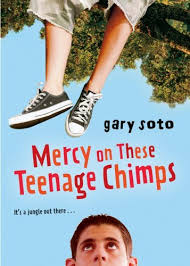 At age 13, best friends Ronnie and Joey suddenly feel like chimps–long armed, big eared, and gangly–and when the coach humiliates Joey in front of a girl, he climbs up a tree and refuses to come down. Gary Soto tells a touching story about friendship, understanding and the painful insecurities of being 13.
Amrica Is Her Name
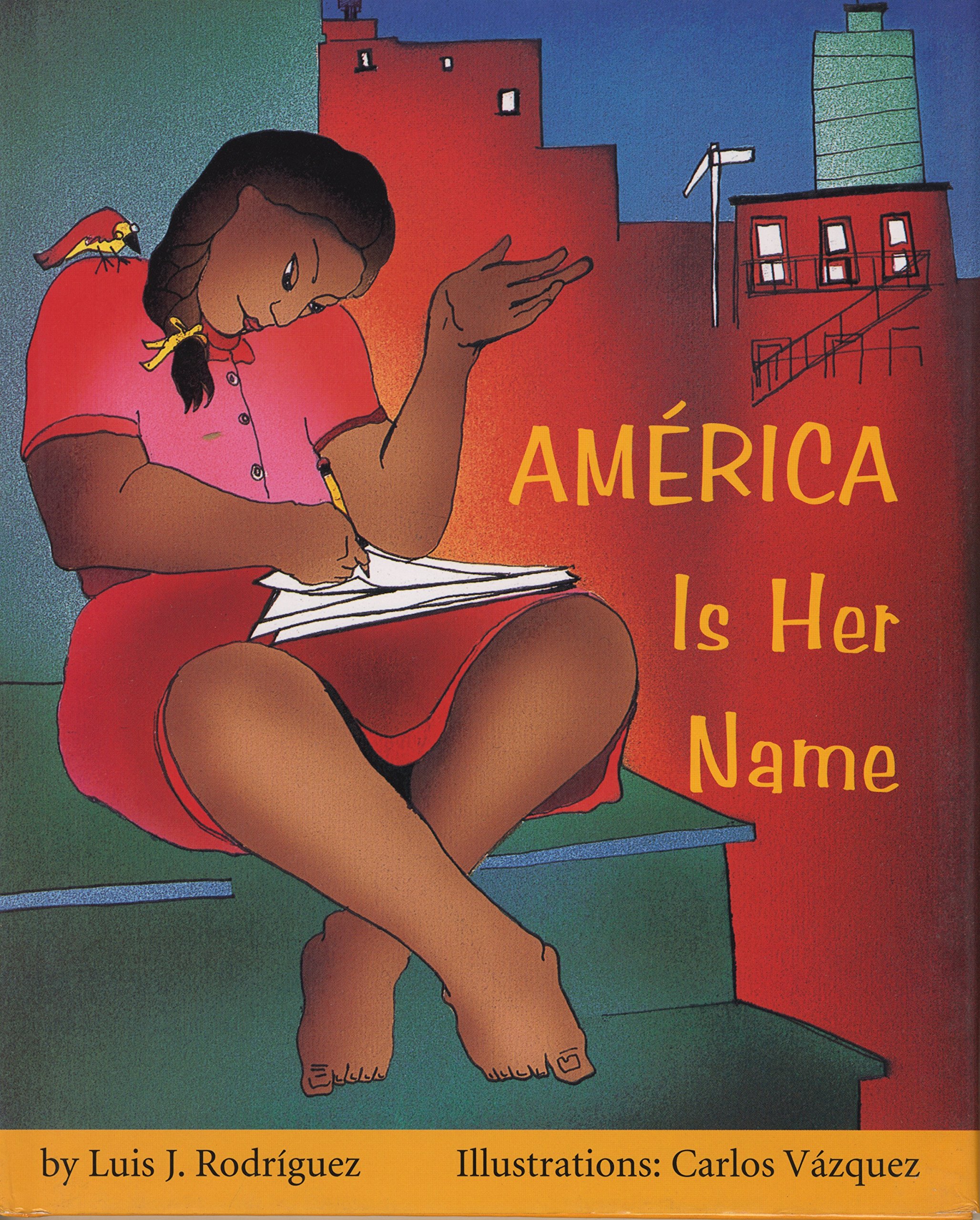 Set in the Pilsen barrio of Chicago, this children’s picture book gives a heartwarming message of hope. The heroine, Amrica, is a primary school student who is unhappy in school until a poet visits the class and inspires the students to express themselves creatively-in Spanish or English. Amrica Is Her Name emphasizes the power of individual creativity in overcoming a difficult environment and establishing self-worth and identity through the young girl Amrica’s desire and determination to be a writer. This story deals realistically with the problems in urban neighborhoods and has an upbeat theme: you can succeed in spite of the odds against you. Carlos Vzquez’s inspired four-color illustrations give a vivid sense of the barrio, as well as the beauty and strength of the young girl Amrica.Luis J. Rodrguez grew up in Watts and East L.A. His bestselling memoir about gang life, Always Running (now available in paperback in both English and Spanish from Touchstone Books), won the Carl Sandburg Award. His Poems Across the Pavement (Ta Chucha Press) won the Poetry Center Book Award from San Francisco State University, and his poetry collection, The Concrete River was awarded the 1991 PEN Oakland/Josephine Miles Award for Poetry. Mr. Rodrguez has worked extensively with gang members to guide them in positive directions, and he is frequently featured as a keynote speaker or guest poet at national conferences and cultural centers. Rodrguez explores the Chicano experience with an unrelenting, socially conscious eye that moved Larry Weintraub of the Chicago Sun-Times to call him a poet “we need to hear.”Illustrator Carlos Vzquez was born in Mexico, studied physics and art, and now teaches in adult education programs in New York City.This book is also available in a Spanish language edition as La llaman Amrica translated by Tino Villanueva. 1-880684-41-1
Pablo Remembers
From October 31 to November 2, people in Mexico celebrate the festival of el Dia de Los Muertos, the Day of the Dead. This photodocumentary follows Pablo and his family as they prepare to honor the memory of Pablo’s grandmother. Ancona’s photographs catch the affirmation of life that fills the Mexican festival arising from both Aztec and Christian customs honoring the dead.
Butterflies On Carmen Street/ Mariposas En La Calle Carmen
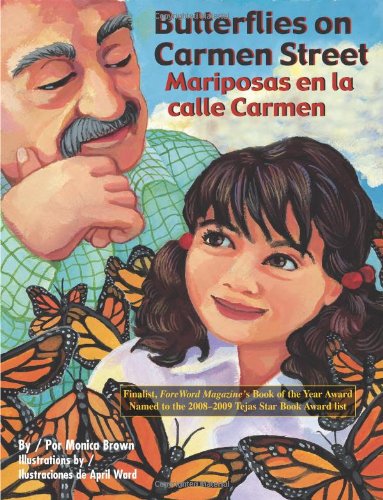 \”Today is Butterfly Day!\” Julianita excitedly tells her grandfather as they make their way down Carmen Street to school one morning. Today is the day Julianita and her friends have been waiting for–they\’re going to learn about monarch butterflies. But what\’s even more thrilling is they\’re each going to receive their very own caterpillar to raise! When Julianita gets hers, she names him Tiger because of his striking yellow and black stripes. Ms. Rodríguez teaches her students all about the monarch. But Julianita already knows that they fly south thousands of miles every winter because her grandfather remembers seeing the beautiful monarchs in his village in the highlands of Mexico. As the children feed and care for their caterpillars, they anxiously anticipate the transformation from caterpillar to chrysalis to butterfly. When Tiger finally emerges from his chrysalis, Julianita doesn\’t want to let him go. She worries that he will get lost on his way to Mexico. \”Tiger knows the way to Mexico because it\’s in his heart,\” her Abuelito reassures her. She feels sad to see Tiger fly away, but Julianita knows that someday, she will follow him to her grandfather\’s magical Mexico. Paired with April Ward\’s charming illustrations that depict Julianita\’s neighborhood–her home on Carmen Street, the bench where Abuelito rests in Palo Verde Park, her parents\’ store that sells everything in the whole wide world–this book by award-winning author Monica Brown is sure to entertain and educate kids ages 3-9. This is a perfect choice for children learning about insects and the forces of nature.
La Isla
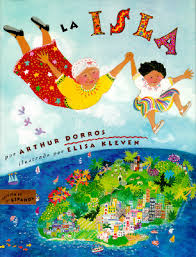
When Rosalba and Abuela travel to la isla, the island where Abuela grew up, Rosalba meets Abuela’s son, Fernando, and his family and samples the sights of the island. By the creators of Abuela.
I’m New Here
 Follow Jazmin Escalante, newly arrived in California from El Salvador, as she recounts her first days of school in America.
Boys At Work
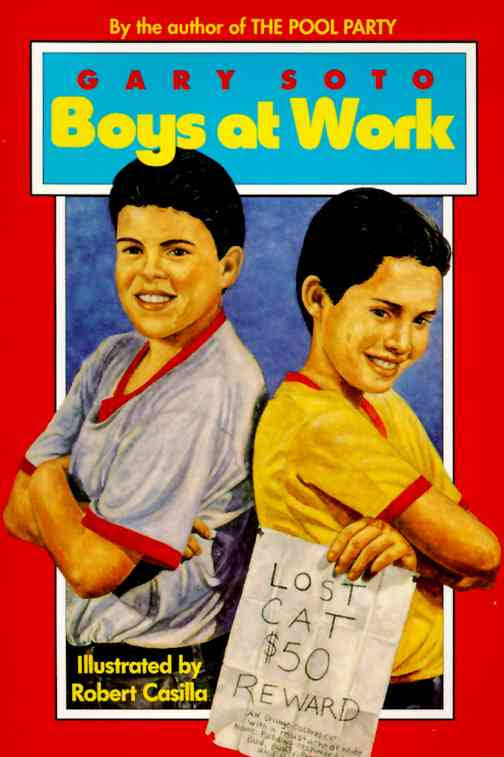 Rudy Herrera and his friend, Alex, scramble to earn enough money to replace Slinky’s accidentally broken Discman and then find out that the Discman really belonged to big, bad Trucha. By the author of The Pool Party.
Celebrate! It’s Cinco De Mayo!
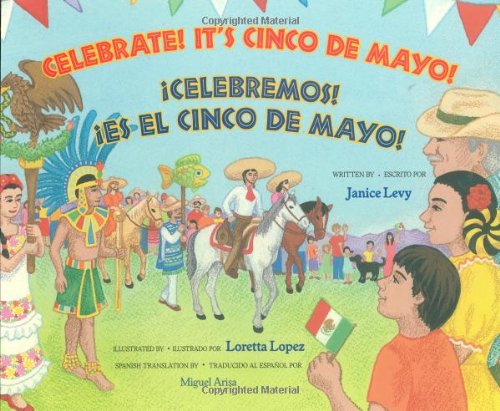 It’s Cinco de Mayo! Everyone is celebrating the holiday in their own way. “Mama marches in the parade. Papa plays in a mariachi band. Abuelita cooks a special meal.” Why do we celebrate Cinco de Mayo? A very simple history of the holiday is interspersed with the story of a young boy celebrating Cinco de Mayo with his family. This bilingual book features a section with “find what’s missing” pictures and simple crafts perfect for any child’s Cinco de Mayo celebration. Loretta Lopez’s engaging and cheerful pictures complement Janice Levy’s child-friendly introduction to this important Mexican holiday.
Yum! Mmmm! Que Rico!: America’s Sproutings
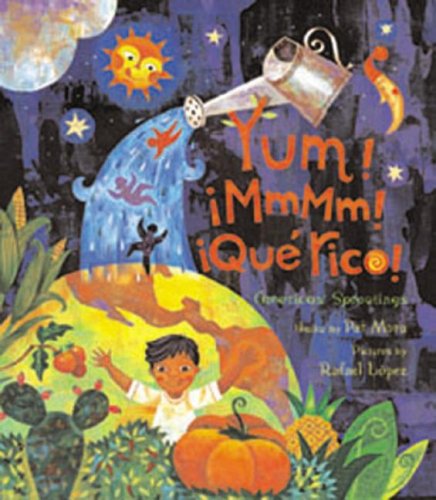 Peanuts, blueberries, corn, potatoes, tomatoes, and more-here is a luscious collection of haiku celebrating foods native to the Americas. Brimming with imagination and fun, these poems capture the tasty essence of foods that have delighted, united, and enriched our lives for centuries.