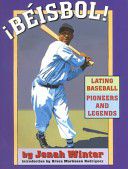
Presents profiles of fourteen Latino baseball players who, from 1900 through the 1960s, were pioneers of the sport in their home countries and the United States.
Biography – Autobiography- Memoir
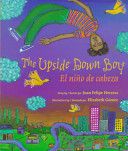
The Upside Down Boy / El Niño De Cabeza
The author recalls the year when his farm worker parents settled down in the city so that he could go to school for the first time.
Featured in WOW Review Volume X, Issue 1.
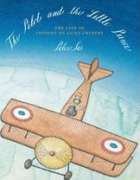
The Pilot and the Little Prince
This story is the life of Antoine de Saint-Exupéry, author of Little Prince. He was born in France in 1900, when airplanes were just being invented. Antoine dreamed of flying and grew up to be a pilot—and that was when his adventures began. He found a job delivering mail by plane, which had never been done before. He and his fellow pilots traveled to faraway places and discovered new ways of getting from one place to the next. Antoine flew over mountains and deserts. He battled winds and storms. He tried to break aviation records, and sometimes he even crashed. From his plane, Antoine looked down on the earth and was inspired to write about his life and his pilot-hero friends in memoirs and in fiction. Peter Sís’s remarkable biography celebrates the author of The Little Prince, one of the most beloved books in the world.
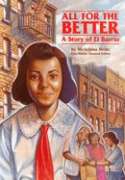
All For The Better: A Story Of El Barrio
Some people live to make a difference. However they find the world around them, they try to make it better. For them, nothing is so perfect it can’t be improved, and no problem is so difficult it can’t be faced. This is the story of a young girl who in a small way made a difference to many people in her community. She had no special gift beyond caring, but you will see how, much you can do when you care enough to make a difference.
See the review at WOW Review, Volume VI, Issue 4
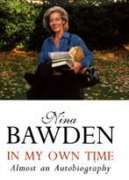
In My Own Time
A critically acclaimed children’s novelist reveals the origins of her stories in her own childhood experiences in England during World War II, her years at Oxford, her family life, and her role in numerous literary organizations.
Beatrix Potter
The life story of the author of many beloved children’s books.
Seeker of Knowledge: The Man Who Deciphered Egyptian Hieroglyphs
A biography of the French scholar whose decipherment of the Egyptian hieroglyphic language made the study of ancient Egypt possible.
Maria and the Stars of Nazca / Maria Y Las Estrellas De Nazca (Bilingual Edition)
Feminist and Abolitionist
When asked to deliver contraband papers to her native island home of Cuba in 1852, twenty-year-old Emilia Casanova gulped audibly in a most unladylike manner. This was her chance to be in the thick of the rebellion against Spanish authority something she had always dreamed of instead of on the sidelines more befitting someone of her station. Even though she would be branded a traitor and endanger her family if she was caught, she pushed her fear aside and accepted the mission.
Back in Cuba following her first summer abroad, distributing seditious propaganda isn’t as easy as it had seemed while in New York. But she honors her commitment to the Junta Cubana, a group of Cuban revolutionaries living in exile in the U.S., and begins her efforts to convert compatriots to the cause of independence from Spain. She begins planting the seeds of insubordination in her social circle and enlists two of her brothers in the cause. Things become more dangerous when she targets soldiers in the garrison close to the family’s home, and it doesn’t take long for one of her brothers to be exposed. Soon Emilia’s father is forced to lead his entire family away from their home and into exile in the U.S.
Raised in an elite, slave-holding Cuban family, Emilia Casanova spent most of her adult life in New York City, where she worked passionately for Cuba’s freedom from Spain and the black man’s freedom from servitude. A wife and mother, she created the first women’s political organization dedicated to supporting the rebel cause during Cuba’s Ten Years’ War. Puerto Rican and Latino Studies professor Virginia Sanchez-Korrol introduces the fascinating but little-known story of a Latin American activist to an English-speaking audience.
Making Contact!: Marconi Goes Wireless
As a boy, Marconi loved science and invention. Born in 1874 in Bologna, Italy, to a wealthy family, Marconi grew up surrounded by books in his father’s library. He was fascinated with radio waves and learned Morse code, the language of the telegraph. A retired telegraph operator taught him how to tap messages on the telegraph machine. At the age of twenty, Marconi realized that no one had invented a wireless telegraph. Determined to find a way to use radio waves to send wireless messages, Marconi found his calling. And, thanks to his persistence, on December 12, 1901, for the first time ever, a wireless signal traveled between two continents.